
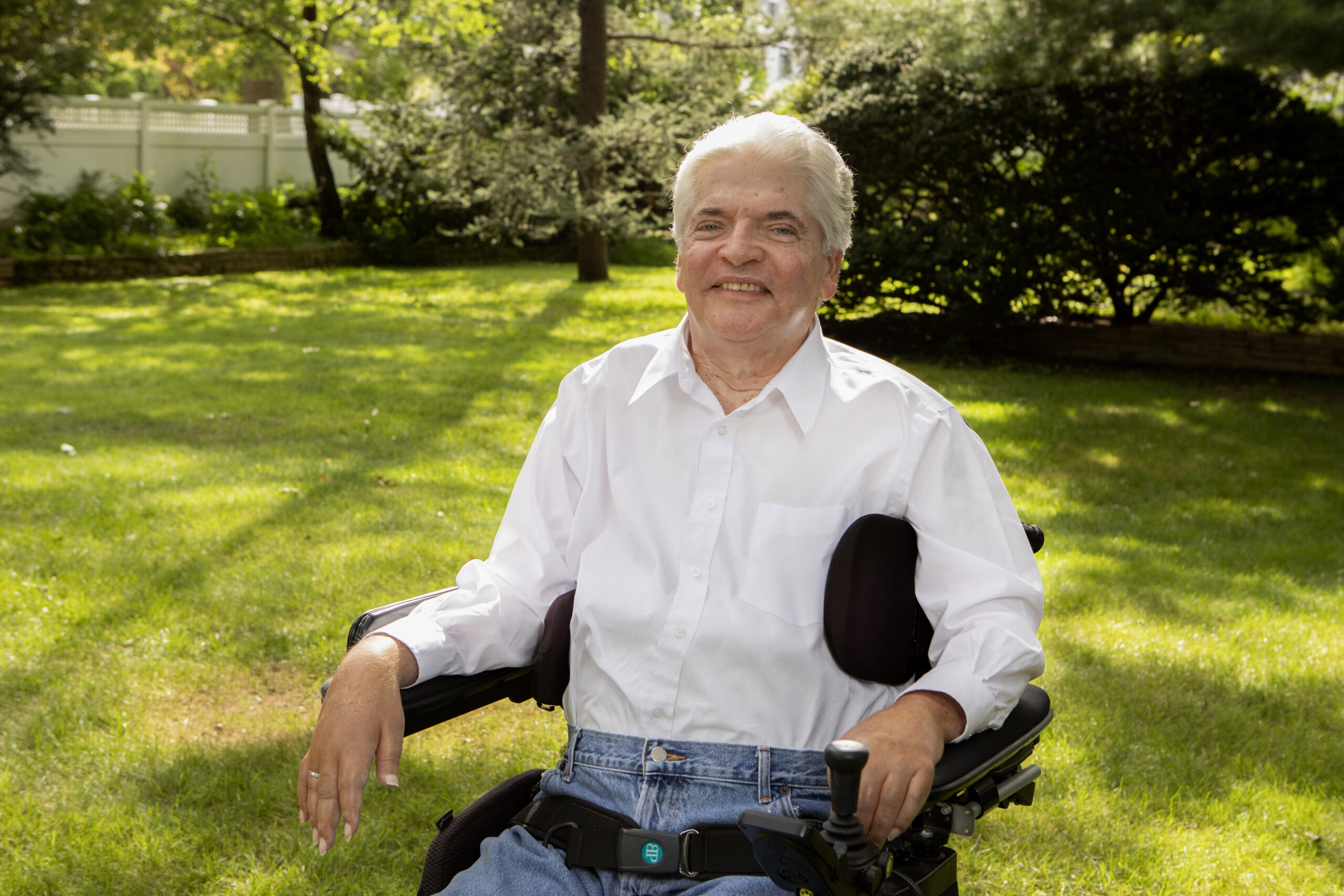
Ken Kunken shares how he overcame a life-changing spinal cord injury to build a 40-year legal career as a quadriplegic, proving that resilience, mindset, and purpose can redefine what’s possible. If you’re facing adversity or feeling stuck, this episode will challenge how you think about limitations and what you’re truly capable of.
🎙️ Give A Heck Podcast
Real conversations about purpose, personal growth, financial stewardship, mindset, faith, and intentional living.
Ken Kunken’s story is one of the most powerful examples of resilience you will ever hear.
After a devastating spinal cord injury left him paralyzed from the neck down, doctors believed his future would be confined to a nursing home. Instead, Ken chose a different path.
He returned to Cornell, became the first quadriplegic graduate, earned multiple advanced degrees, and built a distinguished 40-year career as an assistant district attorney.
This conversation goes far beyond inspiration. It challenges how we think about adversity, identity, and what is truly possible when we refuse to accept limitations placed on us by others.
🚫 From Tragedy to Transformation
Ken’s journey began with unimaginable adversity.
After suffering a C4-5 spinal cord injury during a football game at Cornell University, he faced not only physical limitations but overwhelming emotional and mental challenges.
Doctors painted a future that lacked independence, purpose, or contribution.
Yet Ken made a decision that changed everything.
He went back to school, back to growth, and back to possibility.
✍️ Rewriting the Narrative Others Tried to Define
Despite earning multiple degrees from prestigious institutions, Ken faced rejection after rejection.
Over 200 resumes sent.
No opportunities.
Even volunteer roles denied.
Until one organization chose to see his ability instead of his disability.
That single opportunity led to a career that impacted thousands of lives.
🧠 The Mindset That Made It Possible
Ken’s life is built on one core belief:
Do not accept limitations placed on you by others.
His success came from:
- Family support and learned resilience
- Refusing to internalize negative expectations
- Taking action despite uncertainty
- Believing ability matters more than circumstance
⚠️ Breaking Barriers Before the World Was Ready
Ken navigated a world that was not built for accessibility.
No ramps.
No curb cuts.
No accommodations.
Instead of waiting, he became part of the change.
From Cornell to New York communities, his advocacy created access not just for himself, but for everyone.
📚 A Life Built on Purpose, Family, and Legacy
Ken’s journey extends far beyond career success.
He became a husband, a father to triplet sons, and an author sharing his life lessons with the world.
👉 I Dream of Things That Never Were: The Ken Kunken Story (US Amazon)
👉 I Dream of Things That Never Were: The Ken Kunken Story (Canada Amazon)
🔗 Continue the Conversation
🎧 From Legally Blind to Living with Vision
Michaela Cox shares how resilience and mindset shape a life beyond limitations.
👉 From Legally Blind to Living with Vision
🎧 Breaking Free from Narcissistic Abuse
Dana Diaz shares how to reclaim identity and rebuild after emotional trauma.
👉 Breaking Free: Reclaiming Yourself After Narcissistic Abuse
🎧 Big Bold Brave — Living Courageously
Clint Hatton explores courage and navigating life’s most difficult moments.
👉 Big Bold Brave: How to Live Courageously in a Risky World
🎧 Navigating Grief and Resilience
A powerful continuation of Clint Hatton’s journey through grief and rebuilding.
👉 Navigating Grief Together
🎧 Reinventing Your Life and Purpose
Kay A. Oliver shares how to rewrite your story and step into a new chapter.
👉 Hollywood Screenwriter to Bestseller
🧩 Episode Chapters & Key Takeaways
- Life can change in a single moment, but your response defines your future
- Support systems are critical in overcoming adversity
- Limitations are often external beliefs, not internal truths
- Advocacy begins with asking for what you need
- Purpose is often found through adversity
- One opportunity can change everything
- You have the ability to impact others every day
👤 About Ken Kunken
Ken Kunken is a motivational speaker, author, and former assistant district attorney who built a 40-year legal career after becoming paralyzed from the neck down during a college football game.
He is the first quadriplegic to graduate from Cornell University and has spent decades advocating for accessibility, resilience, and the power of mindset.
🤝 Connect with Ken Kunken
🌐 Website
📘 Facebook
▶️ YouTube
📸 Instagram
💼 LinkedIn
🤝 Connect with Dwight Heck
🌐 Website
🎙️ Podcast
▶️ YouTube
🎥 TikTok
💼 LinkedIn
📸 Instagram
📘 Facebook
💭 Final Thoughts
Ken Kunken’s story is proof that adversity does not define you. Your response does.
When everything changes, you still have a choice.
To stop.
Or to rise.
And sometimes, the life you build after everything falls apart becomes more meaningful than anything you imagined before.
🎙️ Listen, Follow, and Share
If this episode impacted you, follow the Give A Heck Podcast and share it with someone who needs this message.
🚀 Want to Live Life on Purpose?
Start surrounding yourself with conversations that challenge your thinking and push you forward.
📝 Unedited Transcript
Dwight [00:00:03 – 00:02:16]
Life can change in a single moment. Sometimes that moment arrives without warning and instantly reshapes everything we believed our future would look like. A dream, a career path, even the most basic assumptions about what life will be. For some people, those moments become the end of the story. For others, they become the beginning of a completely different one. Welcome back to the Give a Heck podcast. I’m your host, Dwight Heck, here to help you live life on purpose and not by accident. Today’s guest, Ken Kunkin, knows exactly what it means to face a moment like that. As a student of Cornell University, Ken suffered a devastating spinal cord injury during a football game that left him paralyzed from the neck down. Doctors questioned whether he would survive and believe that if he did, his future would likely involve living in a nursing home. But Ken refused to accept that version of his life. He returned to Cornell and became the first quadriplegic student to graduate from the university. He later earned multiple advanced degrees and built a 40 year career as an assistant district attorney in Nassau county, where he Prosecuted more than 50 felony journal jury trials. Along the way, he became an advocate for disability rights, a motivational speaker, a husband and a father. Ken also shared his remarkable life journey in his memoir, I Dream of Things that Never Were. The Ken Kunkin Story, which tells the story of perseverance, resilience, what becomes possible when someone refused to let circumstances define their future. Today, we are going to explore Ken’s life journey, the mindset that helped him move beyond what others believe possible, and the lessons he’s learned about resilience, perseverance, and living a life with purpose. Ken, welcome to the Give a Hack podcast. Thanks so much for agreeing to come on and share with us some of your life journey.
Ken [00:02:16 – 00:02:23]
Thank you. Dwight, thank you for having me as your guest and giving me the opportunity to share a story about my life.
Dwight [00:02:24 – 00:03:26]
Yeah, you know what? People listening or watching on YouTube, buckle up, you’re gonna be in for a treat. I was literally smiling last night as I was building this, this conversation, this interview. You. You know what? We always look at things in life, Ken, before I go any further and get into your origin, we, we look at our lives and we say, you know what? We complain. We become a world of always having negativity when there’s somebody out there looking at our life and saying, I’ll take your life if you don’t want it, right? I’ll take your life. My life’s worse, so I’ll take your life. And when I look at that, I think about all the clients I’ve had over the years, all the people I’ve coached. And I think to myself, you know what? I’m blessed and highly favored. I may have health challenges. I may have things that I, that I have to circumvent. But I was blessed with another day that somebody else would love to have. Right.
Ken [00:03:27 – 00:03:27]
Right.
Dwight [00:03:29 – 00:03:57]
So based on that, and I’ll get off my little soapbox, we will talk about, I want to talk to you about your origin as we. I mentioned a little prior, your origin from when you were a child, before you ever became, you know, the Ken that you’ve been the last 40 years. You through being a quadriplegic. What was your childhood like? What was your, you know, good, bad, indifferent. It all shapes us at some point in our lives. Would you please share that?
Ken [00:03:58 – 00:06:56]
Okay. Well, Dwight, my first reaction when I look back at my childhood was that it was a very good childhood. I grew up being a very happy kid and I look back with fond memories. But when I look back a little deeper, I’m not sure everybody would have expected it to be such a good childhood. Dwight, I’m not sure if you’re aware that less than a month after I was born, my mother died. Now, it was unfortunate. I was born in 1950 and this was during the polio epidemic. And shortly after I was born, my mother and brother contacted polio. My brother fortunately fully recovered, but my mother’s condition became much worse and she died just 27 days after I was born. So after I was born, my father soon realized it would be too difficult to take care of alone. Me, a less than one month old baby, and my brother, a two year old who had polio. So we moved in with his parents, my paternal grandparents in Limbrook on Long island in New York State. And we lived with them for a little more than four years. And during that time, my maternal grandparents used to visit every day and help with our care. So my grandparents became in effect my surrogate mothers. And you know, I looked at them as parents as well. So we actually called both sets of grandparents mom and Popped. And to separate them, we called my paternal grandparents Limbrook mom and Lindbergh Pop, because we lived in Limbrook and my maternal grandparents More mom and More Pop. So I grew up thinking basically that I had two mothers, both grandmothers. And when I was four, my father married for the second time. Unfortunately, it was not a happy marriage. His second wife had two children from her previous marriage that unfortunately her first husband had passed away. And during their marriage, the one good thing that came of it was that my sister Meryl was born. So I know. Dwight, you mentioned that you have five children. Well, I grew up in a household with five children. Right. My brother Steve, my sister Meryl, and my father’s second wife had two children. So we lived together for more than nine years. But it was, as I indicated, not a very happy marriage. That ended in divorce. And my father married for the third time in 1968, shortly before I left for college.
Dwight [00:06:57 – 00:07:00]
Wow. So you’re just before you turned 18,
Ken [00:07:02 – 00:07:07]
right? Yeah, yeah, right before I turned 18, yeah.
Dwight [00:07:07 – 00:07:07]
Wow.
Ken [00:07:08 – 00:07:11]
Actually, I’m sorry. It was one month after I turned 18.
Dwight [00:07:11 – 00:07:12]
Oh, okay.
Ken [00:07:12 – 00:07:13]
That he got married.
Dwight [00:07:14 – 00:09:25]
But either way, wow, what a story. The polio thing really hits me because one of my dad’s closest friends, he made it till he was in his 40s, had. Was born, had polio. He had an iron lung. I remember going to their house when I was a young boy, and my dad was one of the only people in our small community. Farming community wasn’t where I live now, of 12,000 people that employed Marvin. And Marvin’s health would have skids, and he wouldn’t be able to come to work or wouldn’t make it through a whole day. But my dad absolutely loved him, treated him like his brother. And we go over to their house. He lived with his mom and dad and. And he had an iron lung. He had the bed that went like this. I can’t remember what they called that bed, but it rocked. And he had an iron lug in his bedroom. And it was just. It was a circumstance that really hit me as a young person, that, wow, right? And all of a sudden, you know, we get vaccines over the last, you know, 50, 60 years, and then there’s still people today that don’t believe in them. But yet then I tell them, you know what? Vaccines have saved a lot of people. You want to go do a little bit of research. And some of the diseases that have been, you know, pretty much put to bed. And you’ll realize that vaccinations, yes, they have their pros and cons, but there’s a lot of pros for them, especially for the population that knows someone that suffered through polio or is living in that house. And I still remember the day Marvin passed. It crushed my dad. Right. Because he was hoping he’d obviously live longer. And he was only in his early 40s. Right. But so there’s just it. When he talked about that, that was. And then your mom passing away 27 days after you were born. Well, like, wow, that Is you could have as you got older. Obviously, you didn’t know that origin at the time, and you heard that you. You just have even more proudness of your grandparents. And I love how you talked about them having different names. Right.
Ken [00:09:25 – 00:09:35]
Depending on. Right. I’m sorry, but if your viewers can see, there’s a shelf behind me with a lot of pictures. Those are pictures of my mother on the top.
Dwight [00:09:35 – 00:09:36]
On the top shelf.
Ken [00:09:36 – 00:09:46]
On the top shelf. Right. Who I unfortunately never really got to know, but who I heard also was in an iron lung for the short period of time before she passed away.
Dwight [00:09:47 – 00:10:59]
Yeah. Marvin had his for. Oh, my goodness. I can’t even remember how long it. They say between that and the. And the bed that kept his fluids going properly. I forget that. I think that’s what it was for. He was. But they say one of the biggest reasons Marvin lived so long, he felt appreciated. He had a job to go to. He didn’t just sit. And he had the best sense of humor, even though he was. He was really hunched over, like, really bad. It really affected him. Had a hard time walking, couldn’t drive, obviously, but he just. Such a spirit. Such a spirit. And, you know, when we feel that we’re appreciated and worthy in life, we can circumvent and overcome the biggest physical challenges, as you have proven. Right. So, you know, that’s awesome that you have your mother up there. Like, I look at those pictures. What a pretty lady. Guarantee is she’s smiling down on you, brother. Smiling down on you and very proud of you. Just as obviously your family, your wife, your friends, and even your new friend, me. I’m proud.
Ken [00:10:59 – 00:11:01]
Right. Right.
Dwight [00:11:01 – 00:11:34]
So thank you for sharing that. So in your early life, those people shaped you. Your grandparents were there. Was there anybody specific? We’re gonna. I’m gonna ask more specifics about this, but it just popped into my head as such an educated person that’s helped so many people because of your tenacity and passion for education. Was there anybody like your grandparents or anybody that really was into knowledge and education? That was part of who you are today in regards to knowledge?
Ken [00:11:35 – 00:13:12]
Absolutely. First, let me just say that I grew up very close to my not only immediate family, but my extended family. So we’re not talking about just grandparents, but aunts, uncles, cousins, all were involved in my care and my daily activities. So I grew up really appreciating the importance of family. But when you talk about education, my paternal grandparent and my maternal grandparent, you know, both grandfathers were like scholars when it came to religion. Any religion in particular. They used to spend hours talking with each other about religion, in particular the Jewish religion, because I grew up as a Jewish man. But my maternal grandfather was born in Russia, came to the United States, I believe, when he was about six years old, was very, very bright, ended up going to Yale University. He had graduated 1919. He himself had three patents. He invented different things. And later at the age of 65, earned a master’s degree at Columbia University, where my brother and I actually attended his graduation for his master’s degrees. So he was particularly influential in my love for education and my desire to get the best education possible.
Dwight [00:13:13 – 00:13:59]
It’s. It’s amazing how learned behavior and example shape our lives. You’re gonna like the, the crossovers and things that we share is amazing. My gr. So my mom and dad are first generation Canadian. His dad was born in Odessa, Russia before, when it was still the ussr, Right. So. And they escaped that the Heck family had gone from Germany over to Russia when they were begging for people to teach him and to help them learn how to farm. And they lived in Russia, I forget the slang term. They called the German Russians for 150 years. And they escaped just before the Bolshevik Revolution to North America.
Ken [00:14:00 – 00:14:00]
Right.
Dwight [00:14:00 – 00:14:55]
Most of them settled in. Most of them settled in Canada. Some couple, like I mentioned, settled in the US and there even my uncle, who’s still alive, his kids now and then his great. His grandkids now are farming the original homestead. Nobody had ever farmed it. There’s a big sign that was given to Bike by the Canadian government years ago as one of the first homesteaders of that land. And, and this, it’s still being farmed by our. My relatives. And yeah, the Russian connection. And my grandma on my dad’s side was born in Buenos Aires, South America. Her parents were German. They came from Germany to. To South America. Same sort of thing. Needed help, wanted to learn farming techniques. So a lot of my relatives are still in Germany, obviously. But it’s just interesting how life is shaped.
Ken [00:14:57 – 00:15:05]
It sure is. In fact, one of my sons is going to be doing a semester abroad next semester in Chile in South America.
Dwight [00:15:05 – 00:16:42]
That’s sweet. That’s sweet. I love the commonalities. It’s just. Oh, wow. The energy of this podcast is just amazing. When we just started, so, you know, you ended up having a grandpa, you know, three patents, gets his masters at 65. And they were both very. Both your paternal and maternal grand grandpas were, you were saying, were very educated. So that, that is a great kickstart. But in life, though, I always want to look back at the person. Look back at you, Ken. You still had to be the willing. You still had to want it. I know people that have super well educated parents or grandparents or surroundings of all the aunts and uncles and they still turn out to be average. Not even average, less than average. So congrats to you though. You still had to be the willing to notice all of that and realize that even if you didn’t realize it till you’re an adult. I didn’t realize how smart my dad was or what my grandpa sacrificed or all the history till my brain developed in my mid-20s. Right, right. Because it still takes time. So congratulations and thank you for sharing that very intimate, you know, details of your life. So we’re going to get into the life changing stuff about your life. Obviously you experienced at Cornell that football injury that resulted in that severe spinal cord injury. I think it was at C4. I believe I was reading.
Ken [00:16:42 – 00:16:43]
Right, C4, 5.
Dwight [00:16:44 – 00:17:06]
Yeah, I believe I was reading that yesterday. I usually have a pretty good memory. I don’t have written down. I just. That’s why I was questioning it. So when it. Walk us through what happened that day, that of what you can remember and what the reality that you face in the weeks and months that followed. Would you mind sharing it? I imagine it’s quite sensitive, but I appreciate it.
Ken [00:17:07 – 00:17:09]
Well, let me go back just a little further and tell you.
Dwight [00:17:09 – 00:17:10]
Sure.
Ken [00:17:10 – 00:23:41]
I grew up absolutely loving sports. I mean, when my father was growing up, both high school, college and high school, I know he ran track, was involved in broad jumping, he played football in high school and college. And my brother became a terrific athlete, played football and baseball. In fact, in college he was all Yankee Conference baseball when he went to the University of Vermont. So I grew up being very active in sports. And I know somebody once asked me when I spoke at a meeting to describe myself when I was in high school. And I remember thinking about it and said, you know, in high school I started on the varsity football team, I started on the varsity wrestling team. I played in three different softball leagues. I worked in the summer as a lifeguard. And I was also a pretty decent student. I mean, I was in the National Honor Society and my grades were good enough to get me into Cornell University, one of the top colleges in the country. But I thought of myself first as an athlete and then almost as an afterthought that I was a pretty decent student as well. Well, when I was at Cornell, I was studying industrial engineering and it was a really Tough curriculum. And I was really struggling with it because while I was very good with math, physics and chemistry were a real challenge for me. And at the time, boy, I was experiencing a lot of anxiety. And sports seemed to be a great way to deal with my anxiety. I mean, I could certainly get out all my frustrations and tensions out on the football field. So it felt absolutely great to have that type of release. But I remember at the beginning of the season, it was early in my junior year, I actually had a premonition that I didn’t know how to explain it, but for some reason, I just had a feeling I was going to get hurt that season. I still can’t explain it. In fact, it was such a strong premonition, I actually verbalized it to my roommate at the time. I said, john, I don’t know what it is. I just have this feeling I’m going to get hurt this season. The first tackle I made that year is when I broke my neck and severely damaged my spinal cord. And I remember later I related that story to one of my aunts, and she said, did it ever occur to you maybe you shouldn’t play football that year? And I thought about it. I said, it absolutely never occurred to me. I just thought of myself as an athlete, and you just play. But I had my injury. Coincidentally, it was hurt on the Halloween Day, October 31, 1970, where I grew up thinking Halloween was the greatest day in the year. Go out trick or treating all night, get a lot of candy and chocolate, couldn’t wait for the next year to come around. And here’s when I broke my neck on Halloween day. And I then spent the next nine months and 20 days in various hospitals and rehabilitation centers. And I was devastated. I don’t think anybody could have been in a worse depression than I was in. And I could remember lying in bed thinking, my life is basically over. And quite frankly, Dwight, if I could have taken my life, I probably would have. But I didn’t even have enough movement to take my own life. So I just had to suffer through it. But my grandparents and aunts, uncles, my father, everybody kept encouraging me that since I still had my mind, there was a lot that I could do. But I found the medical professionals didn’t seem to want to answer any of my questions. For some reason back then, they seemed to think the less the patient knew, the better. I remember when I was in a rehab facility. The rehab facility I was in, it was called the Rusk Institute, actually published a pamphlet about people with spinal cord injuries and it was broken down by the level you were heard. I’m hurt very high up in my neck between the fourth and fifth cervical. And with somebody turning the pages for me because I couldn’t turn the page. They had a page about what type of movements you might have. And it said I may have some biceps, but no triceps, right on point. They had a page about where my level of sensation would be. And it said it may be just a couple inches below my shoulders and up, I cannot feel anything below that. And again, it was right on point. And they had a page about how it would affect your bodily functions, how it affect your bladder and your bowels, your kidneys, your breathing. And again, it was totally accurate. And then they had a page about what type of careers you could eventually go into. And the only career I saw for somebody hurt at my level was to someday sell magazine subscriptions over the telephone. And I was devastated. And at the time, remember, there weren’t even touch tone phones back then, so I couldn’t even dial a telephone or take notes or write anything. And I started to think even that would be too difficult for me. And here I was studying engineering at one of the most prestigious colleges in the country. And now I’m looking at a career possibly selling magazine subscriptions over the telephone, which I didn’t think I’d even be able to do. And I had a number of roommates in a rehab facility who had spinal cord injuries, but they were all hurt lower down in the neck than I was, so they had more movement than I had, so they could physically do more than I was. And yet none of them seemed to be doing anything productive with their lives. And I started to think that maybe all I’ll ever be able to do is just sit at home and watch television. And it was just incredibly depressing. But my family as well as a vocational counselor at the rehab facility encouraged me to go back to school and continue my education. So just 11 days after I was finally discharged, I decided to go back to Cornell University and resume my studies.
Dwight [00:23:43 – 00:24:31]
Wow. I got a question for you. Do you believe tenacity is, is rooted in our family? That we. That it can become a learned behavior? Because I think you’re a very tenacious person and I personally think tenacity is a superpower. And all I keep on hearing is that you weren’t going to quit. You had those oppressive cycles, but you still became the willing, that you didn’t want to be that person like the rest that weren’t doing anything and they had More mobility. So I hear that tenacious energy from you. Have you always been that way? Obviously, when I think about the stories of your maternal grandparents and your paternal grandparents, I think your whole life is rooted in. Is rooted part of me in tenacity. Wouldn’t you agree?
Ken [00:24:32 – 00:25:31]
Oh, I’d absolutely agree. And I might add, when you mention my grandparents and my family, I couldn’t have done any of the things I did without a lot of help and encouragement from my family and friends. But I might add that with the difficulties we faced early in our life, I always had a lot of encouragement that there was still a lot you could do. And while it seemed like there were a lot of outsiders telling me, you can’t do something or it’ll just be too difficult, I was fortunate. I had a lot of family and friends who said you could basically do anything you set your mind to. And I might also add, Dwight, that I was very motivated before my injury. I mean, you don’t go to Cornell, study engineering, play a sport at the same time, and not be incredibly motivated. So I just tried my best not to let my injury stop me from remaining motivated.
Dwight [00:25:31 – 00:26:57]
Yeah, you mentioned, like, you were motivated prior. And I was thinking when you were telling me earlier about all the sports and all the stuff you did, I thought to myself, my goodness, when does this man sleep? Right? Like, you know, people say that to me, like, obviously at my age now, with the family I have, and they say, you know, how do you continually drive yourself? Like, you’ll have days where you’ve said you’ve worked 14 hours. Because passion trumps my tiredness all the time. My purpose, my drive to do one more thing isn’t about my ego in a negative way. It’s about wanting to continually make myself better. And I looked at. I was looking, and I had wrote some notes down before we even met each other today. And I looked at all the education, you know, your master in arts, your master’s of education and psychology. And I think to myself, when I’m reading that and writing the notes down, I’m thinking, wow, that is a person that is hungry and thirst for knowledge. Not to say, hey, I’m smarter than you, but, hey, I want to learn more so I can make more of a difference constantly. Even your maternal grandpa getting his master’s at 65, that tells a lot about your lineage, about your family, right?
Ken [00:26:57 – 00:26:57]
Absolutely.
Dwight [00:26:57 – 00:27:00]
That’s something to be so proud of. Wow.
Ken [00:27:00 – 00:28:36]
Thank you. And they convinced me there was still a lot I could do to help people, despite my physical limitations. So based on the recommendation of a psychology professor, because I took an elective in psychology, I decided to pursue a career that would prepare me to be a counselor. So after I graduated from Cornell with a degree in engineering, I stayed at Cornell and earned a master’s degree in counseling and student personnel administration, which was actually in the education department. And then to increase my counseling credentials, I went to Columbia University, which coincidentally, was the school I was injured playing against when I got hurt playing football. And I earned my second master’s degree, this one in psychology and psychological counseling and rehabilitation. And I decided to look for a job in the rehabilitation counseling field with the hopes that I could help others. And here I had Dwight think about this. Two degrees from Cornell, one from Columbia, three prestigious Ivy League degrees, two master’s degrees, and no one would hire me, even my counselor at Columbia. My advisor told me, despite what they teach there, people even in the rehabilitation field would be reluctant to hire somebody with my disability. Now this was in the 1970s, late 1970s, and I mailed out more than 200 resumes and looked for a job for a year. I was even turned down, off to volunteer my services.
Dwight [00:28:37 – 00:28:37]
Wow.
Ken [00:28:38 – 00:29:31]
But I was fortunate that I found at least one organization willing to give me the chance to show what I could do. And that organization was Abilities Incorporated, which is part of what’s now called the Viscardi center, named after its founder, Dr. Henry Viscardi Jr. And they hired me to work as a vocational rehabilitation counselor for other individuals with disabilities. And they’re located on Long island in New York State. And they changed my life, Joy. They changed my life. They helped build up my self esteem, my feelings of self worth, my self confidence, and totally changed the way I felt about myself. And for the first time in many, many years, I was in a position where I could help others. And that’s a tremendous feeling to be able to do that.
Dwight [00:29:31 – 00:30:56]
Oh yeah, People smile or they’ll outright laugh at me and they’ll say, yeah, you know, I appreciate that conversation, or I appreciate that knowledge you’ve shared with me your story, whatever. It gives me the warm and fuzzies. And I’ll put my hand up in my chest and go, you know, it gives me the warm and fuzzies. And people like, hahaha. What do you mean? Well, it does. It gives me an. I get warm, I get energy from somebody’s, you know, their characterizations of what they’ve seen, how they viewed it. Then people come into their lives and they uplift you. Like you were saying, you got Some. You got some very much needed mental and emotional relief and education on how to circumvent and climb out of that. Like, what a story, you know, you’re blessed. God blessed you with such an amazing family, right? Such an amazing connection, educators, people from that center that you’re talking about, to your beautiful wife, your kids, like, wow, man, you are blessed and highly favored. It just, I get the warm and fuzzy. So thank you so much for being so vulnerable and sharing what you’ve gone through. And you know, and then I was looking too. You went back after. What is the Jurius? How do you pronounce that?
Ken [00:30:56 – 00:30:57]
Degr.
Dwight [00:30:59 – 00:31:00]
In law.
Ken [00:31:00 – 00:31:01]
All right, well, what.
Dwight [00:31:01 – 00:31:03]
Can you share a little bit about that, please?
Ken [00:31:03 – 00:32:54]
Sure. I worked for a little over two years as a vocational rehabilitation counselor at the Viscardi center and I loved it. They kept increasing my duties and responsibilities. One of the areas that they had me function was to speak before groups and organizations concerning affirmative action and non discrimination for people with disabilities. Often after my talks, I would be asked questions. And while I would do my best to respond appropriately, I was always careful to caution the questioners. They should really speak with a lawyer about their concerns. At the time, I had a brother who was a lawyer. He worked as a defense attorney, as a public defender. And I used to go and watch him in court and think this was really interesting. And also the fact that maybe I could help others with disabilities by becoming a lawyer. So I decided to leave my job as a rehab counselor and I went to Hofstra University School of Law here on Long Island. And while I was there, at my brother’s suggestion, I did a summer internship at the Nassau County District Attorney’s office. And I absolutely loved the work and found a new way that I could help people and serve the community as a whole. So near the end of my third year of law school, I applied for a full time job with the office. And I was very fortunate that the district attorney at the time, a man by the name of Dennis Dillon, who was a very progressive, forward thinking district attorney, based his hiring decision on my abilities rather than my disability. And he hired me to work as an assistant district attorney.
Dwight [00:32:55 – 00:34:08]
And wow, unbelievable. I wrote down, as you were chatting, I wrote, advocate equals advocate. Why do I say that? You had advocates and people that, that right, from your family and friends to people in school, to professionals advocate for you. You advocated for yourself though, right? You. And then became an advocate for others. Like, you know, what a life circle, right? Starting out, going one way, coming back to being you, being that person. So, wow. That, you know, like, literally when we talk in life, I talk about serving others and I pray about serving others. Right. I just want the strength to get through this day, to understand my circumstances, to help somebody through their pain, because I want to serve them like others have served me. And you’re the, you are the prime example of somebody that just constantly wants to learn to serve and having those opportunities where people notice you as you. Right? Where they. They look at you and go, I see you, Ken. That’s what that man. That’s. That’s what that man did. He seen everything.
Ken [00:34:08 – 00:36:24]
Right? Let me just comment a little bit about my journey as. Sure we have, counselor. And as a da, I would describe myself before my injury as I was always a bit of an introvert. I mean, while I played sports and I was a member of a fraternity, I was always trying to sit in the very back of a large lecture hall, never raise my hand, hope nobody would notice me. And suddenly I’m in a position where, since I cannot move or do anything for myself, I need to ask for help. I need to speak up, I need to talk about things that I need. And to my surprise, people kept asking me to appear before groups and organizations and to give talks. When I was working as a rehab counselor, they sent me out to so many different agencies and groups and events where I gave probably more than 20 talks at that time. And that really was not comfortable for me because I never liked speaking in front of a group. And I was even asked to deliver graduation speeches at high schools. And it was such a strange experience. And then in the District Attorney’s office, we’re here, I’m in court and appearing before juries and, you know, a lot of witnesses and spectators in the back of the courtroom. It was such a strange change of career for me. But let me tell you again about the beginning of that change of career. Here I was. I went through three years of law school. In the standard three year time period, I passed a very difficult New York State bar exam the first time that I took it. I began my work at the District Attorney’s office by participating in completing a very intensive four week training program where they taught us all aspects of trial techniques from a prosecutor’s perspective. And I was so proud to go to court my first day only to find I couldn’t fit through the swinging doorways in the courtroom. They were too narrow to allow me to get through in my electric wheelchair. That’s how I started at my job.
Dwight [00:36:25 – 00:37:51]
Wow. And this segues into the fact I want to discuss, you know, the disability challenges you had. You know, I. I read. I can’t remember where I read something about, you know, your first day at school, you. When a hundred. You had to be pulled or pushed or lifted and, you know, 100 stairs or something like that. And I’m thinking to myself, well, how does. How has this affected him in his career? Now you’ve just answered that. So many people, you know, especially in the 70s, even into the 80s, it’s still there. It can be a fight. I go into places today because I have disabled friends, and my daughter. My oldest daughter’s had severe health issues, is in a wheelchair. And, you know, when I go places with her and how frustrated she gets because you can’t get through things because it’s too narrow or, you know, there’s. There’s stairs and there’s a pitch going down because she can use arm crutches. And sometimes she’s able to. The pain’s not too bad. She doesn’t want to be in the wheelchair. But there’s no real rails. There’s no real support. Yet people talk the lip service, yet they don’t do the. Do the actual walk and do the actual stuff. So you sharing that, how have you been involved in any of that in regards to changing the disability acts in the US or even in your local place where you live, have that been a challenge? Has that been something that you’ve been really passionate about?
Ken [00:37:52 – 00:41:54]
Oh, very much so. Let me add that my injury, I got hurt 1970, that was about 20 years before the Americans Disabilities act took effect. And that was an act that mandated that more facilities that receive public funds be made more accessible to people with disabilities. I got hurt about 20 years before that. So you didn’t see many people with disabilities out in public back then because you couldn’t get around, you know, you couldn’t cross the street. There were no curb cuts. There were no ramps to get into buildings that had steps. So you just didn’t see many people with disabilities. I got hurt about 25 years before Christopher Reeve’s devastating injury. Now, Christopher Reeve became a tremendous role model for all of us. But when I was injured, I didn’t know of any role models that I could look to for hope or inspiration. So when I went back to Cornell, their campus was totally inaccessible. Cornell is on a very hilly terrain. Virtually all its buildings have steps in front of it, and there was not one ramp or curb cut on the entire campus. So one of the classes I took that met three times a week was located in a building that had 16 steps in front of it. And my dorm room was in a building that had 10 steps to get in. So my first day back at school, I had to be the pulled up or bounced down close to 100 steps just to attend my first day. And, you know, I was doing that every day for quite a while. And then at the beginning of the second semester, we had a fire trill. Now, of course, when there’s a fire drill in your dorm, everybody must evacuate the building, which I did by having my attendant bounce me down these 10 steps. But the next day, one of the administrators approached me and asked me how I managed. And I was very honest with him. I said, you know, I felt bad when I was going out those steps because I know I slowed up the other students who were exiting the building. So wouldn’t, you know, within two weeks, they put in a ramp. Even though they said, you know, initially they were hesitant because they had to remove two bushes to put in the ramp. And initially they were hesitant because they’d have to remove two bushes and were afraid students might protest if they did that. They did it. And not only did no students protest, many preferred using the ramp than going up and down the steps. So that was quite a lesson for me. So I know when I later went into New York City and lived there for my masters at Columbia, I wrote to the city to see if they could put in some curb cuts so I could at least get to class without having to go up and down curbs. And to my amazement, New York City put in two curb cuts for me. And I was astonished. So here I got a ramp built in at Cornell. I had curb cuts built in in New York City. And later, when I moved to Long Island, I wrote to my village. I live in Rockville center, if they could put in some curb cuts to help me manage a little better. And again, to my surprise, they ended up putting in, I believe it was 47 curb cuts. See the 47 or 53. It was a lot to make the whole village accessible for me. I was amazed. But you know what? Not only do we live in a great area where people really want to help you, if they know what they can do to help. People really do want to help when they can. But in addition, they realize it helps everybody, you know, whether it be women wheeling baby carriages or shopping carts, you know, or just people who just don’t want to go up and down steps, it helps everybody. There’s no downside to it.
Dwight [00:41:55 – 00:41:57]
That village Mentality is awesome.
Ken [00:41:57 – 00:42:43]
Absolutely. And, you know, when I worked at the Viscardi Center, I became an advocate for people with disabilities. And I’m so proud that after I left there, they remember the work that I did there. And I guess it was about 30 years after I left there, because they still remembered me. They asked me to be a member of their board of directors. I’m so proud that since 2009, I’ve been a member of their board of directors. And gives me the opportunity to still talk about all that people with a disability can do and function better and advocate for people employing people with disabilities.
Dwight [00:42:44 – 00:43:50]
Yeah, that’s. That’s amazing. And I think about, even in today’s age, though, how much. How far people have come in regards to recognition of people with disabilities. And as you mentioned, it happens. Pardon me, it helps so many people, but there’s still so much for it to grow yet. And I speak on my daughter’s behalf, and I, you know, in the apartment that she lives, where the people that own the apartment complex is the. A huge facility, huge company that owns multiple across the city. And how she’s begged for stuff, and she’s lived in that apartment now for about 10 years, and still nothing. She. She reached out to the city because she can still drive. She’s still capable of driving. She doesn’t do as much. She used to just to get a disabled parking spot put in front. And how this year her car is buried because the plows have plowed windrows around her where she can’t even get her car out. She’s been fighting with him now for six weeks trying to get somebody to come dig her car out. Right.
Ken [00:43:51 – 00:43:51]
And it’s.
Dwight [00:43:52 – 00:44:16]
It’s not even something that I can help her with because I have my own health challenges, because it’s all. We’ve had. Melting cycles, freezing cycles. It’s like a solid wall of ice around her car. And, you know, just lack of respect. Even the person that runs that plow, you can see there’s a disabled sign right there. You can see everything that’s marked for a disabled car. Why would you do that? Right.
Ken [00:44:16 – 00:45:42]
People just really don’t think. They just don’t think of others when they do that. And I remember with me, people kept believing there were things that I couldn’t do, despite all the things that I was doing. As you indicated a little in your introduction, I’m the first quadriplegic to ever graduate from Cornell University. I’m the first quadriplegic to ever earn a graduate degree. From Cornell University. I’m the first quadriplegic to ever work as a trial assistant district attorney on Long Island. And yet shortly after I was hired, I learned later that one of the supervisors questioned while I was hired because, as he put it, he can’t even write. Now, this is despite the fact that I had already obtained all of those degrees. Right. You know, between a bachelor’s, two masters and a law degree, somebody still questioned when they saw me in a wheelchair until they saw me actually function in the courtroom. And as a result of how well I did, I was promoted a number of times, where I eventually became one of the deputy bureau chiefs of our county court trial bureau, where I was helping Supervise more than 25 other assistant district attorneys. So there’s a lot somebody with a disability can do if they’re given the opportunity to show exactly what they can do.
Dwight [00:45:43 – 00:45:46]
Well, yeah. And that was in Nassau county, right?
Ken [00:45:47 – 00:45:48]
Right, Nassau County.
Dwight [00:45:49 – 00:46:26]
So, you know, kudos if anybody in Nassau or anybody in that area listening, thank you for, you know, not being thick headed. Thank you for being open minded. Thank you for cultivating you to help you grow and continue to. I can’t imagine the thousands of people, your hard work, not just your story, your action, has changed their lives. So it just, it everybody out there. One domino can create an effect, right?
Ken [00:46:26 – 00:46:53]
Absolutely. And you talk about one domino. You know, I remember speaking to the person who had hired me and I said, you know, I thought it took a lot of guts on your part to hire somebody in my condition. And he looked at me and he said, no, it really didn’t. I looked at what your background was, all you accomplished, and I believed you could do it. And sometimes it’s just that one person who could make all the difference in the world.
Dwight [00:46:54 – 00:47:34]
Well, and every single person that’s touched your life, all the way back to your grandparents, to people believing in you. You know, that perseverance, that leadership that you had the perseverance to keep on moving forward. Their leadership created you to be a better leader and have more pressure, you know, to be more. Have more perseverance. But, you know, where do you think you would be if you wouldn’t have had all that support? Because look at how many people in disabilities that don’t have that support that are still sitting and their greatness is just locked up inside of them.
Ken [00:47:35 – 00:48:53]
It would have been incredibly difficult, if not impossible. And I was fortunate. I had that support my entire life, both before my injury as well as after my injury. As I indicated before, I was not able to do anything physically without the help of so many people. I mean, I can’t roll over in bed or wipe my nose or scratch an itch or dress myself. And yet here I am, a husband, father. I owned my own home. I had a tremendous career. And in fact, after a while I felt I had to work even harder not to disappoint all the people that worked so hard to help me during my life. I felt I’d be letting them down. But I also felt that it was important for me to show others that if I can do it, other people can do it as well. And that it’s important not to listen to the naysayers, not to listen to people who say it’s just too difficult or you can’t do something or that it’s just impossible. It’s only impossible until somebody does it. And then it’s not considered impossible anymore. Once we’re given the opportunity and the right support, there’s so much we all can do.
Dwight [00:48:54 – 00:50:04]
Well, the mental and emotional barriers you’ve helped knock over, destroy so that others can you, you’ve had that you’ve led right, by example with a path and you know, anything that the mind can believe it can achieve. Right. Within reason, obviously. I thought of Roger Bannister that, you know, broke the. Yeah, four minute mile like, stuff like that and. And all of a sudden, within eight months, how many more people did it? Right? How many people that are health challenged, emotionally challenged, doesn’t even have to be health. Just hearing your story about what you went through with the depressive nature of after you were disabled and you know, just continually pushed forward. How many people out there that are listening to your story, hopefully maybe there’s some of you listening right now, right. I know for a fact I’m going to be directing my daughter, my oldest daughter to listen to this because she’s very upbeat and positive, but she has her moments and I’m just sure we
Ken [00:50:04 – 00:50:06]
all do help her a lot.
Dwight [00:50:06 – 00:50:07]
Right.
Ken [00:50:07 – 00:51:48]
Well, you know, that’s one of the reasons why I wrote my book is as I indicated, when I was first hurt, I didn’t have any role models that I could turn to for hope or inspiration. So I had encouragement to share my story with others. And one of the best ways to do that was to write a book. So through help from somebody who used to first start visiting me when I was in a rehab center, I worked on my book actually for more than 50 years, where I start and stop. And eventually it was my wife that sat down with me and helped me Finish my book, which is available not only in hardcover, but in an e book and in an audiobook as well. It’s right on the shelf behind me, and it’s called I Dream of Things that Never the Ken Kanken Story. And if I might add, Dwight, where I got the title of my book. Six months after my injury, I was asked to testify before United States Health subcommittee, Senate subcommittee chaired by Senator Edward Kennedy. And eight days after my testimony, Senator Kennedy sent me a glass paperweight in the mail that had an inscription on it that the senator said his late brother Robert Kennedy liked very much. And the words on that inscription have always been very inspiring to me. The inscription read, some men see things as they are and say, why? I dream of things that never were and say, why not? And that’s why I got the title of my book, I Dream of Things that Never Were, the Ken Kumkin Story.
Dwight [00:51:49 – 00:52:25]
Wow. Thank you for sharing that. I was going to get into that. In our next segment, before we go dive a little bit deeper in your book, I want to go back and ask you a little bit more about what it was like being able to have your wife and you have three sons. Obviously, it was medical technology. It helped you accomplish that. But how would that shape your life and the way you thought and your processes? What switched in you when you were able to say, oh, my goodness, we’re gonna have kids, and three of them to boot.
Ken [00:52:26 – 00:55:50]
That changed my life so incredibly every day and has improved it immensely now, I might add. After my injury, I never thought I could get into a serious relationship with a woman with all my physical limitations. I just totally ruled it out. And I have an Aunt Betty who said I shouldn’t feel that way, that she felt I still have a lot to offer, and if I meet the right woman, she was sure that we both would eventually fall in love. And I shouldn’t rule out that type of future. And as it turned out, in 2003, I did find that right woman. Her name is Ana. She’s actually sitting just off camera to my right right now. And Ana’s the most incredible person that I ever met. And initially, I met Ana because I had hired her to work as one of my personal care attendants to help me on weekends. And, you know, it was so strange because Anna and I are different in so many ways. I mean, for one, Ana is 19 years younger than I am. Anna was born and raised in Poland. Well, I’ve spent almost my entire life on Long Island. Ana’s Catholic, and I am Jewish. Ana is over six feet tall. I’m just under five foot eight. Although obviously I’m in a wheelchair all day. And Anna’s in exceptional physical condition, and I’m almost totally paralyzed. And yet, Dwight, it just seemed like a match made in heaven. There was just a certain magic, a certain chemistry between us that you just can’t put into words. So in 2003, Ana and I were married. And when we talked about getting married, Ana said that she wanted to have my baby. And not just a baby, my baby. Now, think about this, Dwight. This just seemed totally impossible at the time. I had been paralyzed for more than 30 years, and I was already in my 50s. Plus, I never thought I could be a good father at any event, with all my limitations. But Anna convinced me when she saw me with my nephews and nieces and felt I was a very good uncle, that I could be a very good father. We looked into various options, including in vitro fertilization, and were very excited to learn that it still may be possible for someone in my condition to father a child. Now, remember, this is more than 20 years ago. In vitro has developed and advanced quite a bit since then, but we decided to pursue it. And Dwight, I was present in the delivery room on January 24, 2005, when my wife, Ana gave birth to triplet sons. We have three incredible, incredible sons. They’re now 21 years old. Their names are Joseph, James, and Timothy. They’re juniors at three different colleges in upstate New York, all doing incredibly well. And they are the absolute joys of my life.
Dwight [00:55:51 – 00:57:44]
Wow, what a story. That is absolutely amazing. But even though you thought, you know, you’d never be a. A father, you know, you could be have children, you were blessed and highly favored to have Anna come into your life. Like everything happen, everybody’s, you know, things don’t happen to us, they happen for us. We just have to see the forest for the trees. And that is absolutely amazing because you now both have brought three fabulous young men into the society. And you mentioned earlier about all what they’re going to school for, and that’s just amazing. And it all stems from starting with the fact that your family taught you to be tenacious and have courage, that you could accomplish anything. And this is even before you got injured. And yes, your trajectory to up has had its hills and valleys, but wow, it’s just. It’s amazing. It just. Yeah, it makes me. I’ve been on permanent smile this whole conversation just about because it’s just. It’s such an uplifting, practical story, though, too not just uplifting in. In the. The warm and fuzzies, but it’s. It literally gives people. I love lighthouses. You are a lighthouse, my friend, for so many people. You really are. Right, so we want to get. We’re going to go in now and now jump back into you talking about your book, I Dream of Things that Never Were, the Ken Kin story. I love how you come up with the title. I like the fact that the backstory of getting, you know, that. That little crystal or whatever it was with that inscription, that’s just wow. Things again happen for us.
Ken [00:57:44 – 00:57:44]
Right?
Dwight [00:57:44 – 00:57:45]
They just.
Ken [00:57:45 – 00:57:46]
It sure do.
Dwight [00:57:47 – 00:58:37]
That is just amazing. So when you wrote this book and obviously you said Anna was. Was a huge support to help you get it down on paper. And I believe writing like I know my book, five and a half months of tears, sweat, anxiety, depression over it, was very cathartic. It helped me understand that I didn’t give myself enough time along the journey to pat myself on the back for the successes. But it also taught me some things that I compartmentalized and stuck back in my mindset that I hadn’t really kicked myself in the pants about, that I’d really come to, you know, come to that moment where I can acknowledge it and accept it. What was it like writing for you? Was. It was. What was the cathartic nature for you, if any?
Ken [00:58:38 – 01:01:33]
Oh, boy. There were so many thoughts that go through my head now. One, I never enjoyed writing. I mean, my undergraduate degree was engine in engineering and we were known, you’re an engineer, you’re good in math and not so good in English. So the thought of sitting down and writing a book was about the furthest thing from my mind. But, you know, obviously when our boys were born, my wife thought it was very important to get my story on paper to share with them, you know, not only what I went through, but how helpful the family was every step of the way. But in addition, it gave me the opportunity to share more of my life with my wife. There were so many stories in it that she wasn’t aware of. And my wife is from Poland, so English is her second language. So trying to dictate to her when she’s typing it up on her laptop computer was quite a challenge also for Ada as well as for myself. But writing, you know, talk about being cathartic, it was difficult because now I had to go into detail about some of the hardest, most depressing times of my life. And I had to relive it in detail and describe it to my wife so that she could understand it and everybody else could follow it as well. And they gave me the opportunity to thank all those that helped me every step of the way. So it took from the time I started when I was first at the rehab center, before I even met my wife, to over the years picking it up, stopping, Picking it up, stopping, and finally writing it with my wife. It was more than 50 years between the time I started and the time I stopped. And, you know, I was encouraged that I ought to do it as an audiobook as well as a written book. So one of my sons, my son Timothy, actually did the recording for the audiobook when I narrated it. So that was his first time hearing about my book and much of my story. And, of course, my other boys have now read the book, and it was very strange for them to learn all about the details of my life and obviously how wonderful our family has been every step of the way. But to be able to share my story with others who are going through challenging times and will hopefully appreciate the opportunity that there’s a lot we all can do if we don’t give up, if we don’t listen to the naysayers, if we believe that nothing’s impossible, if we set our mind to it, and if we’re given the opportunity to show what we can do.
Dwight [01:01:34 – 01:01:41]
Yeah, wow. I like how you ended that. If we’re given the opportunity.
Ken [01:01:42 – 01:01:42]
Right.
Dwight [01:01:42 – 01:02:56]
How many people watching or listening to this do you know, others around you that may not have a physical disability, but they have another disability that you’re aware of, where they’re lacking in emotional regulation or their support because of their circumstances. If it’s to be. It’s up to me is an exact phrase. That is true. But the support behind that can be as simple as you just acknowledging that person and saying, you know what? I may not understand, but, hey, you know what? Let’s work together. Maybe I can help you and I. And what I mean by that is I’ve spent my life directing people, and if there’s something I can’t help, I’ll say to them, you know what? I can’t answer that. Or I kind of know, but let me find out the facts. Maybe I can give you something that’ll support you and, you know, people will go, well, I’ve talked to so many people in my life, and they’ve never, ever said anything about this. How long has this, you know, option been available for me when I give them results? And I’ll say to them, because I’ve done their research, oh, 20 years, 15 years. Why didn’t anybody ever say anything? Because you know what? Our society needs to open its mouth and remove all doubt, right?
Ken [01:02:56 – 01:02:57]
Absolutely.
Dwight [01:02:57 – 01:03:19]
Care that we have compassion, that we can support, and that by doing that, it’s a reciprocal effect. That person is going to do it again. You, one person that has had a spider web. You’re that spider that creates that web, right? That goes everywhere and has changed people’s lives. And you’ll never know how many people’s lives you change. But thank you for doing that.
Ken [01:03:19 – 01:06:01]
Well, thank you. And I. I hope it is helpful to others. But it’s one of the reasons. One of the reasons why I like the title of the book, I Dream of Things that Never Were. Because I wanted to make sure I did things that people may have thought were impossible, that never were. Because if I could do it, others could do it as well. And I might add that at the district attorney’s office, when you finally leave the job, you go through what they call an exit interview, where you talk to somebody in the personnel department about what you liked best about the job, what you thought could be improved about the job. And I’m so proud to say that on a number of occasions, I was told that the assistant district attorney who was leaving said one of the best parts of their job was meeting, working with, and getting to know me. And the reason why I wanted to say that, Dwight, is I know they weren’t talking about me, Ken Konkin in particular, but meeting and spending time with somebody with a significant disability. Because unless somebody has a close relative with a disability, most people rarely have the opportunity to come in contact on a daily basis with somebody with a disability. And it really has opened a lot of people’s eyes to all the things that somebody with a disability can do. And also the fact that we’re no different than anybody else, whether they have a disability or not. We all have the same hopes, dreams, wants, and desires that everybody has. And for some, this was a real eye opener. And I remember before I did my first jury trial, my supervisor called me into his office and said, how are you going to handle your disability in front of the jury? And I looked at him like, what do you mean? He said, well, the jury’s gonna be curious about your disability and how you’re able to do this. And I said, I don’t want them to treat me any differently than they do anybody else. I’m not asking them to base their verdict on my inability to walk. I want them to base their verdict on the way I present the evidence and whether I’ve proved to them my case beyond a reasonable doubt. And after speaking to a lot of juries after my trials, I’m convinced my way was the right way. I never had to tell people, by the way, I have a disability. They could see that I also had a lot of ability and that they should treat me no differently than they would anybody else. Okay.
Dwight [01:06:03 – 01:07:16]
So thank you for sharing that. And, yes, the belief in ourselves and the belief that we can make a difference and change is just a decision. It’s a choice. And we. And I like how you brought up. Many of us don’t have people in our lives that have circumstances of disabilities that are visual. Right. In fact, a physical disability. So they really don’t understand. And in my mindset, it popped to the fact that I go to National Hockey League games, and there’s a. There’s a couple disabled people there. One, his name, nickname is Wheels, and he whips around. He’s got his own little podcast on sports, but he’s always got a smile on his face. And if I see him, I stop and we visit a little bit. He’s just a really upbeat guy. And not once after I first met him, I did. I focused on the fact he’s in a wheelchair. I don’t know how he got into the wheelchair. I’ve never asked him that personal question. Maybe I will someday. Maybe I’ll have him on my show. Who knows? But he’s just a very upbeat guy. He’s hard to walk away from. Like, I walk away. He’s wheeling away and not feel good. He’s just. He’s just got that smile, and he’s got that. He’s got that panaz. You know what I mean?
Ken [01:07:16 – 01:07:43]
Absolutely. You know, I think a lot of people are surprised when they learn I’m a very happy person. I’m leading a wonderful life. I have a tremendous group of family and friends, and I can wake up each day with a smile on my face because I feel very good about my life and the life I’m leading and the people that are around me. It’s just been a tremendous blessing that I’m fortunate to have.
Dwight [01:07:43 – 01:07:46]
You know what, though? They’re all blessed to have you, too, brother.
Ken [01:07:47 – 01:07:48]
Thank you.
Dwight [01:07:48 – 01:07:49]
You really, really are right.
Ken [01:07:50 – 01:07:50]
We.
Dwight [01:07:51 – 01:08:41]
It’s great that you acknowledge everybody and how they’ve touched your lives, but you’re touching so many other lives, and you’re just as valuable in their life as they are in yours. So never forget that. And you probably don’t when you wake up, I wake up with gratefulness and gratitude. And I have a little exercise before I even get out of bed that I tell myself. And I go through things even this morning. I was excited when I went to bed last night. I had gratefulness that I had the opportunity to interview you today. I woke up this morning excited about it, thanking God again and again for those that are not God fearing, that are listening. I’m not trying to segregate you. I’m just saying what my world is, what my truth is. Right. And, yeah, thank you. This has just been unbelievable. We got a few more questions and we’re going to wrap up the show. Is that okay?
Ken [01:08:42 – 01:08:42]
Great.
Dwight [01:08:43 – 01:09:11]
Awesome. So one of the things that, you know, your book significantly influenced the way you think, right. Obviously, it brought up things. You had to share it all, whether or not it was over 30, 40, 50 years, whether or not Anna helped you. What did it when the book was finally done? Did it change the way you looked about resilience, perseverance, or life itself? Did it add any layers on top of that?
Ken [01:09:12 – 01:10:39]
It sure did. Because, you know, over the years, I’ve had a lot of people congratulate me on what I’ve done in my life and how I’ve had an influence on others. And it always hit me as strange because I never think about it that way. And I remember when I’m working on my book and actually rereading it, and it was like, wow, you know, I hadn’t thought about that in a while. And, boy, these sure was some difficult times. And when I look back to where I am now and where I was more than 50 years ago, it’s many times difficult to reread or listen to. But at other times, very gratifying to know where I was then, where I am now, and how many people I’ve met and have helped me along the way. And hopefully that I’ve been able to pay some of that back and help others. And when I watch my children, they’re now obviously young adults, and I see them helping others and being a role model for others, it just brings such a smile to my face and makes me so enormously proud. And I know they’ll do everything they can to help others. And it’s just absolutely wonderful to see
Dwight [01:10:41 – 01:11:17]
as a dad, I am just beaming. Right. I’m listening to you and realizing how impactful my children as adults continue to, you know, shape other people’s lives, their kids even shaping my lives. The conversations we have about the past, open conversations about things that as A single dad, maybe. I, you know, messed up. They acknowledge I tried my hardest. But you know, it always goes back to the positiveness of, of support and never giving up.
Ken [01:11:17 – 01:11:18]
Right?
Dwight [01:11:18 – 01:12:07]
Just like my, my book. My book is Give a Heck how to Live Life on Purpose and not by Accident. Right? And literally it takes effort. But if we have a tribe, we have a village around us, we can accomplish so many things. And with our accomplishments, it helps others accomplish things. Like your, your children. Right? And, and all the other people, all the people that you, you overseen within, in, as a, your time in county, you, you change people’s lives. And now you’re, you could be retired, laying, you know, laid back and just go, you know what I don’t need to do anymore. I’ve done enough. But you’re. I think you and I have a lot of commonalities. I tell people when they say when it, when’s enough, enough. The day I take my last breath,
Ken [01:12:09 – 01:13:00]
I still try and remain active. Dwight. I’m on the Versati Center Board of Directors while I live in Nassau County. I’m a member of the Suffolk County Rehabilitation Society. I’m a member of the Cornell University Council. And over the years I’ve given more than 40 motivational talks. So I’ve tried to remain active in the community and in my boys lives, of course, and feel wonderful each day about getting up in the morning. And just like with this podcast, I’ve been involved as a guest on many different podcasts and I hope that by sharing my story, it’ll help others deal with their own lives and any challenges or adversity that they face. Perhaps it’ll make it a little easier for them.
Dwight [01:13:01 – 01:13:34]
Oh, thank you again, this has been so powerful. Thank you for being my guest lecturer today. It’s been, it’s been amazing, the education and we’ve only scratched the surface of who you are. Right. And what you’ve accomplished. So this is going to be the last question that I’m going to ask you pointly. Ken, if you could give our listeners one last message about why it’s worth giving a heck about the direction of their life and the impact they have on others, what would that message be?
Ken [01:13:36 – 01:14:26]
Well, there’s an awful lot you could do not only for yourself, but for others. And what makes me feel the best is anytime I can help others, and the best way of doing it is by participating in different activities. And every day, every step of the way, there’s so much you can do that will have an impact on others, hopefully in a very positive way. And when I look back my life and I look at my wife and my three children and the impact that they have on so many lives, it’s like a domino effect sometimes you just don’t appreciate that when one person makes a difference in somebody’s life, that next person makes a difference in many more people’s lives and so on and so forth until we all benefit by it.
Dwight [01:14:27 – 01:14:52]
No, I love that last message. And those listening are watching. When you help somebody out, do it for the right reasons. Don’t do it for accolades, don’t do it for recognition. Do it because it’s genuinely in your heart and in your mind that you want to make a difference. And it shouldn’t matter how many more people are helped, right? It’s just matter that you’ve made a difference.
Ken [01:14:52 – 01:14:53]
Right?
Dwight [01:14:53 – 01:16:43]
Life is grand. Life is great. And when you’re somebody, in the circumstances of what Ken’s gone through and what he’s accomplished, if he still can, say he wakes up every day and he’s grateful and he loves his life, maybe it’s time for you to take that baby step, right? To acknowledge that you’re special and unique and that you have gifts that you can possibly bring to the world. And if it’s a fact of your environment, try to change it. I’m not going to say outright, we’ll just change your environment. It’s not always that simple. But reach out to people that can have a conversation, reach out to me, book a call, go to my website. And it won’t. It doesn’t have to be about life coaching. It doesn’t have to be about finance. It can just be in a conversation. Maybe I can help direct you to taking that baby step. Maybe you’re nervous about reaching out to Ken and having a conversation or wondering, is it all true? Can I actually make a difference? I can be your advocate. So many people out there are like me and like Ken and his wife and want to advocate and help you because we understand that the six inches between our ears can be the biggest anchor and the environment and the people that we associate with, not just the people, but what we listen to, watch and read, could be our anchor as well. You too can give a heck about your life and I believe in you. And Ken’s message is phenomenal. I hope you listen to this podcast more than once. I hope you pick up his book right. So, Ken, is there any final comments that you have? And. And please tell the listeners as well, what’s the best way to reach you? But is there any Final comments or anything that you’d like to add before I wrap up the show?
Ken [01:16:44 – 01:17:35]
Well, they can learn more about me and how to purchase the book by going on my website, which is kenkunkin.com and that’ll tell them a number of different ways to purchase the book. But in terms of comments, it’s. The best part about my life is knowing I can make a difference in other people’s lives. To know that nothing is impossible until you set your mind to do it. And by helping others, you make not only your life better, but the lives of others around you better as well. And there is so much each and every one of us can do. We may not appreciate it today, maybe even tomorrow, but as time goes on, you see more and more of all the things that you can make a difference in other people’s lives.
Dwight [01:17:36 – 01:18:41]
Wow. Thank you so much for that closing comment. I really appreciate it. Thank you again, Ken, for coming on the show. I hope in the future and we can stay in contact. Even. Even I have guests over the years that we just have coffee conversations, we jump on a zoom call, and just because we connect. Right. And I’d love to stay connected to you. I. Obviously, you’re retired, but yet, are you really? You’re just. You’re out there sharing your gifts and sharing your knowledge and your stories and your vulnerability with the world. And I, for one, am so appreciative of it. Right. And proud of the fact of what you’ve overcome. And it gives me a little bit more hope for some of the challenges I face, which aren’t even close to what you’ve gone through, but it gives me hope, you know, continued faith that I can constantly circumvent and surmount my challenges and continue to help and serve others. So, again, thank you for being on the show, Ken.
Ken [01:18:42 – 01:18:48]
Thank you, Dwight. And this time just really flew by. It’s been such a pleasure.
Dwight [01:18:49 – 01:20:17]
Yes, it certainly has. So we’re going to wrap up the show. Again, thank you for coming on and sharing your perspective and your story and your knowledge and your compassion and your empathy. Just. I could go on and on. Just. Thank you. Your journey is a powerful reminder that while we cannot always control what happens in life, we can control how we respond to it. Your willingness to keep pushing forward, to build a meaningful career, to create a family, and to use your experiences to inspire others shows what becomes possible when someone refuses to let circumstances define their future. I truly appreciate you being here and sharing with the journey with both the audience that are listening and watching on YouTube to our listeners and viewers. Thank you for investing your time with us today. For investing time in yourself in this. If this episode resonated with you, please share it. When you share an episode, it helps this message reach more people so they too can give a heck about their lives and live a life with purpose and intention. Please subscribe to the Give a Heck podcast on your favorite platform and leave a review. It helps it get out to more people and I truly appreciate it and I look forward to reading your comments. Until next time, live life on purpose and not by accident. And remember, it’s never too late to give a heck.