
🎙️ Beyond Saving: Life Insurance & Wealth Building for Financial Freedom
Podcast: Give A Heck
Host: Dwight Heck
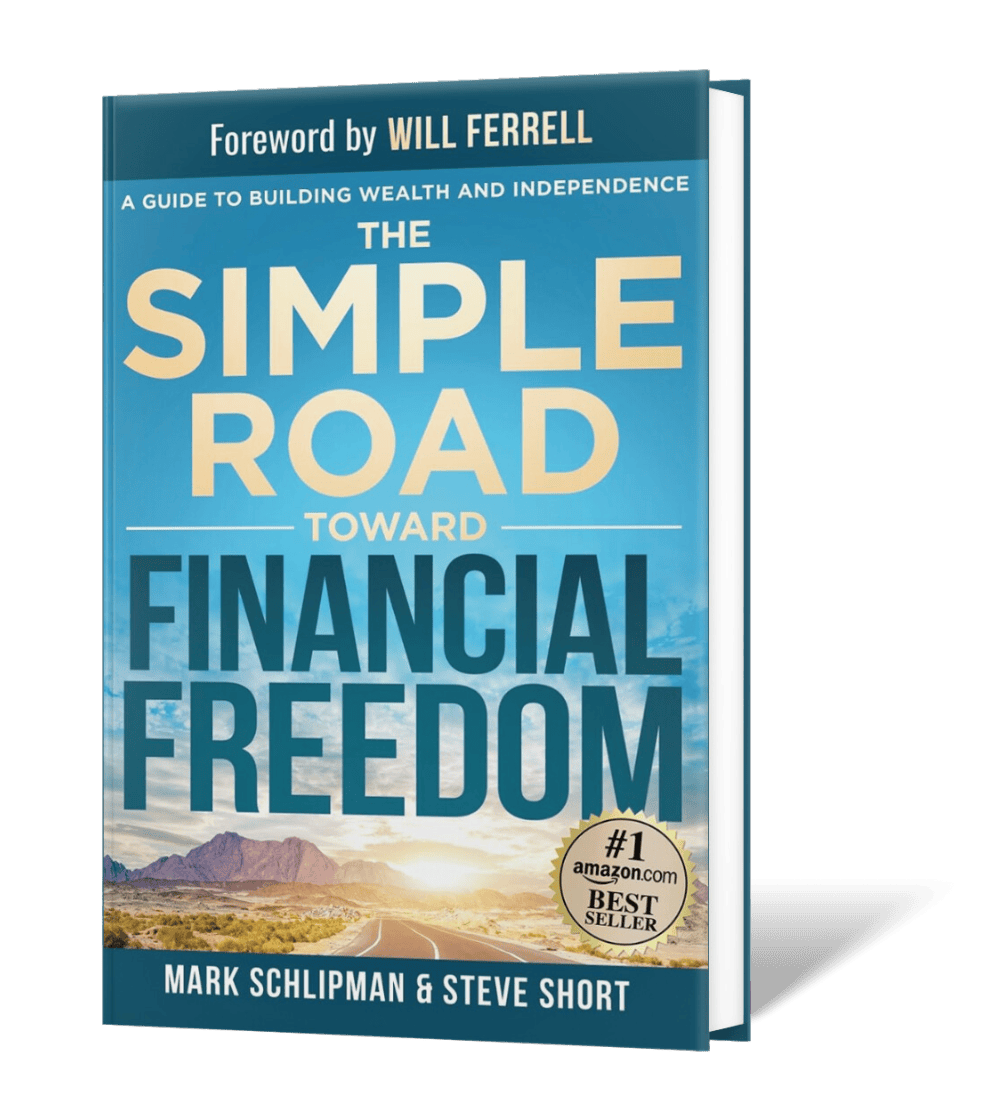
Guests: Steve Short & Mark Schlipman, co-authors of The Simple Road toward Financial Freedom
🔥 Episode Overview
Are you ready to discover how life insurance could be the foundation that protects everything you’ve worked to build? In this compelling follow-up episode, Dwight reconnects with Steve Short and Mark Schlipman to explore the critical gaps left uncovered in their first conversation.
This episode reveals why most people approach protection planning backwards—and how one simple shift in perspective can safeguard your family’s financial future. Steve and Mark also share their unique connection to Will Ferrell, who wrote the foreword for their bestselling book, underscoring how even celebrities recognize the importance of teaching financial literacy to the next generation.
💬 Key Takeaways
- Why you can’t save yourself rich and the dangerous myth keeping people trapped in mediocrity
- The emotional reality of delivering death claims and how it changes your perspective forever
- How to have age-appropriate conversations about life insurance with young adults
- The shocking statistics about funeral costs most families are unprepared for
🔄 Breaking the “Penny Saved” Myth
- Why extreme savers often live unfulfilled lives while missing meaningful experiences
- How to balance saving for the future with living fully in the present
- The difference between being comfortable in retirement versus building true wealth
- Real strategies for creating legacy while still enjoying your journey
🌱 The Foundation of Financial Security
- Why protection planning should come before investment planning
- How a $25,000 child policy prevented a family financial crisis during their darkest hour
- The conversation Dwight had with his 18-year-old son that changed his perspective on insurance
- Why your ability to earn income is your largest financial asset—and how to protect it
- The medical insurability advantage most parents overlook
🛠️ Real Stories from the Trenches
- The funeral director who spent 40 years helping grieving families but wasn’t prepared for his own loss
- How a simple child rider converted into $150,000 of coverage for a young man with major health issues
- Why even successful people struggle with the emotional side of financial planning
- The importance of removing yourself from survival mode to make clear-headed decisions
🎯 Final Message
This conversation goes beyond numbers and spreadsheets to address the human side of financial planning. Relationships, values, and emotional intelligence play crucial roles in building lasting financial security.
Whether you’re a young adult just starting out, a parent wanting to protect your family, or someone reconsidering your approach to money management, this episode provides practical wisdom that could reshape your entire financial strategy.
Don’t let your family become another statistic in financial unpreparedness. The protection you put in place today could be the difference between grieving with dignity or facing a financial crisis during your most vulnerable moments.
⏳ Complete Chapter Summaries (SEO‑Optimized)
00:00:02 — Welcome Back: Financial Freedom Authors Return
Dwight reconnects with Steve Short and Mark Schlipman, co-authors of The Simple Road Toward Financial Freedom. They revisit their mission and discuss ongoing collaboration in financial education.
00:04:07 — Building Trust Through Empathy in Financial Planning
Dwight explains his relationship-first approach to clients, emphasizing empathy, body language, and care before diving into numbers.
00:08:27 — Family Legacy and Small-Town Business Values
Exploring Dwight’s father’s legacy as Canada’s largest farm equipment dealer, built on relationships and values of faith, family, and work.
00:15:27 — Living Life on Purpose: Intentional Success Strategies
Dwight shares how daily gratitude and perspective help him avoid “bad days” and stay aligned with core values.
00:23:11 — Will Ferrell Connection: Celebrity Support for Financial Literacy
Steve reveals his college friendship with Will Ferrell and how the comedian’s serious side supports financial education and charity.
00:29:16 — Cancer for College: Scholarships for Survivors
Discussion of Craig Pollard’s charity, providing $1M annually in scholarships to cancer survivors and amputees.
00:32:05 — Debunking Money Myths: Beyond Just Saving
Dwight challenges the “penny saved” mentality, showing why saving alone won’t create wealth and advocating balanced living.
00:35:22 — Life Insurance: The Cornerstone of Financial Planning
Mark and Dwight highlight life insurance as the foundation of financial security, sharing real stories of death claims and insurability.
00:43:08 — Visualization and Goal Setting for Financial Freedom
Mark encourages visualization, future-focused planning, and gratitude as essential tools for building wealth and confidence.
📬 Connect with Steve Short & Mark Schlipman
- 🌐 Website: simpleroadbook.com
- 📘 Facebook: Simple Road Book
- 📸 Instagram: @simpleroadbook
- 💼 LinkedIn: Simple Road Book
- 📺 YouTube: Simple Road Book Channel
- 🎵 TikTok: @simple_road_book
🔗 Connect with Dwight Heck
- 🌐 Website: giveaheck.com
- 📘 Facebook (Personal): Dwight Heck
- 📺 YouTube: Give A Heck Channel
- 📸 Instagram: @give.a.heck
- 🧵 Threads: @give.a.heck
- 🐦 X / Twitter: @give_a_heck
- 💼 LinkedIn: Dwight Heck
- 🎵 TikTok: @giveaheck
Apple Podcast:
Spotify Podcast:
YouTube Podcast:
Unedited Transcript:
[00:00:02 – 00:03:00]
Welcome back to the Give a Heck podcast where we encourage you to live a life on purpose and not by accident. I’m your host, Dwight Heck. Today’s guests are second appearance at the Give a Heck podcast and I’m so honored that they’re giving me more time. And the reason I say that is we had such a fantastic conversation the first go around. It was like we had known each other forever. It was like they were picking thoughts out of my brain. It was just, it was absolutely amazing how concise and how realistic their thoughts and processes are to what mine are. And I’m thinking, wow, you know, we live in two different countries, but we think at the same level of helping and serving others. And that’s what our whole lives have been. Is there different congruences and different, you know, abnormalities? Absolutely. But overall, these gentlemen are amazing. So if you haven’t listened to the first episode, please dial it back to listen to Steve and Mark and myself discuss their Simple Road Toward Financial Freedom book and so many other great things that we talked about. I will read a little bit of a bio about both gentlemen for those that are just listening now and want to listen to this episode first and we’ll go on from there. It’s going to be a very short episode just to fill in some gaps that I believe we missed in the first episode. But honestly, Mark and Steve, maybe you disagree, but I think we could probably have a series of episodes and. And never run out of content to talk about. Absolutely. So yeah, so I’m going to read this little bio. Today’s guests are Steve Shark and Mark Slippman, who co authors of the number one Amazon bestseller the Simple Road toward Financial Freedom with a Forward by Will Ferrell. Steve is a retired business executive who spent nearly 30 years leading billion dollar divisions. And Mark is a financial advisor with over two decades of experience helping clients build wealth. Together, they’ve made it their mission to help the next generation avoid the financial mistakes they’ve seen and made by simplifying money management into approachable jargon free lessons. Their passion project was born out of frustration that their own kids, like so many others, were entering adulthood with little financial literacy beyond the book they give back by supporting Cancer for College, a non profit providing scholarships to cancer survivors. Their message is clear. Financial freedom is possible and and it starts with simple, consistent steps. Welcome back, Steve and Mark. Thanks so much for agreeing to give me a little bit more of your time so we can dive more in depth into your book and whatever else comes up in our Great conversations, Dwight.
[00:03:00 – 00:03:03]
Good to be back. I appreciate it very much.
[00:03:04 – 00:03:08]
We gave such a heck that we’re back again.
[00:03:08 – 00:03:11]
Right on. It’s like a boomerang effect day.
[00:03:11 – 00:03:11]
It is.
[00:03:12 – 00:03:17]
That’s what I am. You’re coming back for more. More. More pleasure torture? Bit of both.
[00:03:17 – 00:03:32]
No more. I was just, I was mentioning, or before we started recording, it just seemed like the first podcast we were so in alignment in terms of like the things that we were saying, the thought thoughts that we had that it was great, great conversation. So excited to be back.
[00:03:33 – 00:03:35]
Doesn’t life better when we have great conversations?
[00:03:36 – 00:03:37]
Yeah, yeah.
[00:03:37 – 00:03:42]
You can have constructive, good conversations and they’re meaningful, not meaningless.
[00:03:43 – 00:04:07]
You know, the one thing I was going to ask you, Dwight, that I didn’t get a chance to last time was sure. You know, obviously we deal with successful people and we deal with people that have financial struggles. So when somebody comes to you with just overwhelmed with finances or struggling with finances, what are two or three things that you immediately gravitate towards in trying to walk them through the process?
[00:04:08 – 00:06:46]
Well, depends what part of the process you’re talking about. And now if it’s information gathering and it’s goal setting, it’s budgeting, if I see that they’re mentally between their six inches, between their ears are struggling, it goes back to. I think what we talked about is the origin. I just sit down sometimes. It can even. I’ve had people break down and I’ll just, you know, you gotta gauge it though. Sometimes people, you can’t touch them, but sometimes you can put your arm around them if it’s face to face or if it’s on a virtual call, which has become more and more prevalent within my practice because it collapses timeframes for the client and myself. I just, I really make sure I watch my physical, my body language, my tonality and make sure. And I’ve practiced with my empathy. And why do I say that? Because I realized, you know, over the years that I’m an empath. And that was because of a lady I had on twice now that’s an empath coach. And she, she’s taught me things that help me pull out that information from people. Because at the end of the day, those listening or watching people don’t care what you know until they know that you care. When people know you care. Now, that information gathering, those steps you talk about, Mark, are easier to get from them. Right? It’s easier for them to share and be vulnerable because maybe they’ve been dejected by somebody. Maybe somebody’s Tried to help them. Maybe a family friend or somebody’s made fun of them. I don’t know if you’ve experienced that yourself, Mark, or even Steve yourself. Like people, they’re so tired of number crunching and being promised the moon, but no substance to that relationship or the data that we’re sharing with them, right? Just feel like a number, another number. And I want people to know that I care about them, right? That I give a heck. And it may sound corny, but that’s. That’s the way my dad raised me in. With his farm equipment dealership in a small community at the time of 12,000 people. Every farmer that came in was number one, front and center in front of him. That conversation was always. They were the most important person, not the other person walking around. Or people would interrupt him. He’d go, just hold off for a second. He was very polite about it. This person’s who I’m dealing with right now. Unless it’s a 911 situation. Relationships matter. And I could never understood that until I got older, you guys. Until I got older and looked back at my dad’s life and realized, man, he was the biggest dealership in Canada for many years and the biggest in western Canada. He’d have people coming from hours away to deal with him.
[00:06:47 – 00:06:47]
Wow.
[00:06:48 – 00:07:00]
Relationships. It had nothing to do with the fact he had the best prices or the worst prices or the. He was just friendly, right? One of 18 kids. Can you imagine? Can you imagine?
[00:07:02 – 00:07:04]
Where do you fall in line of the 18?
[00:07:05 – 00:07:11]
He was boat number. I think he’s number 10. I can’t remember now. I think it was number 10 that.
[00:07:11 – 00:07:13]
Was close to the middle of the close.
[00:07:13 – 00:08:10]
Close to the middle. And. And out of those 18 kids, there’s still 10 surviving. So, you know, the oldest is in. Is the oldest out of all of them. Passed away a few years ago. My Uncle Frank. But, you know, when I talk to them, they’re all cantankerous. They got that old, you know, that way of thinking and adage. But they taught me. And when I look back at my core values that I really filter my business and personal life through it. I’m the same person outside the door as I am right here. Faith, family and work. They lived it. Their faith. They lived. Their family and work was always important. But you get together with family, man, like, oh, my gosh, they’d all fall on a sword for you. And they still will today. Even the ones that I really don’t talk to a lot because I have 60 some first cousins. Just on that side of the family. My mom was one of nine and I have over 40 some cousins on that side. How do you stay in touch with people? The ones that want to be in a relationship with you still today?
[00:08:11 – 00:08:11]
True.
[00:08:12 – 00:08:26]
Long blown out answer, Mark. Sorry. I get pretty passionate about relationships and, and being connected with people and understanding their origin. And that’s how it’s made me, I believe, a great financial educator and planner.
[00:08:27 – 00:08:38]
That’s. As somebody that knows car, the car business fairly well being number one dealer especially because. Weren’t you saying it was kind of in between Calgary and Edmonton?
[00:08:40 – 00:08:47]
Cameros. Yeah, it’s. It’s about it. It’s about an hour and a bit outside of Edmonton. So to Calgary it’s about two hours. It’s not quite halfway.
[00:08:47 – 00:08:50]
Okay. Is it smaller than both of those cities, Right?
[00:08:50 – 00:09:00]
Oh yeah. Well, Calgary is 1.7 million metro over 1.5 million metro cameras now. Latest was 18,000 because it’s a farm.
[00:09:00 – 00:09:02]
And it was the number one dealer.
[00:09:02 – 00:09:37]
Yeah. Oh my dad. Oh yeah, yeah. But when I was, when I was growing up, it was about. It had just gone over 10,000 and we became a city. In our country, in order to become a limited or incorporated metropolitan city, you have to be over 10,000 people. We applied. They have their own police force there. Even at 18,000 people. Cambro’s police department. Right. I’m serious. And you know, such a small community. When I left in the 80s, there still wasn’t a Walmart. Now there’s everything there because the rural community around there is roughly around 200,000 people they support.
[00:09:37 – 00:09:39]
Oh, okay. I gotcha.
[00:09:39 – 00:10:23]
Right. That we’re talking out. Yeah, we’re talking about out to a couple hours away though, so they’re the closest Walmart. You got a staples there. You got everything you need. Beautiful little community. When I grew up though, where the, the mall is now, we used to go out and snare gophers and ride our bikes, you know, and stuff like that. So awesome. Right. But that’s where I grew up and, and it was just always about relationships. And it’s sad though. It took me till my adulthood, my in my 30s to realize after I’m reading all these books like where did you get all your knowledge from? People would say, or where, where did you. Where did your origin start? It always went back to my dad. 12 years of age. You’re coming to work. No, you don’t get the summers off. You need to help, right? I give you love.
[00:10:23 – 00:10:24]
Help.
[00:10:24 – 00:10:28]
I give you love, shelter and food. The rest Is up to you. Yeah.
[00:10:28 – 00:10:49]
You’re on your own. Yeah. I was just at, at Enterprise. We same thing, very focused on customer service and greeting the customer. We train our employees all the time. You know, if the phone rings that came and it was in front of you and always, you know, the face to face relationships were always so critical. But the real question I have, Dwight, is there a Tim Hortons there?
[00:10:52 – 00:10:55]
National treasure that’s been bought and sold so many times.
[00:10:55 – 00:10:59]
I know. Like it’s coming here to Kansas City actually.
[00:10:59 – 00:11:00]
Yeah.
[00:11:00 – 00:11:01]
They’ve been in New York state for.
[00:11:02 – 00:11:02]
Yeah.
[00:11:02 – 00:11:03]
30 something.
[00:11:03 – 00:11:09]
Yeah. Buffalo and kind of the, the bordering states more. They were in St. Louis for, for a little bit. But.
[00:11:09 – 00:11:26]
But no. Tim Horton was a hockey player. Right. And until hockey player and he started it. He was, he was smart, but yeah, he was dumb. Right. It was his partnerships that helped him get it going. But it’s been sold. Burger King owned it for a while. Who else owned it? And like I don’t, I thought they.
[00:11:26 – 00:11:28]
Do they not own it anymore? Okay.
[00:11:28 – 00:11:52]
No, it’s back to a Canadian company owning it again. And then, but then they moved their offices to the US and now everybody’s saying, well you’re not Canadian anymore. I don’t care. I don’t, I don’t go and get a Tim Hortons double. Double. To be honest, I’m a Starbucks fan. Sorry for all you Tim Horton fans that are snarling. Yeah, I like Starbucks. So there you go.
[00:11:52 – 00:11:53]
That’s funny.
[00:11:53 – 00:11:54]
So.
[00:11:54 – 00:11:56]
And we didn’t ask your hockey team and then we can get back to true business.
[00:11:57 – 00:12:11]
Edmonton Oilers. What about him? We were the greatest hockey player of all time. Played for our team. The current world Considered number one player in the league is Connor McDavid. He’s on our team. Leon Dry Settle. So yes, I’m a season ticket holder, so.
[00:12:11 – 00:12:28]
Oh, are you really? I saw. I went with my daughter. We ended up right before she went away to university. We ended up to a blue. We were living in St. Louis at the time. So we saw the Blues. The Blues and the Oilers play gas price five years ago now. But Tim McDavid in person was a treat.
[00:12:28 – 00:12:40]
Yeah. St. Louis is their rank. I stayed at their hotel that overlooks their rink. I never got a chance to go to a game there. But yeah, I’ve been to a few conferences in St. Louis and they’re very passionate about their hockey.
[00:12:40 – 00:12:41]
It’s a good hockey town.
[00:12:41 – 00:12:41]
Yeah.
[00:12:41 – 00:12:43]
Surprising. Yeah.
[00:12:43 – 00:12:59]
You know, at the end of the day when the game’s over, animosity should subside it’s a sport, it’s a business. Right. It’s relationships. And yeah, I love the question you guys are asking. No, Gretzky moved to la. He’s.
[00:12:59 – 00:13:00]
Oh, that’s right. With his wife.
[00:13:00 – 00:14:20]
Yeah, yeah, he’s been there with Janice and they have a bunch of kids and no, he hasn’t lived here forever. He was part of our team. We had him in operations for five years. But when the pandemic hit and in his contract in 2021, he didn’t renew because it was becoming too difficult to come over the come back and forth. But yeah, he’s, he’s still associated with our team in regards to the influence and stuff. I don’t necessarily enjoy his politics side. I still appreciate him as a sports person. He’s. He was amazing. The only person that’s ever beaten one of his major records is Ovechkin, which went over his goal total here last last season. But he’s also played more games too. So six of one, half dozen of another. We’re a generational city. We’re a hockey town. You want to come to a hockey game and have your doors blown off? You’re like your socks blowing off. Come to Edmonton. We’re considered one of the top places to come and watch a hockey game. We have a world renowned rink that we built back in and opened in 2016. Blow your doors. Right. If either of you guys ever want to come up, I promise you I’ll give you a place to stay and I’ll take you to a hockey game.
[00:14:20 – 00:14:20]
Okay?
[00:14:22 – 00:15:03]
I’m serious. No cost. I’ve. I’ve offered it to so many people and, and my, my publisher who lives in Pittsburgh, huge Pittsburgh fan, huge Crosby Hunter, huge Mario Mew. We started talking. He’s in his 30s. Well now he’s just turned 40 something. And I told him, I said, oh, I’m glad you love Canadians. What are you talking about? I said, Sidney Crosby is a Canadian, right? He’s from Nova Scotia. Oh, do you know who Nate McKinnon is from Colorado? Canadian. Over 60% of the league is Canadian. What are you talking about? Marlo Mew. Way better than Gretzky. Perfect Canadian. No, he wasn’t.
[00:15:05 – 00:15:08]
We’re going to get you at the Olympics. So Dwight, just wait.
[00:15:08 – 00:15:09]
Good luck.
[00:15:11 – 00:15:27]
So, not to digress, Dwight, but you referenced, you know, getting off the hamster wheel, living life on purpose outside of what the feel good about living life on purpose, with purpose. Do you measure it in some way how you’re doing?
[00:15:27 – 00:17:14]
How I’m doing? Personally, yeah, yeah. I do measure how I’m doing personally in regards to living on that hamster wheel. And it’s called appreciation. Every single day. I have gratefulness and gratitude from the. When I get up, when I got up today and I had to get up early today, took my son to the airport, he had to fly up northern Alberta. He works in the. He works with a company that does downhole drilling and stuff. So I was up and driving him on the roads at 4:30am and how do I gauge? Am I living on purpose? Am I living intently as my core values again, it always goes back to faith, family and work and, and if I get caught in something and, and I’m kind of struggling, I always say, what am I aware of? What, what happened when I woke up? Oh, maybe I forgot to have gratefulness. Maybe I woke up a couple minutes late and I forgot to be grateful. I woke up, got to be grateful that I have so much that so many other people can’t have. And then I’m grateful starting my day that I get to do this. I get to have my client call. So it’s always dialing it into am I literally being aware of where I’m at in my life or am I just aware of what society’s telling me I should be aware of or that I should be stuck in? So I always gauge it on how am I feeling and if I’m feeling having that character building moment, what am I doing about it? Am I analyzing it? If I can, I will shut everything down and I will go time myself out. And it may sound shocking. I’ve been on so many podcasts where I’m interviewed and they say, well, teach us some things because I have a lifestyle coaching business that developed out of my finance business. Everything I do with my clients became part of another part of my business because it’s worked. It’s a school of hard knocks. Right. So a little bit longer answer than you need.
[00:17:14 – 00:17:15]
No, I love it.
[00:17:15 – 00:17:17]
Is this your guys’s podcast?
[00:17:19 – 00:17:21]
Thanks for coming on, Dwight.
[00:17:21 – 00:18:28]
We appreciate ties in. You know, you’re. I didn’t. This is the first time we’ve been on a podcast where honestly the two books could come together. Your book and our book. And like I said, yeah, yeah, very much so. And it’s almost like it’s seamless and I, we really appreciate it. But the dialogue and the commonality. But yeah, helping other people and that’s the whole thing. Like when I first met Steve, we talked about last time. Normally I’d be prospecting Him, I mean, look at him. I mean, he’s a nice guy and seems to be well groomed and successful and. But he knew so much information that me being like, you know what, you should probably fire your financial advisor. Not everyone needs a financial advisor later in life and some people definitely don’t need a financial advisor when they’re getting started and. But there’s so many young people, Dwight, as you know, that need the tools to get started and they don’t have the confidence to ask the questions because they feel like they’re possibly going to ask a stupid question, which we know there’s not a stupid question, but that’s really the design of the book is to help compliment what people are already doing and. Or get them started.
[00:18:28 – 00:20:30]
Yeah, exactly. And that’s why I suggested, you know, I was reading through the transcript summaries and we talked about the fact of, you know, our books would tie beautifully to back together and I think, you know, honestly, we may not have mentioned in the last recording, but there could be some great collaborations between us three, you know, like, you know, just throwing it out there, a mastermind or, or open calls where we do it live, where we have people come on from both the US and Canada and ask questions and we can, we can create so much more hopefully hope and belief in people than we realize or want to give ourselves credit for. And it’s simply like you said, Mark, asking good questions. Right? Ask questions and you know, at first those listening are watching. When I first started asking these questions to my clients in year one, year two, it got easier. The difference is, is be willing to listen to what the people are saying then if you’re going to ask the question and if it makes you feel uncomfortable, it’s not necessarily personal to you. You gotta, you gotta remove yourself from that circumstance. And if you see body language change, don’t be afraid to say, hey, Mark. Hey, Steve. Did I say something wrong? Yeah, oh no, you triggered this. Or oh yeah, you know, you said this and oh, I’m. That was not my intent. I’m trying to get better at being a wordsmith. I’m honest with people, not to say stuff. Cause you can say something one way and people take it a different way. So I always work on communication. Right. Am I perfect at it? Absolutely not. How do I get better? How do I gauge myself? It’s back to that awareness piece that you talked about, Mark. I’m super aware. And twice a day, minimum, when I go to bed, when I get up, and then throughout the day sometimes, if I have those character building moments. That’s why I never, ever have a bad day. I’m going on to my eighth year of not having a bad day because I work at it. Because people deserve the best of me and I deserve the best of me.
[00:20:31 – 00:20:33]
Yeah. So basically you’re choosing not to have a bad day.
[00:20:33 – 00:20:34]
You got it?
[00:20:34 – 00:20:35]
Yep.
[00:20:35 – 00:20:36]
It’s a choice. Yep.
[00:20:37 – 00:20:48]
But it is a choice. People say that’s impossible. You cannot. Sorry, gentlemen. One of my grandkids was trying to FaceTime me. I’ll go.
[00:20:48 – 00:20:49]
Go for it.
[00:20:49 – 00:20:49]
No way.
[00:20:49 – 00:20:51]
Bring him on. Yeah.
[00:20:51 – 00:20:56]
Oh, you love him. His name’s Memphis. How old? He’s three. He’s my youngest.
[00:20:56 – 00:20:56]
Never too young.
[00:20:57 – 00:21:10]
Yeah, he just turned three. And anyway, I could go on, on about my family. He faced time. He’ll. He’ll all of a sudden get really upset at his mom or he’ll pick up a book I bought him or a toy and he’s gonna talk to papa. He’s gonna talk. Right.
[00:21:11 – 00:21:14]
Is there a significance with the name Memphis? Is there?
[00:21:14 – 00:21:41]
I don’t know. I never asked my daughter. When she said, dad, we’re gonna name, if it’s a girl, this. We’re going to name it, you know, and then they found out the sex was going to be. And they, they wouldn’t tell me. We’re not going to tell you till the baby’s born. We know that the sex is going to be Okay. I love it. I think Memphis is a great name. You know what it could be though? I’d have to ask his dad. His dad is a huge country music fan, so be surprised if that’s why Memphis is the name. Right. So.
[00:21:41 – 00:21:44]
But yeah, maybe it’s yes.
[00:21:44 – 00:21:45]
I don’t. I don’t know.
[00:21:45 – 00:21:47]
Or they vacationed there three and a half years ago. Yeah.
[00:21:47 – 00:22:25]
Oh, my gosh. My memory. We could go on and on. The memories, the memories I’ve. I have with my grandma. The woman that had the 18 kids. We used to go to their house and in Provost, which is along a Scotchman Alberta border, and we go into their house and she’d pop in an A track and you know, this woman would. Would go and start dancing with her grandkids and stuff and she’d put on Albus and I became a huge Elvis fan. Eight tracks for those listening are like a real big version of a cassette tape. And if you don’t know what a cassette tape is, I’m not gonna bother.
[00:22:25 – 00:22:26]
Google both of them.
[00:22:28 – 00:23:11]
But yeah, so it is what it is. We could have again a lot of collaboration. But we’re running out of time. I want to dive into because I never give it enough. I never give it enough perspective. Not because I didn’t want to. We just ran out of time. Your connection to Will Pharrell and the book and, and, you know, putting the forward in and just the relationship you guys have developed with him, I never, ever, ever thought, well, Pharrell would be somebody that would be connected that way. So I want the listeners and viewers to understand that and as well, I’d like to understand more. So whoever wants to start, whoever wants to share, please tell me the connection and the origin of Will Ferrell with the book.
[00:23:11 – 00:23:16]
Well, I know somebody who knows Will Ferrell and he’s my co author, Steve.
[00:23:18 – 00:23:20]
Steve, you’re the connector.
[00:23:20 – 00:25:11]
I am the connector, yeah. He and I go back to our college days. So we went to school together and have remained friends to this day. And so he’s been told him we were thinking about doing a book. It’s a. It’s. Everybody knows Will as a. As a actor and the different shows and things like that, but, you know, he’s a father. He’s got three boys and so it’s something that he’s talked to them about personal finance. And I started talking to him about some of the topics in the book and delayed gratification and how the kids aren’t learning any of this stuff in school. And he’s like, I’m on board. And I said, do you mind writing the forward? And he was. He was happy to. To assist with that. And actually our audiobook, he read the forward. His forward. He read. Which is going to be great, but yeah, big. It was obviously very helpful for us in terms of the name recognition that he brings to it. We’re also both heavily involved with cancer for college. Have been for a long period of time. Started by another friend of ours from college who is a three time cancer survivor, double amputee. Part of our proceeds we may have mentioned yesterday, but for those that didn’t listen or two days whenever it was that part of our proceeds go to cancer for college as well. And so it’s a passion area for me. Mark’s been very gracious with the charity as well, but. And Will’s super involved as well. It’s his main charity. So that’s a little background on how he got involved. But as we like to say, you know, the finance doesn’t need to be so serious. And having Will, you know, bring his angle to it sort of just makes it a little less Serious. You can have fun with it as well. Maybe you read is. Is typical Will.
[00:25:12 – 00:25:35]
He. You humanizes Will for all. Because we see him in TV or on, you know, on shows, movies or whatever, and he’s a card. Right. He’s comical and. And. And I really wanted to hear that. So I appreciate it and the ability for you to stay connected with him in school. Amazing. That says volumes for you and volume for him that relationships are important.
[00:25:36 – 00:25:58]
Absolutely. Yeah. It’s. We were. We were a group of us that are pretty tight and just have remained tight over the years, and we get that question, you know, has he changed a lot? He really hasn’t changed since, you know, I don’t know how many years ago I had to age myself, but a lot of years ago, a few decades ago, I guess people can look up how old he is.
[00:25:58 – 00:25:59]
Yeah.
[00:25:59 – 00:26:00]
In the same ballpark.
[00:26:00 – 00:26:03]
That’s okay. You’re not old. You’re seasoned.
[00:26:03 – 00:26:04]
That’s right.
[00:26:04 – 00:26:06]
Yeah, you’re seasoned.
[00:26:06 – 00:26:08]
Slightly more seasoned than Mark.
[00:26:09 – 00:26:12]
Slightly more seasoned than me, maybe.
[00:26:12 – 00:26:13]
I don’t know.
[00:26:13 – 00:26:15]
You know what? At the end of the day, less salt.
[00:26:18 – 00:26:19]
Are you too old to have salt?
[00:26:19 – 00:26:22]
Are you more. A little spirit. Spicy. Are you into spicy?
[00:26:22 – 00:26:26]
Spicy. And less pepper. Steve’s got more pepper than I have, so.
[00:26:26 – 00:26:32]
See. Yeah, I get. And both. And both you have more hair than me, so.
[00:26:32 – 00:26:35]
That we know. Yeah, that we know of.
[00:26:35 – 00:26:40]
Oh, yeah. Yeah. I won’t take my shirt off. I won’t. Skinny.
[00:26:40 – 00:26:41]
Yeah, that’s. This is getting spicy.
[00:26:43 – 00:29:15]
But, you know, you guys, this is. Oh, man, we could go on and on and on. We should have weekly coffee appointments. It’s, you know, so. I appreciate you sharing that. And Mark, obviously, you know, you’re grateful. Grace, you’re gracious and your gratefulness and wanting to support that charity as well. I do what I can up here. I. Unfortunately, in North America, the stats will blow people’s minds. How many people die? The number one. Number one cause of death. And the reason being is I also. I don’t do just finance. I’m also licensed and I do life insurance. Right. I do a lot. I do corporate. I do private. And. And I go to these underwriting. I haven’t been to one in a little while here. But you go and you see the underwriting of what’s going on in our world, and it. It is really sad. The only thing is, though, is this could be a total different podcast. I don’t believe that there is not a cure. I believe that has become so, so prevalent for money in business. You look at a company like Pfizer for an example, 45 years, they’ve never created a cure, but they sure created a lot of shots and pills. And I’m not against vaccines, I’m not anti vax, I’m not anti medication. But if you can create all these things to help or put a band aid on health, why can’t you create a cure? I, I, like, I’m not a conspiracy theorist. I just, I know a lot of people in the medical profession, including scientists. I honestly believe that what you’re doing is very honorable. I, I support and do things here too. But come on, something has to change. But again, we can have another podcast about, about the fact of a support and you know, if you’re not giving back, why aren’t you? Yeah, you know, like people like donate blood for an example. You know, in our country we don’t get paid like you. I know in the States they pay people to donate blood. In Canada it’s voluntary. Right. And I watch when I’ve donated blood and I watch bus school busloads of people coming during their lunches in their company, giving them two hour lunch break so that they can still eat but don’t eat blood. Right. And they’re all volunteering to do it. Why? Because what happens if you’re the person that needs that blood and if you know lots about cancer survivors, you know how much blood they go through, platelets, the list goes on. It’s unbelievable. So congratulations to both of you for doing that.
[00:29:16 – 00:30:09]
It’s a great charity. It’s my buddy that started it. Craig Pollard was in, he was able to, he got cancer in high school, then again in college. And he made a promise with God that he was going to give back. He, his parents had insurance, he was able to go back to college because of the insurance that they had. And he had people that he met in, in treatment that unfortunately weren’t surviving or weren’t able to go back to college. And so it, the charity provides if did apologize if I mentioned this earlier, need based college scholarships to cancer survivors and amputees. So it’s, it’s just, it’s amazing. 2,000 people, more than 2,000 have been helped give about a million dollars a year in scholarships to these kids. And they’re just amazing individuals that have been through so much that I know we’re kind of discussing that.
[00:30:10 – 00:31:12]
Well, it’s too bad we didn’t have more time. I’ve got a story that you’d love that a guest of mine that was on and he passed away in the last couple months. He actually helped Tony Robbins create all his firewalk and his glass walk. He created that whole division of his company. And, you know, there’s so much. So much different things that cancer. You know, even one of my best friends died back in 2016. Five and a half months he was gone. Depending on what type of cancer it is. And we. We need to. The reason I bring this up is when we tie our lives to one another, we think, oh, I’ll see Steve or Mark next week, next month. You don’t know that. So make sure you value every communication, every conversation, like it’s the last one. And it’s not to be doom and gloomy. It’s so that you’re present in that relationship, in that conversation. So, you know that gentleman that started that organization, you’re talking about Steve, man. He sounds like somebody I want on my podcast. It’s probably have a great conversation with him. So we might be a great.
[00:31:12 – 00:31:16]
He’s actually got a book coming out next year. We should talk about that offline.
[00:31:16 – 00:31:43]
Yeah. Would you. Would you please tie me to him? Obviously you. Your time. Our times run out for you. You needed to be off here. Is there anything last that you guys would like to offer up before we shut the episode down? Like, I could go on. I. I left my rest of my afternoon over, but I don’t want to disrespect either of your times. Is there anything you’d like to both add. And again, we can be on again in the future, too?
[00:31:43 – 00:32:04]
Yeah. I’ve always. I’ve been wanting to ask you, has there been a myth about money that you had to debunk from your own thoughts to break through? Like something that you’ve been. Has been ingrained in you that you realize that’s just not true? Well, you’ve seen the commonality.
[00:32:05 – 00:34:11]
The first myth that I can think of is something that I think that most people in North America, and I’ve heard it from many Europeans as well as people in Australia and other people, is, you know, a penny saved is a penny earned. You cannot save yourself rich. And what do I mean by that? Because we both talk about you got to save and then spend on the difference. There’s people that live such terrible lives. They want to have that asset for their. Their loved ones, that they live a terrible life because they’re saving everything, but they’re never realizing that you can still save and live right. You can have goals, you can save. You can still have that vacation. You can still have that, maybe that cabin, maybe you can have that nicer vehicle. Right. The adage that because I grew up with that, my dad would always say, you know, save, save, save. You know, you can save, but you can’t just save yourself rich. If you’re at a job and you’re just saving money, you’re not going to be wealthy. You might be comfortable in retirement, but if you want to be rich, you need to come up with, you know, you have to pull your bootstraps up, you need to figure out what is your passion and then have somebody like me or maybe Mark or Steve that sits down. And I have these tough conversations. I’ve had people, not startup businesses, because when they’re done with me, right. Better to stay at a job because nobody’s ever challenged them. And they, and they, when there’s people that say, oh, if I save, save, save, and I reach people. I sat with people here recently in their 70s. They hardly had anything in their whole life. They never did anything. They didn’t have any real journeys, they didn’t have any real experiences because they were wanting to save for their family, to leave something to them that was what they thought legacy was. Nobody challenged them that you can’t save yourself into wealth for your children even. You need to live for your life now. Maybe somebody can help you plan so you can save some. So, oh, maybe you need to look at some permanent insurance. There’s your estate plan, maybe there, that’s your legacy and you can still. And then you can spend all your money into your death. Right. So I don’t know if that’s too much of an answer or not.
[00:34:12 – 00:34:26]
I tell you what, Dwight, the one thing that we both share together, I’m sure is life insurance makes you a believer. I know what it did for me when I was 23 years old and I delivered my first death claim. Oh, that was pretty impactful.
[00:34:26 – 00:35:06]
It wakes you up. And then being with the grieving family, if you have that relationship, they want you to be part of their grieving and, and it, and it can be washed over you and it’s overwhelming. But the gratefulness that I felt every time somebody’s had to, you know, tap into that, unfortunately, even if it’s critical, illness or long term disability, whatever, I feel gratefulness and gladness because I put myself out there and I give them credit, they put themselves out there and we’ve done something now that that generation can grieve without financial distress.
[00:35:06 – 00:35:22]
Yeah. And that’s definitely a big chapter in our book is, yeah, protecting Yourself life insurance, we look at disability, what the appropriate amounts could possibly be for your own situation. It’s a, it’s a foundation. It’s a complete foundation. It’s amazing that it’s the number one.
[00:35:22 – 00:35:25]
Foundation of financial planning. Number one.
[00:35:25 – 00:35:37]
Most of us, most of us would not leave our house if it wasn’t insured. But you know, some, for most young people, their biggest financial asset is their ability to earn income as you know. Yeah, that’s gone when they’re not in the picture.
[00:35:38 – 00:35:43]
I was just, I apologize, I do have to run. But you guys keep going. There’s great conversation.
[00:35:43 – 00:35:45]
We’ll talk for a few more minutes.
[00:35:45 – 00:36:11]
And the only thing I was going to say for folks that maybe didn’t get a chance to hear it in the last podcast is if they want more information. Simpleroadbook.com is our website. It has videos on there, it has a link to buy book. You can also get it at Amazon or Barnes and you know your favorite retailer, Walmart, what have you. But YouTube as well, right?
[00:36:11 – 00:36:11]
You have a YouTube channel.
[00:36:11 – 00:36:51]
It goes. Yeah, we have, we have a YouTube channel, Facebook, Instagram and LinkedIn. So we’d love to have people follow us. Mark and I post once a week usually and it’s some financial tip that’s super bite sized. And so we’re getting more and more people, especially in today’s era that are like, I just want information really quickly. And so it’s usually like a 60 second video. So we’d love to have people follow us if they’ve got ideas on how to spread this message that we’re trying to get to help. We’d love to have, you know, as many people as possible kind of, you know, jump on our, on our team here. But thanks again for having us on and I will do that introduction and I’m sure we’ll be in touch soon.
[00:36:52 – 00:36:56]
Yvette, you take care. And Mark, if you want to stay on for a few minutes, we’ll talk a little bit longer.
[00:36:56 – 00:38:05]
Let’s wrap up for a couple minutes and absolutely thanks, Steve, but no, that’s. So as a financial advisor in the time when I was 23 years old and delivering that death claim and I had two situations early in my career, one I realized there wasn’t enough and what did the original agent do or recommend and what was the premise? But then when you deliver that sweet spot where you’re providing that financial security because, you know, it’s interesting, Dwight, I was in my 30s and a funeral director in our hometown who had Given Funerals for almost 40 years, him and his wife. And he lost his wife to cancer. And he told me something pretty impactful six months after she died, that nothing that he has done in his career prepared him for the loss of his wife. That’s amazing. You never know how you’re going to take death. And this is coming from a funeral director who consulted thousands of families and they weren’t ready. So I always tell it to people that you just don’t know if you’re going to be able to go back to work. You don’t know.
[00:38:05 – 00:38:23]
Do you know, I do that a lot with young people. People will say, well, I’ve had so many people disparage, you know, when I’ve done talks or I talk about the fact, you know, why would young people need life insurance? Right. I’m not even talking just about child insurance.
[00:38:23 – 00:38:23]
Right.
[00:38:23 – 00:40:10]
I think that’s valuable. My kids have child insurance. I put them on them years ago when they were kids. But I look at the fact of when my son turned 18, we sat down and he wanted, dad, help me with some of this stuff. Okay, let’s budget, let’s go do this and this and that. But the number one foundation is we need life insurance on you. Why? I said, do you think that if you passed away tomorrow that it might be a financial burden on me? I don’t know. But what happens if I’m at that valley in my life where I’m in the valley of despair and something financials come up and I can’t afford your funeral and it puts a financial crisis on me or on family members? What happens if one of your sisters who you’re really close to can’t work because the grief over washes her like the overwhelming. What happens if she can’t work? Could you could maybe that policy give her a little bit of time to grieve and to move on and not face financial strife? And I. And that’s exactly the conversation I had with him. He says, dad, I never thought about that. I heard you talking about it, but I never thought about how to. I’ve heard you talk about it with other people, but, you know, it didn’t really affect me, but now it does. Yeah, one of my force, you know, there’s. He’s one of five, four sisters, older sisters is. Yeah. He says, maybe it can make a difference. And he says, who do I make as a beneficiary? Do I put them all down? I says, well, how do you want to do it? Well, can I just put you down And I trust in the fact that you’ll help who needs help? So you don’t care if it’s equal? He says, no, if none of them need help, keep it, dad. Pay for the funeral and maybe that’ll help you with your retirement. I was just like, wow, you know, 18, awesome. And now he’s 26.
[00:40:11 – 00:40:12]
That’s a win. That’s a good win.
[00:40:13 – 00:42:52]
And the reason I tell you that story, Mark, is so many people forget to talk to young people about the importance of insurance and the financial stress it can put. And I’ll tell them real life examples. I didn’t have to with my son. I already had a client that I got after the fact and they’re telling me over the horror stories of burying somebody in their family and they had to max out all their credit cards and borrow money just to have a celebration. And I said, well, why did, if it was that bad, why didn’t you do it? Because society’s expectations, family expectations of what we were supposed to do. And then I talked to them about the fact of my four year old granddaughter that passed away in 2017 and my daughter had no money to pay for it back. You know, had health concerns from when she was little, really little. So the best I had on her was a small little hole I policy that I put on when she was really little to cover funeral costs for me. And that’s, and I still own it. It’s nothing major, it’s only $25,000. But you know, she’s 30, getting, she’s 39 years old, right. So at the end of the day it’s still valid, it’s still funding itself. It’s a nice little, if something happens I can, I can help with her significant other in that. But you know, I look back at the fact and say to myself, wow, you know, like we should be putting insurance on people right from the port here in Canada. You can’t do it till they’re 14 days old. I said, you know, even if we could get through to people, first and foremost, they want to protect their significant other right for insurance. But if you could do it so that you can budget that, you can put the numbers in and we could do it so that your kids are covered too, you know, why would I want to cover my kids? Oh, medical insurability. I don’t know. In the US used to be the same in Canada it’s medical insurability, right. Even if it’s a term policy, you can convert it and there’s no medical insurability. I just did it for a young man, major health concerns. Child rider converted it five times the value. $150,000 policy that it may not seem like a lot, but it’s better than zero. Right. And the parents were so, so ecstatically happy. We couldn’t figure out why you wanted this child rider. And we remember you talked about the fact it could help pay for a funeral and stuff like that. So we agreed to it at $14 a month. Right. It covered their kids while their one child ended up. We exercised the rider he had till he was 25 years of age. We did it last year. Now he’s 26.
[00:42:52 – 00:42:53]
Right. Awesome, awesome.
[00:42:54 – 00:42:56]
So stories like that we need to share.
[00:42:56 – 00:42:59]
Absolutely. I appreciate you very much, Dwight, what you’re doing.
[00:43:00 – 00:43:07]
So I don’t want to keep you too much longer. What are there, what else would you like to share? Stage is yours.
[00:43:08 – 00:44:17]
You know, I, I love the fact that the book speaks to a lot of different people in different situations. So. And it all comes back down to find, you know, what is your, what is your goal towards financial freedom? And, and I think most people that are listening need to ask themselves, what is my goal of financial freedom and what does it look like? I mean, visualize it and then get a game plan to get there. And a lot of people don’t spend enough time just to sit back and think, you know, turn off the phone, turn off the tv, turn off all the static and the noise and just think about that and visualize yourself. So if you’re 50, you know, what would your, what would your 40 year old tell you that you would, they would like to be. When you’re at your age right now, 50, well, you can’t go back in time. But if you could speak to your 60 year old self and that 6 year old could tell you what you need to be doing now to get to where you want to be when you’re 60, need to listen to that and do some visualization, do some planning. And I believe everyone can tune up their financial plan or at least create one if you don’t have one. And that’s something that the book, and I know your book would do the same thing on getting people on the right course and don’t be intimidated by the process.
[00:44:19 – 00:44:56]
What a great message. It is true. I’ve never, I’ve always had people ask me, even before podcasting, you know, general questions in a workshop that I’d be running and stuff like what would you tell your 19, 18 year old self? But I liked how you Dialed that. If you’re 60, what would you, you know, 50. 50, 40. Like, you’re so right. When I think now what. What I have been like in. In my early 50s, as opposed to my late 50s, I think to myself, oh, wow. My brain just went, you could have done that. Yeah. So that’s. I appreciate that.
[00:44:56 – 00:45:05]
I’m 50 years old right now, and I will tell you that when I’m 65, how much money would I give to be my age now?
[00:45:06 – 00:45:11]
Oh, wow. That is really great question.
[00:45:11 – 00:45:15]
And I’ve already hit. I’ve already hit the jackpot. I’m 50. So live it.
[00:45:16 – 00:45:37]
Oh, live the journey. I think we. We may have talked about that in the first recording. So many people, so many successful people that I know they can’t tell me the journey that they’ve been on to get where they’re at. They missed events, they missed this, they missed that. They had no core values. Their only core value was one work and legacy, because nobody had taught them there was more.
[00:45:38 – 00:45:40]
Exactly. Exactly.
[00:45:40 – 00:46:49]
So I appreciate you being on. I won’t keep you any longer. We’re going to wrap up this second amazing episode, and. And I hope we stay in touch, brother. Like, I really do, 100%. I think there’s going to be a lot of value for us to collaborate, work together, jump on calls. Right. Different perspective from one country to another, which I so appreciate. So as we wrap up today’s episode, I want to leave you with something. The same thing I left in our last episode. I’ve learned through hosting this podcast and living my own journey. Living on purpose is not a destination. It is a daily decision. Guests like Steven Mark remind us that financial freedom is not about perfection. I’ll say that again. It’s not about perfection, but about consistency and mindset. And then I will add this. It’s about taking action. Taking action. Even if you just reach out to Mark, Steve, grab their book, grab my book, they both have value. They can maybe give you your little seed inside that ember, give it a little bit of growth. Right. Wouldn’t you agree, Mark?
[00:46:49 – 00:46:50]
Absolutely.
[00:46:50 – 00:47:04]
So wherever you are right now, whether you’re stuck searching or soaring, remember, you have the power to live your life on purpose, and not by accident. Until next time, remember, it’s never too late to give a heck.