
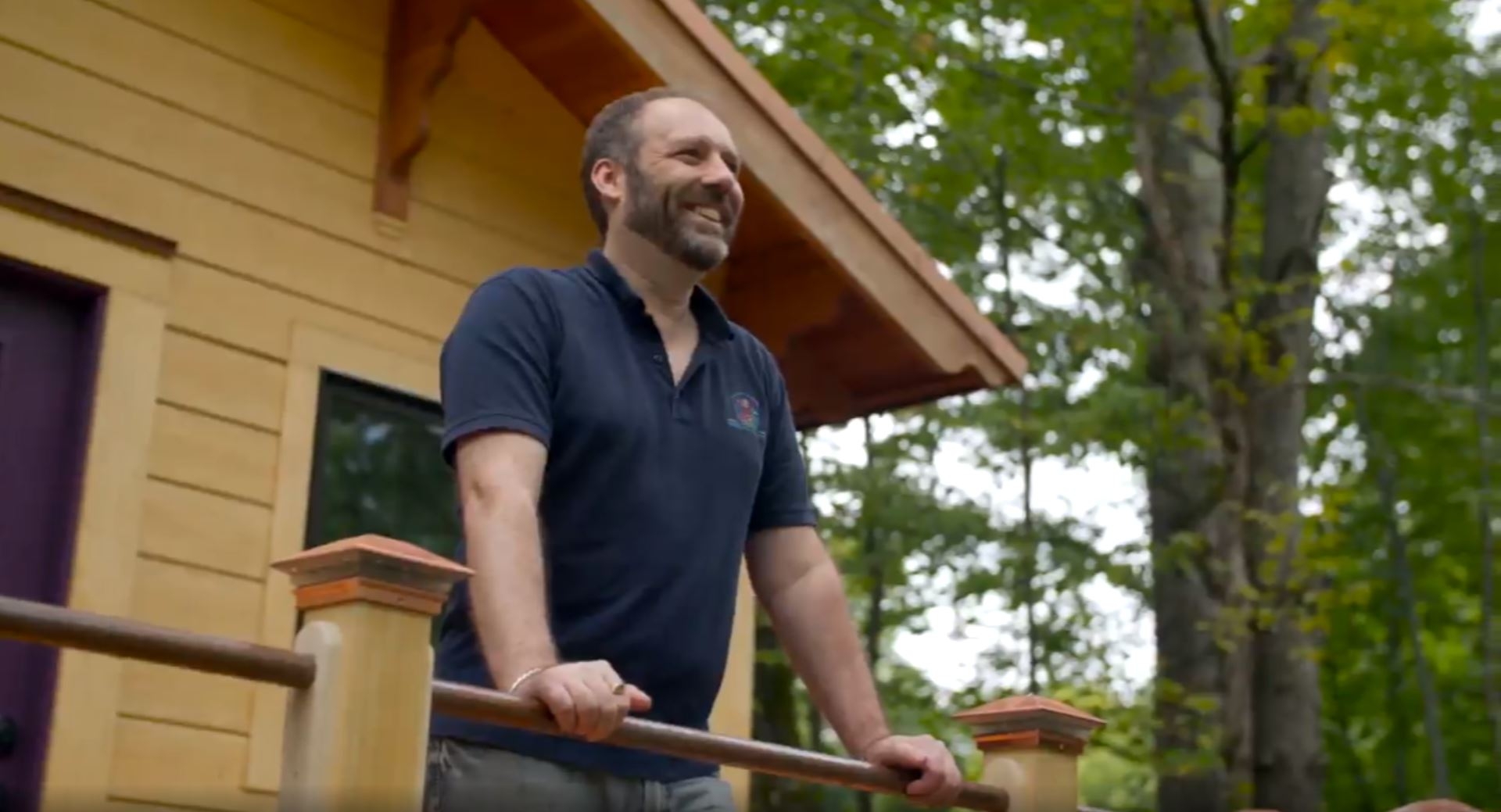
In this episode of Give A Heck, Talor Stewart, an architect focused on intentional home design, explains how the spaces we live in influence happiness, productivity, habits, and long-term outcomes. This conversation explores why the environment often shapes behavior more powerfully than motivation and how design decisions affect the way we think, feel, and function each day.
Talor shares insights on designing homes for purpose rather than appearance alone, the relationship between space and identity, and how intentional environments can support clarity, calm, and better decision-making in both life and work.
🔥 Episode Overview
Are you spending half your life in a space that drains your energy instead of fueling your dreams? In this eye-opening conversation, I sit down with Talor Stewart, a licensed architect with over 25 years of experience whose book Conscious Home Design has hit number one bestseller status in seven countries.
Talor shares his fascinating journey from building hand drums and travelling across North America to discovering his true calling in architecture. But this is not your typical design conversation. We explore how the science of human happiness intersects with the spaces we inhabit daily.
💡 What You’ll Learn in This Episode
How your environment shapes your willpower and why environment is stronger than willpower
The three types of relationships essential for happiness and how to cultivate them in every room
Why most homes are unconsciously designed and what that costs you emotionally
The Harvard Study of Adult Happiness findings that changed everything about home design
🌿 The Science Behind Space
Discover the research-backed principles that Talor uses to create life-changing environments:
How seeing three shades of green physiologically calms your nervous system
The sunny window effect and why your pet instinctively knows better design than most architects
Why Leonardo da Vinci could not have painted the Mona Lisa without a dedicated space
How Baker Miller Pink can calm even the most volatile emotions in just 20 minutes
🏡 Practical Strategies for Any Living Situation
Whether you are renting, renovating, or building new, Talor breaks down actionable steps:
Simple plant placement that creates giving relationships while purifying your air
Strategic photo and affirmation positioning for daily emotional anchoring
How to identify and eliminate friction points that sabotage your goals
The bathroom transformation that proves every space can nurture connection
💛 Beyond Pretty Rooms
This conversation challenges everything you thought you knew about home design. Talor reveals:
Why happy people become better citizens and neighbors
How conscious design supports your biggest life goals
The difference between decorating and creating environments that serve your values
Why two percent shifts in multiple rooms compound into life changing results
Talor’s approach is not about imposing a style. It is about understanding your unique needs and creating spaces that put the wind at your back. From the strategic placement of your home office to the colours that calm your nervous system, every detail matters when you are intentional about your environment.
This episode will change how you see your living space forever. You will start noticing which rooms energize you and which ones drain you. You will understand why you gravitate toward certain areas of your home and avoid others. Most importantly, you will learn how small, conscious changes can create profound shifts in your daily experience.
Do not let your home work against you for another day. Your environment is either supporting your best life or sabotaging it. There is no neutral ground. Start creating spaces that serve your highest potential and watch how everything else begins to align.
Talor Stewart’s insights into how environments shape behaviour closely align with this episode featuring Colin Corby on digital detox and focus restoration, where the digital environment is examined as a powerful influence on wellbeing and attention.
🔗 Connect with Talor Stewart
🌐 Website: https://conscioushomedesign.com/
📧 Email: talor@conscioushomedesign.com
📘 Facebook: https://www.facebook.com/ConsciousHomeDesign/
📸 Instagram: https://www.instagram.com/conscioushomedesign/
💼 LinkedIn: https://www.linkedin.com/in/talorstewart/
🔗 Connect with Dwight Heck
🌐 Website: https://giveaheck.com
📺 YouTube: https://www.youtube.com/@giveaheck
📸 Instagram: https://www.instagram.com/give.a.heck
🧵 Threads: https://www.threads.net/@give.a.heck
🐦 X / Twitter: https://twitter.com/give_a_heck
💼 LinkedIn: https://www.linkedin.com/in/dwightheck/
⏱️ Chapter Summaries
00:00:02 🎧 Introduction to Talor Stewart and Conscious Home Design
Host Dwight Heck introduces Talor Stewart, a licensed architect with 25 plus years experience whose book Conscious Home Design became a bestseller in seven countries, specializing in creating life changing home environments.
00:02:57 🌱 Talor’s Origin Story From Nomad to Architect
Talor shares his childhood fascination with creating spaces, his travels across the US and Canada, his drum building business, and the spiritual awakening that led him to architecture at age 25.
00:13:52 🏚️ The Problem with Unconscious Home Design
Talor explains how most homes are designed unconsciously, focusing only on basic shelter needs rather than incorporating scientific knowledge about human happiness and excellence into architectural planning.
00:25:32 🧠 The Science Behind Environmental Impact on Well being
Discussion of how our environment affects us subconsciously, the Harvard Study of Adult Happiness findings, and how physiological responses to nature and green spaces impact our health and mood.
00:37:41 🔄 The Three Types of Relationships Framework
Talor introduces his core concept giving, receiving, and reciprocal relationships, and how conscious home design creates opportunities for all three types in every room of the house.
00:44:06 🚿 Practical Application The Bathroom Example
Detailed walkthrough of how to apply the three relationship types in an unexpected space, the bathroom, using plants, dual sinks, and inspirational images as examples.
00:55:08 🏠 Individual Centered Design vs Style Focused Architecture
Talor distinguishes his approach from style focused architects, emphasizing how conscious home design prioritizes individual activities and values over predetermined aesthetic preferences, using comprehensive workbooks to understand client needs.
01:19:47 🌞 The Sunny Window Effect and Natural Light Benefits
Explanation of how natural light and strategic room placement can enhance motivation and success in activities like exercise, work, and personal development through the sunny window effect.
01:29:42 🌍 Final Message Happy People Make Better Citizens
Talor’s closing thoughts on how creating supportive home environments leads to personal happiness, which enables people to become better neighbors and citizens, contributing to broader social well being.
Apple:
Spotify:
YouTube:
Unedited Transcript:
[00:00:02 – 00:01:08]
Welcome back to the Give a Heck podcast. I’m your host, Dwight Heck, here to help you live life on purpose, not by accident. Each week we dive into real stories, raw truths and powerful conversations that challenge you to give a heck about your life and the lives of others. Today’s guest is Taylor Stewart, a licensed architect with over 25 years of experience and his book Conscious Home Design has hit number one bestseller in seven countries. Specializing in single and multi home, family homes and international communities, he works with clients across the United States and internationally. He also offers a certification program for other designers and architects to learn the conscious home design method, helping them apply life changing principles and wherever they are. You can also find out more by visiting conscioushomedesign.com Taylor welcome to Give a Hack. I am excited to dive into your work and principles beside behind Pardon me, Conscious Home Design.
[00:01:10 – 00:01:26]
Sure. Hey Dwight, thank you very much. I’m really glad to be here. I’m looking forward to a great conversation, getting into some interesting content that people can really, you know, help them create that mind, body, environment connection.
[00:01:28 – 00:02:33]
That’s fantastic. Like I said to you before we hit record, going through your website, looking at your, your book, obvious, I didn’t have time to read the whole, read the whole thing. But skimming through your book and looking at your workbook, I was very impressed on how you discussed the values of people and asked good questions to find out what works for them, what can work for them. You know, most people, even in my industry, don’t ask enough great questions. So your workbook is, is a fantastic value add. Obviously people have to put the effort in to do it. It’s no different than me having questionnaires for my clients and asking them questions about their values and what’s their goals. Not enough people put that effort in. So thank you for sending that stuff ahead of time. So I was able to review it. Listeners, buckle up, people watching. You’re going to get some great value on what you can do and utilize within your environment that you live in. Right. Think about how many hours you spend in your home. It’s, it’s something that we don’t take serious enough.
[00:02:33 – 00:02:33]
Right.
[00:02:34 – 00:02:56]
So we will talk about all of that and more. Tell me a little bit about your origin, Taylor. What, what happened in your life, you know, from your earliest recollections that you’re willing to share to where you are today. Was there something specific that happened or stories you could share that would let people into your world and, and how you got to where you’re at?
[00:02:57 – 00:13:51]
Sure. Well, you Know, I think it was always in my. It was a natural inclination, you know, space making, place making. For me, you know, as. I mean, even to earliest childhood, my favorite activities were the block, you know, and setting up little villages and worlds, you know. And as I got older and started playing with, you know, action figures and stuff, I noticed, you know, a lot of friends, whether, you know, whether they were male or female, you know, when they’re playing with their figures, they would usually make them do stuff like they would have conversations or they would go on adventures together and they would. They would animate the toys. But for me, what was actually what I found was, was most satisfying. And I certainly played engaged kind of play with friends, but I actually preferred just. I could spend a whole week setting up this elaborate, you know, scene where I would, you know, dig the trenches and build the forts and the tree houses and get everything going. And then I’d put all the little figures in, in the perfect position and I would just set the stage, you know, and once I got it there, then I would sit back and I would just appreciate it. I would just look at it and take it all in and just look at it. And I didn’t actually, for me, the play was. That was setting the scene, not actually making them engage, you know. And so as an architect, someone who, who says, hey, what, what. What’s everyone going to be doing here? What activities do you want to, you know, facilitate? Then we’ll shape the space for that and then it’s hands off, it’s up to you to go live happily ever after, you know. And so that sort of was a natural inclination for me. I was always good at drawing and I used to do sketching with, you know, graph paper and stuff even as a kid. And I got into woodworking and carpentry pretty early on, but it wasn’t until, well, it was. It was quite a while before I realized that I was going to become an architect. I actually took a. Took a break between high school and college because I wasn’t sure what I wanted to do. And I did a bunch of traveling around. I went to. I’ve been to every state but Alaska and all across Canada and just doing, you know, adventuring and stuff. And during that time I started a drum building company. I was really inspired by the, the. The hand drums of the West African traditions. And so I, I designed a line of. Of nine different drums that were based on. On those that I made and wholesaled to about 65 stores and also did trade shows and festivals and fairs and so I lived this very, you know, sort of maker, craftsman, bohemian lifestyle of, you know, make it and sell it. You know, make a batch of drums and then hit the road and go open up new wholesale accounts or go to fe and sell them and meet people. It was a very, you know, fun, cultural, integrated lifestyle. But after a couple of years of that, I knew that I was passionate about it and I loved it, but I knew that it wasn’t going to be my. The focus of my life. I said drumming and drum building and music and dance, and that can be a cornerstone of my life, but it can’t be the entire foundation. You know, there’s more to it than that. And so I ended up selling that company and hitting the road for another two years. Kind of like this walkabout, you know, where I was just like, I don’t know what I’m gonna do, but I’m gonna just go, you know, figure it out, you know, and try to find myself a little bit, you know. And it was suddenly during that process where, you know, I actually have a very spiritual outlook. And I thought, well, I, you know, I could go join an ashram somewhere and meditate for enlightenment, but I actually wanted the richness of, Of. Of a creative life. I wanted relationships. You know, I didn’t want to be a her for, for my life. And I just, I thought that I would be happier if I stayed in the world and, and contributed. And I thought, well, yeah, if you’re going to stay in the world, you have to add value, you know, you have to, you have to be a. You know, you’ve got to do your part. So I, I was like, well, what am I going to do? And suddenly the light bulb went off. It was like, oh, of course I’m going to become an architect. It’s always been there, you know, I just hadn’t saw it before. And it was like everything, all the activities, the loves and fun and passions that I had in. In life from, you know, from snowboarding, like, I. I even entertained as a teenager a brief moment of being a pro snowboarder. You know, this is way. This was back in the day when, you know, it was. It was more real, more realistic. You know, you had to be less of an acrobat that, you know, back then to do it. But I. I went through many explorations, and when I swept off all the stuff that was on the table of my life, I found that the table itself was. Was architecture, if that makes sense, that it was like I couldn’t see what My true purpose or my true sort of mission or dharma in life was because it was cluttered up with all these other activities that I, that I thought were fun, you know, drumming and traveling and, and snowboarding and whatever. But really architecture was it. So at 25 years old I went back to college and yeah, so that’s sort of a little bit of the journey to starting my, you know, my clarity on architecture and architecture is not, it’s not an easy path. You know, it takes a long time. First it’s, it’s many years of schooling followed by many years of apprenticing. You know, it’s, which is required to get your hours in before you can even be allowed to sit for the exams and, and pass. And the exams are another thing. And it was many, many questions over, over months of, of study. Not easy. It took me many years to get licensed. But I always knew I was going to write a book. You know, I, I wasn’t going, I didn’t go back to school for job training. You know, specifically I went to be, you know, to, to carve a new path and a little bit of a pathfinder. And I wanted to bring my unique perspective into the built environment. And I always knew I was going to write a book even for my college days. But it took me 20 years. You know, it wasn’t, I didn’t publish the book until 2019. And so it was after, it was only after 20 years of, of, of experience that I was able to really gel everything and consolidate. You know, because when I first sat down to write a book, I had a 50 page Google Doc from all of my notes and wake up at 3am with a brainstorm that I had it down and even some, some concepts from old college papers I had just assembled over the years. All this stuff and scribblings from my notebook that I had typed and transposed into, into digital format. And I was looking at this thing and I was like, how am I going to make sense of all this? You know. And a friend of mine told me who had done some professional editing work, she said well, why don’t you take every unique concept or idea that you have and put it on a 3 by 5 index card and lay it out on a table and see if you can, you know, rear rearrange them to make a storyline, you know, and, and, and make some coherence. I thought that’s a great idea. So that’s what I did. But as I, when I did that I looked at it and I thought oh my God, no one on earth is going to want to read a 42 chapter book on architecture. How boring. You know, it’s like. And I said, I’m not. My goal is not to create a textbook for young architecture students. You know, my goal is to create a bridge between the profession and the community. Because what architects do is very esoteric and it’s, it’s sort of mysterious. People don’t really understand the depth of knowledge. And architecture is an extremely broad field. Just like law or medicine, you can specialize. So not all, not all architects are created equal. You know, we have our different focus points. And so I really wanted to just sort of lay it out in a way that was very accessible. You know, the book. I didn’t want to have a lot of jargon in there. I wanted to, I worked very hard to make it an easy read. I remember Mark Twain writing a letter to a friend, hey, I would have wrote a shorter letter, but I didn’t have the time, you know, and I, I put the time in to write to, to, you know, have a book that you could read in about an hour, you know, and then I hired someone with a dual masters. They had a master’s in social work and a work, and they’re a psychotherapist, they do counseling. And I had this person, you know, read the book. And then together we worked to create the workbook. And you, you hit on it a little bit earlier. The quality of your question determines the quality of your answers and your results. And if you don’t ask the right questions, you won’t get the right answers. And so, you know, everyone, if they’re thinking about, hey, I’m shopping for a new home or I want to build a new home or I just need to rent something, you know, whatever, you know, when someone’s looking at a transition in their home life, everyone has their wish list, you know, and that’s great. Your wish list is valuable because these are things that you’ve identified as being important or being necessary to you. And whether it’s because it’s a goal that you want or something you’ve experienced that you didn’t like before and you’re trying to run away from, from, from that, you know, you’re. However you get to your list, you know, it’s, it’s meaningful and personal to you. However, you know, I find that there’s like actually a secret list with things, the questions that most people have forgotten to ask or didn’t know to ask in the first place because they don’t live and Breathe. They haven’t gone so far down the rabbit hole of architecture as, as I have. So it was about, hey, let’s make sure that we leave no stone unturned and we extract, you know, the, the right answers out of people by asking them the, the right questions. So that’s really what that is about, is to really help people. Because, you know, I know Dwight, you’re very intentional in your life and, and you guide your clients to be intentional too. Right. Because we all want to feel like our destiny is, is in our hands. You know, life is big. It’s bigger than us. Stuff happens, you know, lots. A lot of things are out of our control. So where we do have control, where we are able to offer guidance, you know, it serves us to, to take control of those things. It’s like surfing, you know, you have to surrender to the ocean. The ocean’s big, those waves are powerful. We’re not in charge of that. Our job is to show up and do our part, get on that surfboard, practice our balance, you know, know when to cur, carve and turn. Right. And so it’s a, there’s a give and take. There’s an element of surrender in life, but also an element of, of self determination. So conscious home design is about helping people determine, you know, what they can. There’s, it’s so deep. There’s so much we could talk about. There’s so many examples. But I just want to pause and you know, we can.
[00:13:52 – 00:13:53]
Yeah.
[00:13:53 – 00:14:08]
If you have comments or feedback on, on that before, I just go on. I’m trying to paint a big sort of 10,000 foot view so you see the hue, the whole landscape before we zoom in on, on, on details and action steps that anyone can apply in their own situation.
[00:14:09 – 00:15:32]
Yeah, I get what you’re doing. You’re, you’re also, though it can, it can be overwhelming for people listening because you’re going into all the book and stuff which we haven’t even discussed some of the principles behind, you know, why what you do is important. Right. The book is, is great. That’s the end result that we want to make sure people are aware of. But what about things within your origin? Like you talked about home design and how in depth and how there’s different facets of being an architect. Some people focus on, on different things and people don’t necessarily appreciate what an architect can do for them. Right. So in order for us to get more in depth to that, I’d like to know some, some other things about yourself. Like you talked about Going to school. You talked about, you know, going across Canada. So you went across Canada and went across the US and you’ve traveled a lot. When you look back at those moments, were there things now that when you decided to become an architect and then you said you had to work under, people became. Before you became licensed to be on your own, were there things that you look back at that were actually triggered for you when you did your travels, when you were that movable, like, person that wanted to be a discoverer, a nomad, whatever you want to call it?
[00:15:34 – 00:24:04]
Yeah, sure. You know, I never lived in one home for more than two years, so I had a lot of chances to see different, different homes and different architectural styles and, and different, different layouts. And a lot of, what drove, what drove conscious home design was the fact that homes were, were largely unconsciously designed. You know, they’re really, I found that they’re designed based on just shelter, you know, just this concept of, hey, if you give people a place to sleep and, and a place to prepare some food and, and a bathroom and, you know, then that’s, you know, that’s it. And, and people are left to fend for themselves, to actually live, you know, be happy. Right. And so we have learned so much about the science of human excellence and happiness, but architecture, by and large, has not incorporated what all the other fields of science have brought to us. We’re still designing homes the way we did last century in the 1900s. And though they’re more energy efficient and some new construction materials, some technologies have changed. Instead of using plywood, people are using, using, you know, oriented strand board, you know, OSB or zip panel. You may see, you know, so some of the building materials, the technologies are changing, but we’re still building the same thing. Bedrooms, a kitchen, a living room, bathroom. And you know, it’s, it’s still the, the floor plans haven’t changed much. Styles have changed. You know, once upon a time it was, well, everything’s beige, and then everything turned and now everything is gray. You know, and like, so the different, you know, styles change and the, and the technology has changed, but we’re really not incorporating stuff. And so think about. So most of my things came out of frustrations, right? It was me finding the limitations and finding that, you know, that, that four walls boxing me in didn’t allow me to live my fullest life. And so I, I really liked the traveling lifestyle because I had more opportunity for, for spontaneity or, or adventure or to, to feel. At the same time, I also Had a lack of ability to accomplish certain things. Think about the most famous painting in the, in the world, Dwight. It’s the, the Mona Lisa from Leonardo da Vinci. And, you know, it took him as the Mona Lisa, by the way, just turned 500 years old, right? He started painting it in the early 1500s. So this thing is, you know, stood, stood this through the centuries, but it took him more than a decade to paint that. You know, he didn’t sit down and do it in a weekend or in a week. And when I, when I found that out, I thought, this is the perfect example for what I’m talking about with conscious home design. Because without architecture, you know, all of our human advancements in science, in art, in medicine and technology, none of them would really be possible without the ability to control our environment and dedicate space to our activities. You know, if we didn’t have architecture, then the limit of what you, you could accomplish would, would really have to be contained within what you could do in a sunny afternoon. Because as soon as the weather changed or the wild animals came or hostile neighbor tribes came or whatever, they’d mess everything up, right? So the ability to control our space and create a controlled environment allows us to build on yesterday’s achievements. And so, you know, Leonardo da Vinci would not have completed the Mona Lisa if he didn’t have an art studio. Because, you know, he, when he wasn’t having inspiration or he was busy with other projects, he was able to put that thing away. And then when it was time, you know, when he got inspiration or when he had a moment between other, other work, he was able to pull it out and work on it again. And so when we dedicate space to an endeavor, it exponentially increases our chances of success. It was Seth Godin, I think, who’s coined the 10,000 hour rule. He said you got to put in 10,000 hours to achieve mastery at anything. And this makes sense to us. You know, we all know practice makes perfect. It’s impossible to get good at something without putting in the time and the effort. But what’s missing from that common sense formula is that it also takes space without dedicating space for an activity. Swimming against the current, swimming, you’re swimming against the, you know, the flow and you’re making. It’s going to be a lot harder to do that. You know, Winston Churchill said, we shape our buildings, and thereafter they shape us. And so if you, if you haven’t shaped your building to allow you to do a certain activity, it’s going to be really hard to do that activity, you know, the, your very motions are going to be dictated by the where, by the arrangement of the walls. Yogananda said that environment is stronger than willpower. And you know, when I first thought of that, I thought, oh man, I don’t, I don’t like the sound of that. I don’t want to feel like, like I’m not strong enough to overcome my environment, you know, or to, or to win, you know, I don’t want to feel like I’m, I don’t have the power to succeed. But the more I thought about it, you know, it’s, it’s, it’s true because, you know, in any given moment, the human will is, is magnificent. It’s, it’s indomitable, right? People break records every day. People reach down deep inside and they find the strength or the courage or, or the will or whatever it takes to overcome their circumstances. You know, people have these incredible breakthroughs and Instagram and social media are full of those moments. You know, we celebrate the, the, the breakthroughs when people overcome the odds, when people break through and get to a, overcome with their limitations. But the thing is, is that those are, those are breach moments, like a whale that uses all their swimming power and launches out of the ocean and up into the, into the air. You know, it’s very majestic. And that’s why we take pictures of it. Because those breach moments are like, yes, they, they remind us of the power and the potential that, that we have, that we all have. But the thing is, is we’re not always living at that level of a hundred percent volume on, right? We’re most of the time we’re trying to conserve energy and economize. That’s what habits are for. That’s what routines are for. Because they make it so that we don’t have to, you know, waste a bunch of energy. Decision fatigue. You know, it’s like when I come home, my keys go here, my wallet goes here, my jacket goes here. And that way in the morning, I’m not running around like a chicken with my head cut off going, hey, where are my keys? You know, I know where my keys are. I’ve got a system for that, right? So this is our normal state. So after the breach moment, we fall back in. And so when we’re normal, when we’re tired, when we’re going through, through on autopilot, that’s when the environment is going to take its toll. Just like a tree root can crack a sidewalk. You know, wood is not as hard as cement but that slow, constant pressure, 24, 7, day after day, year after year, it, you know, it’s gonna, that’s the force. So our environment is going to put that constant, steady pressure on us. In any given moment. We can overcome the environment, but over time, the environment is, is going to put an influence on us, whether we’re aware of it or not. So the idea behind conscious home design is to say, let’s make sure that the environment we shape puts a positive influence on us rather than creating, you know, friction points and, and obstacles for us. You know, we want to put the wind at our back, so to speak, as, as though like the draft and Tour de France, you know, the guys in the front of the pack, they have to pedal harder because they have to break the wind. The guys behind, they don’t have to pedal as hard because they’re drafting. Yeah, I, I want your life to live, I want you to live in a home that feels like you’re drafting.
[00:24:06 – 00:25:30]
That makes sense. Your home also becomes very, how do I put this? When we walk through our homes or we walk through other people’s homes. Well, like when I go into clients homes for an example or in their business, I’ll notice things and, and comment about it and they’ll go, oh, that thing, I forgot that was even there could be a picture, it could be a vase, it could be anything. Something that our minds become visually deaf to what’s surrounding us, but yet our subconscious picks up on it still. So I would think that what you’re talking about and helping people do that can be a soothing thing too, right? A comforting thing. Would it not? Like, I know you’ve, you’ve done some, lots of research and we could probably get into this now and you know, the Harvard studies and stuff that you reference in regards to adult happiness and what actually makes people happy as they age. So how does that affect, first off, how, how are we affected by being blind to what’s around us in our home? We stop even looking in that picture anymore. Is it that important to make sure that that environment that we’re walking into, even when we stop visually seeing it, is there to be a calming effect? Have they found that that’s a calming effect on people and, you know, go from there? If you wouldn’t mind, in regards to that study as well?
[00:25:32 – 00:28:51]
Yeah. Okay, Dwight, I, I really appreciate that question. No one’s ever asked it that way. That’s a, that’s, it’s a unique frame that you’ve, that you’ve put in talking about, you Know the, when things are no longer new in your environment, the mind again based on trying to economize energy, says okay, we know what that is. And so it stops, it tunes it out because it’s no longer relevant or important to our survival. Right? And that’s, that happens. You know, it’s, it’s just the natural way of our body trying to economize, you know, and save, and save calories because our brain burns up, you know, 20, 25% of our, of our calories every day. Just thinking, you know, we’ve got these big brains compared to, you know, many other creatures in, in, in on the earth. So what we know is that our bodies evolved in nature, not in boxes, you know, and not, not in buildings. And so even if you have a very beau decorated or well appointed or well designed space that makes you feel calm in it, just looking at some green space, you know, has a physiologically measurable effect on us. And so, and even if you’re unconscious about it, which is one of the reasons why I like having plants in the home. When, and, and it takes three different colors. If you see three different shades of green, three tones of green, so, so get two or three plants that colors. When you see that the mind calms, the breath becomes more regular and the heart rate slows and becomes more, more even and blood pressure can slow. These are physiological responses that are universal to all humans. And so even if you’re not consciously paying attention, you know, that environment can, can really, you know, lower blood pressure and, and make you feel calmer and put the body at rest. And over decades and years of years and decades, that’s going to have a, have an effect because we know that is, is it shortens life expectancy. Interestingly enough, when they showed people cityscapes, you know, which might be, you might say, oh, I like that. You know, that’s a beautiful, you know, it’s nice to look at. You know, you, you may like looking at things, but it doesn’t have the same physiological response. You know, the body was not calmed by looking at cityscapes and the built environment, but like it was when you looked at, you know, trees or plants or, or the ocean or, or a lake or you know, a nature scene. So, you know, that’s something you can do is, is, is, is try to bring the outside in, you know, and what if you’re able to do it with live plants, great. But if it’s just pictures of nature, that works too. Actually the brain doesn’t decipher between you know, a representation and the real thing is thing. So windows. Depending if you have windows that look out into a yard or into some trees, that’s great. If you live in the city and your windows look out at another building, then, you know, it’s doubly important for you to bring, you know, pictures of nature into your, into your space or, or some plants, if you can. So that’s just a universe.
[00:28:51 – 00:28:52]
What about basil plants?
[00:28:53 – 00:28:54]
What about what plants?
[00:28:55 – 00:29:09]
My brain just said, what about fake plants? Does it still give you, does it still give, you know, how you come into people’s environments and businesses and homes and they have fake plants? Does that still do the same thing? Does your brain still trigger in this?
[00:29:09 – 00:29:10]
It actually does.
[00:29:10 – 00:29:11]
Oh, okay.
[00:29:11 – 00:37:40]
It does. It does trick the brain. You know, I mean, if you look at it and say, oh, that, that plant is fake, you know, that may sort of undo a little bit of that, but if it’s, you know, if it’s a good fake plant, you’re just, and you’re just not paying attention to it, then it, it will send that signal that, that you’re in a natural environment and, and that’s less stressful for, for our bodies, you know, for the physical organism. So, you know, as I was researching the book for, you know, before I was ready to publish, I came across the Harvard Study of Adult Happiness. You know, the, there’s many. I did a lot of research because I wanted data. I didn’t want to just come up with, you know, style, opinions. Oh, I like green. Oh, I like blue, you know, or I like modern. Oh, I like classic. You know, those are great and, but they’re subjective. I, I wanted objective stuff, you know, and I wanted to focus on that. So there’s, there’s actually a lot of good data out there from health, from education, you know, data. But this was about happiness itself. And in 1938, Harvard started this study and it’s still going on today. So it’s 87 something years go, going strong. And they’ve studied thousands of individuals and everyone that originally started was, you know, over 18 years old. So that all the original participants have, have passed away and they’re on second and third generations now. But what they did is they did an initial intake form where they said, hey, what’s your station in life? Do you come from money? Do you have a nice house or not? What’s your health like to do a physical assessment? What’s your mental state? You know, how are you, how are you, you know, looking at, at life? And so Basically a whole avatar. They got the whole snapshot of a person and then they tracked them throughout life and periodically pulled them back in to, to re up the assessment and say, okay, what’s going on in your life now? How are you doing? And so they found that regardless of business success or failure, career changes, ups and downs, health challenges, you know, the stuff that happens in life, they found that none of that really moved the needle. The single biggest predictor of people’s longevity, like their life expectancy and how happy they said they were was what was their relationships, the quality of their connections. And when I found that out, you know, I said, okay, stop the press, you know, we’re, we can’t, we can’t publish this book yet, you know, without. Originally I was going to call the book Green Picket Fence Living, you know, the new American Dream instead of a white picket fence, you know, yeah, living a new American dream of, of a custom designed eco friendly home. But my core message is deeper than just, you know, eco friendly. You know, it’s, it’s really about because you can live in an eco friendly home. But if it’s unconsciously designed from a user experience perspective, if it’s not cultivating to, to the things that make us happy, then, you know, then you’re not going to be happy. You know, it might, it may not fit. You know, like the most eco friendly home, you know, might be an igloo, you know, it might be a snow, a snow cave, you know, up in the tub. It’s like it’s made right out of the, the right around you. That’s the most ultimate eco friendly home. But your opportunity for a long, rich, diverse life is, is going to be limited. Not saying that you can’t live a happy life. I’m not saying that people can’t be happy and can’t have a good life. You know, I’m not there to make judgments or qualifications on that. But most people want more than that. Most people want to have opportunities for, you know, education or, or travel and all sorts of things. So, you know, we need to find a way to support them, you know, in a more sort of modern way. So they were very clear in the study that it wasn’t limited to romantic relationships that, you know, that were the predictors of health and happiness. So I thought, okay, well what does relationship mean? So I had to spend time going down the rabbit hole of relationship. And the Greeks have seven different words for love, you know, based on what kind of love it is, if it’ between parent and child or between two friends or between lovers or between a person in their community, you know, agape or filial or storge or eros. You know, they have all these different words for it, for the different qualities. But that wasn’t enough. You know, I. That was just scratching the surface. I wanted to keep going. What I found is that within all of our human experiences, our human relationships and connections that we have, they’re going to fall into one of three broad categories, and they’re giving, receiving, and reciprocal relationships. So our giving relationships are ones where we are the primary giver. And there are going to be relationships that we have with those that we are teaching or coaching, those that we are like with children, perhaps, that we’re parenting or raising or or educating, even plants and animals that where we are primarily, you know, taking care of them, Our pets or animals outside, if you put a bird feeder up, that’s an example of a giving relationship. And so of course, all of our relationships, there’s a give and take. But, you know, and that’s true, but at face value that those are giving relationships where we’re showing up first as, as the giver, then we have our reciprocal relationships like you and I, Dwight, are having right now, where it’s two people standing on equal footings and there’s a give and take. And, you know, I don’t have to put on a sort of a role model face like I might if with a. With a child if I was teaching them, you know, and I don’t have to have that. So I’m able to let my hair down and just be a little bit more natural, have a discussion. So there’s a different. There’s a different flavor of relationship there. So these are relationships that we have with our peers, our friends, our colleagues, co workers, significant others, you know, that kind of thing where there’s an equal give and take. And then our receiving relationships are the ones where we are the beneficiary of someone else’s care and wisdom and love and encouragement. So ones that we have with our coaches and our mentors or teachers, our elders and ancestors, our heroes that we get inspiration from or our spiritual figures. So in conscious home design, I said, if this is, if these relationships are essential, you know, and we have to have all three kinds, what would the house look like if we intentionally designed to support all three kinds of relationship as we go through life? You know, we’re going to have ups and downs, you know, different stages in life. You’ll be, you’ll have more or less of Some, some types of relationship, you know, when you’re in college age, you’re not doing a lot of giving. You know, you’re hanging out as much as you can with your friends. So it’s all these reciprocal relationships and you’re in classes learning. So it’s all these receiving relationships. But shortly thereafter, most people, you know, they leave school and they start a family and now they got young children and they are just giving, giving, giving, giving, giving, giving, giving. And I hear, you know, young parents say, oh my gosh, I just, if I could just get 30 minutes to go hang out with a friend and have an adult conversation, that would be great this week. Right? So it’s just, there’s, we go through balances, but over this course of life, you want to have a healthy mix. And of course that’s up to you as an individual, whether you’re introvert or extrovert and what your expectations are, what makes you happy. You just need to solve that for yourself. But the role of architecture is to create opportunities for, for all three kinds. So I, I wanted to go one layer deeper and say, not just have opportunity for all three kinds of relationship in the home. What would it look like if we intentionally created opportunity for all three kinds of relationship in every room of the home? And so this is really where the rubber meets the road. This is where we start getting to some practical steps that anyone can do to start cultivating their space in a way that feeds them in, in ways that scientific data says this will statistically help you live the longest, happiest, most fulfilled life that, that you can. This will help you live your best life. And so, so just interject. Yeah, go ahead.
[00:37:41 – 00:38:40]
Yeah. Because number one, all that information is fantastic. Like the, the amount of effort you put in to understand all of this has led you to discover to, to actually be able to provide people with a healthy home environment or maybe a work environment too. Like I, I was going to interject this a while ago. I look at how important architecture is. If companies like Google or the list goes on, design specific work environments and walking paths and nature and buildings looking a certain way, you look at, look in the city that I live in, they design the library a certain way, city hall a certain way. And then when you walk inside, they’re so plain, so they worry about the outside architecture, but you’re, you’re concentrating and focusing and developing frameworks to develop inside where you spend a lot of your time so that you get those three relationship frameworks. Correct.
[00:38:40 – 00:39:34]
That’s right. Yeah. I Mean, we’re going to spend, you know, at least half of our lives in our home. Home. You know, there may be moments where you’re really busy with your career and you’re out the door first thing in the morning. You don’t get home till, till later in the evening. And so you’re barely at home at all. But that’s, you know, for a short episode of life from, from birth to death, you know, average person is going to spend at least 50% of their life in, in their home. And so, you know, it makes sense to focus on, on that, on that environment because it’s going to be so impactful, you know. Yeah, for sure. So offices as well. Yes, we’re spending there. You know, I’ve registered conscious home design.com When I was writing the book, but I also registered conscious office design. I just have never gone down that, gone down that rabbit hole. You know, it’s just, there’s too much work just in the homes, you know, for me to go there. So maybe I’ll partner.
[00:39:34 – 00:40:40]
Oh, I appreciate that. No, I appreciate the fact that you’re focusing and having a niche. That wasn’t my point. I just, I was bringing up the fact in my experience, especially all my travels around the world and the US I’ve been to not as, not as all the states like you as a Canadian, I’ve been to 24, 25 of the states and I look at buildings and I think to myself, oh, beautiful. And you walk in and the facade is gone. They’re just, they’re sterile. They’re very plain and boring. And I think to myself, well, you know, architecture, this looks really good. And the architect probably wanted more for the inside, but they disconnected from the architect and they brought on, brought in designers, which aren’t architects. They’re completely different. They’re looking at a space that you designed and said saying, this is what it needs to be. You’re looking at it more on a holistic. This is where you’re going to be 50 of your life at home. So we know we need to put some conscious effort into it. Rance. Conscious home design. So worry about the businesses later. I like the idea that you’re worrying about people’s homes. I really do. Because.
[00:40:41 – 00:40:41]
Thanks.
[00:40:41 – 00:41:23]
You know the little nuances when I walk into clients homes in the last 25 years and, and like I mentioned and, and they’ve stopped seeing that item that I find appreciation for. I’m thinking to myself, well, your subconscious mind still catches it and you’ve talked about that. So I love how they. You’ve integrated that, but at the end of the day, stay focused where you’re staying, your wheelhouse. That’s what I tell people. Right. If you want to partner with somebody else, that does the rest. And you got the URL all great. But I like, I’m excited about hearing more about, you know, and how this all ties into the framework you’ve been developing and, and not just developing, continually bettering it for your own purposes as well.
[00:41:24 – 00:44:05]
Yeah, yeah. I mean business. You know, as an entrepreneur myself, I, I like the efficiency of business. And so, you know, the idea that’s what office design and storefront design and workplace design is about, is about, you know, know, economy and efficiency. So that is something that I, That I appreciate, but I actually, but I, I prefer. Closer to my heart is the intimacy of home. You know, it’s. It’s. It’s where we grow, it’s where we raise our families. It’s where our stories are told, you know, and so that’s just so much more deeply meaningful for me personally. So that’s why focusing on, on the homes there, as far as the relationships go, you know, I like to use as an example to illustrate this for, for people for, for that of having all three types in every single room of the house. There’s a room that people traditionally do not think of as. As being a place to cultivate relationships, and that is the bathroom. The bathroom is. Is usually thought of as a. As a private space. You know, it’s where you go to close the door to get away. If you have young children, you just need five minutes to breathe for. To the bathroom. If you’re. If. If you have a bunch of friends over for dinner and suddenly they start talking about politics and you need to take a break, go to the bathroom and shut the door for a few minutes. Right. Like, you know, or if you’re an introvert at a party, you just need to, you know, catch. You know, take a moment to recenter. You know, bathroom is. Is a wonderful place to. To. To have some privacy. On the other hand, it’s also one of the most ripe environments for us to cultivate our feelings of connection and our. And our sense of. Of self and the way we want to. If it’s intentional. So, you know, in the bathroom, an example of giving relationships is, is that plant. If you have an outside window in your bathroom and you have some natural daylight, put a couple of plants on the windowsill or a little shelf in front of the window or hanging from the top of the window, a little hanging pot. It’s very low maintenance. You know, once a week, take three steps from the sink over and give it a little sip of water, you know, prune off a, a dead leaf and, and then you have a little, a little interaction, you know. And now instead of it just being this space, you know, where you just go in quickly, do your business and get out, it now has life in there. And it’s one step closer to being a garden or, or an oasis, you know, and, you know, if you have a couple of plants. Then again, referring back to, not only is it cultivating or giving opportunity for the giving relationship, but it’s also putting that calming, that physiological effect that seeing the green growing things has on us.
[00:44:06 – 00:44:38]
I have a question before you. You go on. In regards to the bathroom and architecture, I find that so many homes don’t have a window in their bathroom anymore. Back in the 50s and 60s, it seemed like all of them did. So as an architect, it’s so important that people understand that maybe having a window and natural light in that bathroom, because it is a place of solace, can be healthy as well as having those plants. Is that what I’m hearing? Like it’s better to have windows in a bathroom or, or.
[00:44:39 – 00:44:40]
Because I prefer to.
[00:44:41 – 00:44:45]
What about my bathroom, for example? None of them have windows in them, which really sucks.
[00:44:46 – 00:45:57]
That’s too bad. Yeah, no, it’s really nice to have windows in the bathroom because A, you can open it up for some fresh air. Right. B, you get natural light. And natural lighting is, is, is better for color rendering, you know, so if you’re looking at, at artificial light, you know, the, the skin tone that you have and the color of your clothes, it’s not, not, it’s not 100% compared to, it would be in, in daylight, you know, in natural light. So natural light is helpful, especially for, for ladies that are wearing makeup, you know, and it helps them with the color and the tone to see what you look like under natural light is always a pre. A preferable solution. If you don’t have windows in your bathroom, put in a full spectrum light bulb, a full spectrum light bulb. The plants can live just fine under a full spectrum bulb. And with LEDs, the, the electricity use is very low these days. You’re not gonna, you’re not gonna run up the bill, you know, the, the power bill by keeping the light on for, for a plant to live in, in your bathroom. Don’t worry about that at all. Taking it one step further beyond a plant, you Know what if you had a little fishbowl, you know, with a goldfish swimming around, you know, or a beta fish with the nice fins. And then you come in in the morning and you sprinkle a little food.
[00:45:57 – 00:45:58]
Hi, fish.
[00:45:58 – 00:46:43]
How are you? And now there’s light life in there, and you’re having a little spark of joy. And it’s like, all right, I’m. You know, that’s. That’s a fun thing that, that, you know, you could consider doing for, to. To foster giving relationships in the bathroom. Now, for reciprocal relationships, it’s very common to see, especially in the master bathrooms, two sinks, you know, double bowl sinks so you can brush your teeth side by side with someone else. And if you’re able to, you know, design a home for your. For yourself, you know, do a renovation or build a new home. And it’s in your lifestyle, you know, if, if you want this for yourself, you could easily put in a. That’s big enough for two people or even a shower room that’s large enough with two heads. So two people could shower simultaneously. So you don’t have to take turns. It’s more efficient. But it’s also something you can, you can do together. So there’s a.
[00:46:43 – 00:46:47]
That would be reciprocal then, right? If you had that dual shower head.
[00:46:48 – 00:46:49]
That’s reciprocal.
[00:46:49 – 00:47:02]
Is that reciprocal to a certain. Certain desire? Like, because all of a sudden, you know, they both don’t have to wait, but you could actually, maybe people have conversations, you know, they’re showering and, and talk about their day.
[00:47:03 – 00:47:56]
I would consider, you know, even if you’re side by side at the. At sinks, brushing your teeth and you’re not talking because your mouth is full of brush and paste, it’s still a reciprocal relationship. You’re still in proximity with another person. You can be having a relationship with someone even if you’re not talking. Like, you can be. Two people can be in proximity to each other. One person’s doing the crossword puzzle, the other one’s reading a book. You’re not engaging, but you’re together together. You’re still spending time together. That’s still a quality of relationship, you know. And so I would. I would say that showering together, you know, it does, you know, separate. It’s separate. You each have your own shower head and you’re doing your business. You’re not. You’re not having a sexy time. This is just, you know, washing the body. Right? Yeah. That still is cultivating that relationship. Not everyone want will choose that. It’s just an option to consider, you know, as.
[00:47:56 – 00:48:07]
I just want a clarification of the reciprocal. So I appreciate you, you breaking that down because if I had even a little hint of doubt, somebody else could too. So I appreciate clarification that.
[00:48:08 – 00:50:30]
No, I, I, I, no problem at all. Thanks for, for asking the question. Moving on to like, a reciprocal relationship or a receiving relationship in the bathroom. This is where, where I think you can take a photograph of someone that, that, you know, loves you or someone that has some encouraging or inspiring words for you. And, you know, somewhere near the bathroom where, you know, when you’re washing your face or brushing your hair, you can, you can glance at it, you know, and take a moment and say, you know, there it is. And it reminds you of that feeling that, that, that you want. That feeling of being supported or encouraged or loved or whatever flavor of, of receiving relationship feels good to you, you know, that is personally meaningful for you. Choose that photo, you know, and, you know, if you’re in a situation where it’s like, oh, well, you know, I’m, I’m Catholic and my, my partner is Jewish, you know, we can’t, we can’t figure out, you know, we can’t agree on the, on, on a, whose image to put up there, you know, or have different families, whatever, then choose your own images. You know, you have his and hers or, or his and his, or, you know, you can each have your own. Or if you want to agree on one, you know, maybe having a photo is too prominent. Maybe just a quote, you know, a quote that you can tape to the, above the mirror, and you could look at that and it’s almost repeated like an affirmation. And so there is a level of intentionality because over time, you brought it, you brought it up before. If you see it and you don’t pay attention to it, it will disappear into the background. It will become familiar. It’s not new. And so the brain will start to ignore it. And so there’s an element of intentionality behind it. You know, if you make a, make it a practice to, to gaze at that photo or repeat the affirmation once or twice, you know, every day, then, then it’s a, it’s a moment to be, to remind yourself of what’s important to you. It’s a, it’s a moment of being present and from that place of, of encouragement or feeling loved, of support and security, then, you know, what’s that gonna do to your mental state? And, and what kind of ripples is that gonna send out when you engage the world, you know, when you go out, when you leave the bathroom and start to engage with, with life, you know, what kind of, of energy are you going to bring to the circumstances?
[00:50:30 – 00:51:04]
You’re talking about that spiritual connection, because that’s one thing I had read about you, like linking our inner spiritual lives with that, our outer physical space. So we go into that bathroom, we see that affirmation, we see that picture of loved ones or whatever that can makes us feel good, but it also grounds us spiritually, right. In our spiritual connections with ourselves. Like, could you explain some of that as well how our physical environment ties in? Because you’re talking about it affecting our emotionally, but how does it affect us spiritually?
[00:51:05 – 00:52:45]
Well, spiritual. So spiritually is different than socially, right? So if you have a picture of a, of a hero or a teacher, you know, or, or a parent or elder up there, then that might just be a social cue, you know, to, to, you know, as opposed to a spiritual cue. You know, a spiritual cue is going to be something, you know, and, and our, and our emotions are not the same as, as sort of your, your soul, you know, as I, I need to be very careful because I’m an architect, you know, and I need to stay within my lane and in my area of expertise. Right. I’m. I’m not a counselor and I’m not a doctor or, or a therapist or a priest, you know, and so I need, I need to not talk too deeply about those things because it’s outside of my zone of expertise. I just know that those things are factors and if we can incorporate them, we want to. And so I’m not here to tell you, hey, you should have a spiritual thing or you should have. I’m not telling you what connections and examples. Absolutely right. I’m just saying the data says if you have these relationships, you know, that that’s very helpful. And it’s up to you to decide which relationships you want to encour, cultivate. Once, you know, once. So I ask the questions and then once you say, hey, I want X, Y and Z. I want to have this relationship. I want to play the trumpet. I want to have an opportunity for, you know, to study my. To study or to write the next book or to study this thing. Then I said, okay, great, let’s create space that’s going to support you in those activities. So it’s really, you know, that’s.
[00:52:45 – 00:53:31]
So it ties into your workbook. One of your first questions is, is asking about value. Values, right? Core values and stuff. So you’re, you’re you’re being that person that’s giving people an opportunity. Whether you have your preconceived ideas of what things should be, you’re letting them tell you this is who I am, and then navigating and helping them with a road map to develop their home so that it fits their, their values, their value systems. Obviously with your experience you can say, well, you know, what about, about this? You haven’t thought about that, right? Same thing as me. I asked because I, I love core values. I love talking to people about their values. So I was really intrigued by that part of, of your work. Right. Really wanting to know what people are looking for.
[00:53:32 – 00:55:08]
Thanks, Dwight. So. So some architects are really, they’re artists, right? And they come up with a style and that’s their thing. And you can go to their website and it’s just pictures of, of their work and they hey, I. And, and all the homes, you know, look similar. They have a style that they like. You know, Frank Gary, you know, he just passed away, but he, he doesn’t do homes. He, he does buildings, but they all have the shiny titanium undulating thing. That’s his style. He’s an artist. People hire him because they see that and they say, oh, I want that art. If you ask him to do something different, he can’t give it to you. He’s, he’s focused on, on a, on a, a style Conscious home design is not about a style conscious home design is about the individual and saying you’re going to get whatever style you want. That’s a given. You know, of course we can give you the style, but let’s focus first on the activities, the universal activities that, that all humans need. And then on top of that we build the individual activities. How, how does creative expression show up for you? How does personal development show up for you? How does you know is inner development? Is that, is that something where, where you’re cultivating your mind or is that something where you’re cultivating your, your spirit? You know, do you want a prayer room at home for meditation and, and, and worship or do you want a study at home where you can, you know, educate yourself and, and do professional development? Right. There are two different forms of, of personal development. And so it’s up to you to decide which, what, what you want. And, and then my job is just to help shape space to, to deliver that.
[00:55:08 – 00:56:10]
Yeah, that’s awesome. That’s, that’s so great though. It excites me just listening to you talk about all this stuff. And I’m thinking about my. You’re welcome. I’m thinking about my own home. I’m thinking about my adult kids because my kids are all adult now. And, and it seems like. I don’t know if this is even a great question to ask, but is this a gender issue at all? Because I find women, when I go into their, like going to their homes, they do things a lot differently when there’s a woman inside the home in regards to visualization or the plants and that. And. And me as a. As a, you know, divorced dad in my house, I’ve got specific things I’ve picked, but I find some of the most interesting things that I’ve done in my house are because of my sisters or my mom or lady friends that come over that say things to me. Oh, you’ve got a good style, Dwight. But what about this? What about that? So is there any, you know, not. Not to get away too far from. It is. But is this gender related as well?
[00:56:13 – 00:57:38]
I think there is some biological nesting that happens with. With women, you know, because of the. Because of the idea. Not the idea, but because of the. It sort of goes with the territory of having a womb, you know, and, and raising children. Right. It’s like there’s this need. There’s. It’s instinctual. There’s an instinctual need to nest and create a safe environment to raise, you know, vulnerable life. And so, you know, I think women generally will have a little bit more. More Will pay more attention or have a little bit more sensitivity to. To the home environment, whereas men are, you know, not wired the same way generally. And that’s not to say that there aren’t women who don’t pay much attention to the home space because they’re just very focused on something else. And it’s not to say there aren’t men who. Who deeply focus on the home, on cultivating, you know, a. A nice home. Right. So it’s not. Not. There probably is a slight leaning, you know, there’s probably slightly more. Women are more interested than men, but it’s not. It’s certainly not dramatically skewed. You know, it’s not like 90%, nine out of 10 women want it and only 10% of men want it. It’s nothing, you know, dramatic like that.
[00:57:38 – 00:58:38]
I don’t know if you’ve ever had that ass. I just. It was just something I thought because I raised my kids as a single dad and I had this house built and I wish I would have had somebody specialized or had like the workbook again. I Never had a chance to go through it all. But, you know, some of the things that I utilize in my own finance practice to figure out people’s desires, their dreams, to make sure I do the right things for them, are similar in the fact that you have to ask good questions. And one of those questions was the fact that I was just curious if this is a gender, if this would be gender slanted at all, because I’ve heard. Had more advice. My dude, friends come in or family, my dad or uncle, you know, uncles, aunts, brother in laws, and they don’t go like, wow, this is awesome. It’s always the ladies, right? Or they’ll say, have you ever thought of doing this? So that’s why I wanted to interject and ask you that question, because maybe somebody else is thinking that. So thank you for your answer, though.
[00:58:38 – 00:59:48]
It’s a great question. Yeah, sure. I, I appreciate your questions a lot, actually. They’re very thoughtful, helpful, and, and surprisingly, you know, not asked by very many people. There are a lot of questions that I get over and over. You know, this, there’s very common questions, but you, you tend to be answering ones that are slightly more unusual, which I, I really find, which I really appreciate. What happens more often than not that I notice is, is not that more women than men are interested in conscious home design. I, I find that there’s a pretty good mix of people, you know, sort my content online of, of men and women because men do want to shape their homes, because men, you know, conscious home design is sort of positioned as a, as a path to success. You know, if you have goals in life, if you want to shape your future, if you want to, you know, intentionally arrive at your destination, if you want to, you know, this is the way to set your GPS coordinates. And so I think that’s a human desire is to, is to, is to live their best life, you know, with, with some intention. So, you know, broadly it’s, it’s applicable to everyone, but.
[00:59:48 – 01:00:20]
Well, I guess I answered that. I answered that question too, though. Sorry to cut you off. Because I’m a dude. I’m a man. Yeah. With a podcast that was interested in having you on because I find this intriguing. So I guess I kind of answered my own question too. So I just thought I’d bring that up to the listeners and viewers. Right. If you’re watching this or listening to, to this, I just find that stuff intriguing. Right. And I like growing in my mindset as a, as a man, but most men in my life aren’t like Me?
[01:00:23 – 01:01:53]
Well, we’re, we all have our unique, our unique qualities and everyone walks their own path in life. One of the things that’s, that’s a challenge for, for most any residential architect, really, who’s designing homes for, for, for couples is that you can have style conflict. You know, one person might want, you know, like this color or this style. The other person might like a different color or a different style. And so trying to come up with, with something, you know, you know, you like a traditional hetero, hetero couple, for example, you know, especially younger, you know, people that are, that are younger in life, you know, you can have some, something that’s very much the quintessential bachelor pad. It’s not very welcoming for, for a woman and, but neither does a man want to live in, in, in a, you know, you don’t want to have Castle Grayskull meet Barbie Palace. You know what I mean? Neither person is going to be comfortable in that environment. So trying to create, you know, master bedrooms and living room spaces and, and, and common shared spaces that are going to be comfortable for everyone living there is really important. That’s, there’s a bit of art to doing that because if you’re saying, hey, I want to cultivate relationships and I want my family to. I want to spend good quality time with my family in the family room, but one person was the driving decision maker behind the design of that family room and everyone else hates it. You’re not going to have, you’re not fostering harmony in the home, you know, so you have.
[01:01:53 – 01:01:54]
Yeah, that makes sense.
[01:01:55 – 01:02:23]
Yeah. So the workbook. I like to have everyone in the whole house do the workbook that pendantly, you know, so that I can see everyone’s own answers and then try to find ways to harmonize that and, and help them, you know, curate their space. Yeah, even kids, if you’re, if they’re over five years old, you know, sit there and have their parents ask them some questions and let’s find out what the kid wants, you know, see if there’s a way to, to, you know, let them feel included. Yeah, it’s there too.
[01:02:23 – 01:04:03]
I can, I can see that. Elevating the whole family chemistry, though, going through this process with you sounds very, very cathartic and, and holistic and healing for people too, because everybody is involved. And I’ll use my own example. When I got this house built, I sat with the builders, architect and I said I wanted certain things. They weren’t really anywhere close to where you’re at, but you know, they were saying, oh, do this, do that. Because I was building the house, five kids, single dad, and I let them pick their colors, and they thought that was exciting. Exciting. I brought the big paint things in because, yeah, I had a designer come in and. And we went through all the tiles, all the things that people see on tv, on your, you know, your magnolia or home network or whatever. I had that. I had somebody. We went through, okay, this is your tile. This is. No, I don’t like that. Okay. I want my kids to pick their rooms. Well, why would you do that? What happens if you don’t like it? I said, but that’s not my investment environment, as long as it’s not so offensive. And one of my daughters picked lily pad green for about a bedroom. Part of me for an example. Lily pad, Right. And she was only, I don’t know, 10 at the time. 9, 10 when I got full custody of them. And, you know, I look at that and I think about what you’re saying, wow, I could have had so much more positive energy in my home had I known somebody like you. As opposed to just people that. That want to sell me a service. Yes, use this tile. Yes, use this paint. No, you should put this room here. You know what I mean? Like, I felt like I was just a digit. Does that make sense? I didn’t feel connected to the process.
[01:04:04 – 01:05:36]
Yes, yes, completely. And so that works for people that, again, for the artist, style, architect or designer who has. This is my style, you know, like, take it or leave it, you know, and then. So if you hire them is you have to basically give up the process and let them deliver what they deliver, what they’re good at. You know, that’s. That’s their niche. And if it works for you, it works for you. But if you want something else, you know, something truly custom, you know, then you need to work with someone who has room in their model, in their. In their. In their relationship with the client for that. So, you know, it comes down to efficiency as well. There are certain formulas that. That we have to walk a client through sort of that client journey, you know, based on, you know, the steps that we know that work. You know, for instance, if you give someone too much time and say, hey, go find some tile for here, you know, a client can. It can be three months before you hear back from them. They’re going to be like, oh, I got overwhelmed with trying to find a tile. And so if you come as a designer and say, look, here are three tiles that. That could work very well. For this space. Can you choose now you narrow down their choices and there it’s much, you know, it keeps things on time. You know, it keeps things timely. And so there’s a little bit of hand holding or guidance that, that can happen. You know, at some point you have to narrow it down and make a commitment to something. So I don’t want to say that, you know, the practice of design or what they walked you through was, was bad. You know, I wasn’t there. I can’t judge them.
[01:05:36 – 01:05:42]
Oh, I’m not saying they were bad either. I’m just saying after listening to you, I wish I would have had ADD more is what I’m saying.
[01:05:42 – 01:08:14]
Yeah, yeah, yeah. I appreciate that. Thank you for, for, you know, validating the work. You know, take some time with the workbook and, and, you know, you’re going to be living in your home for many years. There may, you may get some inspirational, you know, ways to just do little shifts around here and there. You know, I, I, you know, I don’t go recommending paint colors in there, although there’s a lot of work behind color paint colors, you know, in terms. Oh, there is people’s. Oh, yeah, yeah. For sure. Different colors show different effects physically on, on people’s body. For instance, there’s one color, we call it Baker Miller Pink. It’s a shade of pink that they found. Yeah, they found that people, it made people calm and they were doing this thing where people that would, they were using it in, in prison prisons, actually. And when people who, who were just very disturbed, very volatile and, and would, and would be in a rage, you know, uncontrollable, you know, just out of control, you know, not able to contain the, the, the, the emotions that they had. They would stick them in a small room that floor, walls and ceilings was all painted Baker Miller Pink. And within 20 minutes, their conc. Calm, resting heart rate, everything done. And they found it was universally true. It’s just seeing this color has a, has a physical effect on, on the body. Baker Miller Pink. But there’s so much work done on, on color therapy and different things. Like, there’s, there is preferences, but there’s also some biological things like the three shades of green, seeing the greenery. Oh, yeah, right. You know, blue and green. Blue is the sky, you know, and green as, as growing things. Those colors, you know, the, the net, the natural colors there with pops of flowers, you know, sun, you know, like roses or sunflowers, you know, those yellows and reds and things. Those, those give us calm and Peace, but also a little joy to see those things. But it doesn’t necessarily mean that you want the whole room to be blue. You know, that may be too much or overwhelming. It may be, you know, too much of a good thing is not necessarily good. You know, like sugar is good, but you don’t want to just start eating it by the spoonful. Right. It’s just too much. And so, so, you know, there is an art to, to. To choosing and selecting and delivering these things. And that’s why you work with a designer, someone who. That’s their career focus. Yeah.
[01:08:15 – 01:08:46]
One of the things, before we get too far away from it, you talked about, you deal with people. And I’m just looking down at my notes that I. That I had put. Before we started this, I wanted to ask you because it kind of came up in regards to building new. New. Because we talked about that. Or then somebody redecorating their home. Do you. Do you get into. Because again, I haven’t gone that far into it, so I need to ask the question. Maybe somebody’s wondering. So if you were coming and I was dealing with you and you’re helping me with my space. Right.
[01:08:46 – 01:08:46]
Yeah.
[01:08:46 – 01:09:19]
This home that’s been here for 18 years now, do you recommend sometimes as something as. As forceful as you, you should redesign this room. You should get rid of this wall. You should do this. Like, I know they talk about it on all those design shows. I’m not talking about that kind. I mean, you know, do you get into the fact that this space is not, no matter what we do to it, it’s not going to be conducive to emotional and, you know, spiritual, whatever, growth. Is that a little bit too much of a question to ask?
[01:09:19 – 01:11:29]
No, no, that’s a great question. It’s very relevant. So. So look, conscious home design, you know, meets you wherever you are. If you’re, if you’re living in a rental property and you have no ability to change walls around, your landlord might not even allow you to repaint and change the color of a wall. Right. Your lease terms may be just. You can’t do anything other than hang up pictures and place furniture. You know, in that circumstance, you know, we’re going to go through, through starting with the relationships and core values and things that you like to do. Maslow’s hierarchy of human needs. You know, we’re going to go around and look for opportunities to enhance those things. You know, any gaps that are missing in your life. Let’s see if there’s things we can do Just by arranging furniture and space and the way we, the way we partition off space, the way what we see, you know, what images, what relationships we’re cultivating, plants, ancestors, elders, that kind of, of stuff strategically placed in the home to give you those moments. You know, I like to put things, like I said, in the bathroom, you know, by the mirror when I’m brushing my teeth and also by the front door. So before I go out into the world, I can take a pause, you know, like you can put a mirror just to check your appearance and make sure you don’t have, you know, something your collars turned up the wrong way, you know, or something sucking your teeth. Yeah, right. So you can have a mirror to check your appearance before you go out the door, but you can also have an affirmation or a photo of someone that gives you inspiration. It can just anchor you back again, you know, or a picture of your family, whatever gives you strength, whatever, whatever motivates you to, to be a good person in life. You know, put, put a reminder of that by the front door as you walk, as you walk out. And conversely, when you open the front door to come in, what do you see on the wall? What’s there to remind you, oh, I’m home, know my values, but also guests. What, what are your guests going to see when they come? You know, whatever you display, you’re basically saying, this is, this is what’s important to me. These are my values. So we can do very surface level stuff that are deeply meaningful and have, you know, dividends, you know, in over you that have a payback in your life.
[01:11:29 – 01:11:32]
So that little subtle thing can make a huge difference.
[01:11:33 – 01:12:47]
It can when done intentionally. Absolutely. Little, little. These are just little 2% shifts that you can do. Yeah. What if you did a 2% shift in every room of your house and it added up and it’s like, well, what if every day I spent I felt 8% better, 8% happier, 8% more connected, 8% more like my life is possible. Like 8% more possibility in my life or that my future, you know, that my destiny, my. Is within reach or within my capacity to guide. Yes. This is. What’s that going to do over time? You know, think about compounding interests. I know you help with people with financial planning. The difference between a 5% interest rate and a 7% interest rate over 30 years is life changing. Right. We’re talking hundreds of thousands of dollars just from a 2% shift in increase of rate of return with the compounding. And so over years and decades, In a space, what kind of dividends are you going to get if every day you felt a few percentage points better? Yes, it can be dramatic now. So, so it’s conscious home design meets you where you are. It’s not all or nothing. It’s not, hey, I have to have a brand new house design for me or it’s no good. It’s no. Even if you’re renting a space, you know, we can, we can work.
[01:12:47 – 01:13:10]
That’s why I wanted to bring it up. I figured the listeners need to understand that. Right. Those little nuances in our questions or our responses are important because if they think it’s only about new or, or used or whatever, whatever. I like the fact that you said, hey, even if you’re a renter, we can still do something for you. So you’re, you’re a one stop shop. And I like that.
[01:13:11 – 01:13:12]
Sure. Absolutely.
[01:13:12 – 01:13:12]
Right.
[01:13:12 – 01:14:38]
You sort of choose your own adventure. You know, if you just live, if, if you just have no plans to hire an architect because most people don’t, most people won’t hire an architect. Most people will live in a home that was built, that’s already built and they’ll just move into it, you know, and they’ll do the best they can with the walls that they’re given. You know, so obviously for, for this to, for, for me to help people in, you know, live their best life, I have to be able to work within that context. And so these are the things that I are, through my research. We’ve, we, we know are rooted in science, that, that can be helpful for that. You know, so little shifts can, can lead to big impacts, just like the butterfly effect. Right. The, the mathematician, he wrote, do the flapping of a butterfly’s wings in Brazil eventually set off a tornado in Texas. You know, and so that’s not always true. Not every time a butterfly flaps their wings, it becomes a tornado, but it can be true. You know, the math shows that there’s a cause effect, relationship and like a snowball effect. And, and what it tells us is that, you know, big results are always dependent on sensitive initial conditions. You know, tiny, tiny beginnings like lead to lead to big results. Every, every big result had a tiny beginning. So that’s, you know, that’s the idea between conscious home design is like, let’s start with a bunch of positive tiny beginnings and see what, see what happens in your life.
[01:14:39 – 01:16:23]
So you talked about the butter butterfly effect. Sorry, I just want to, I want to ask you a little bit more about. So those little nuances that so many of us. Because you talked also about me being in finance. You’re right. Compounding into interest, we talk about all these little nuances, people listening and watching. It’s not just in finance. You’ve heard me talk about this, because my podcast isn’t about finance. It’s about discovering unique, wonderful people like you that have given a heck and changing people’s lives through those little, those little nuances. And I love the tie, in effect, because I talk to people about their values, I talk to them about goal setting. I talked to them about, about those little, small, little things can make a difference. And they’ll say to me, well, nobody’s ever told me that. Well, guess what, Taylor? Nobody’s ever told me this stuff. And the listeners and viewers, nobody’s ever told you this either. Most likely in life, little, small things add up. Right? And that’s what I wanted to bring up. And with home design and the fact that you can help anybody from A to Z, A to Z, whatever country you’re in, it just excites me that, that there’s so much commonality in what I do to what you do. We’re out to serve and help people. We’re going to fit within what they need, not necessarily push them into, you know, a square hole. They got a square and got a round block trying to get it in there. Right. So I like that. I just wanted to bring that up, that people listening, those little, small steps and anything you want to change in your life, whether it’s your home environment, your finances, your health, nutrition starts at one step. And having a person that can mentor and coach you like, you know, Taylor, with the home stuff is just amazing.
[01:16:24 – 01:17:24]
This is a truth that’s applicable throughout different disciplines and practice. You know, this idea that, you know, making subtle shifts and adjustments, you know, whether, like think about the gymnast, you know, who’s, who’s in the Olympics, you know, it’s like their coach will be just saying, just look, just change this little tweak, this little thing. You know, it’s like the difference between sticking the landing and, and, and landing off balance. You know, so little shifts, you know, cultivated intentionally can really make, make a big difference. And, and so it’s true for, for whatever field of, of human endeavor you’re in. Right. And I appreciate, you know, you and I are, are aligned. Our work is similar because we’re, we don’t have a one size fits all, you know, thing that we’re selling. You know, we’re not out there hawking a widget it’s like all I have is to sell this one thing. Looking for people that I could. That. That it will fit or that can fit into that. It’s like you and I are more recognizing the individual journey and the relationship.
[01:17:24 – 01:18:16]
Yeah. The relationship of who we’re dealing with. Right. That connection and understanding. We’re all unique. Like our fingerprints and, and don’t treat people like they should be shoved into this hole. Right. That they deserve to be shine and be unique. Obviously, if there’s something that’s really crazy. Crazy, you’re going to say, you know, but it’s wordsmithing. A lot of people don’t know how to do that either when they’re dealing with. With. At your, you know, your, your trying to think of the word now your end user of your product or service. Sometimes the wording is just like, you know, that’s interesting. I like that. But have you ever thought of this? Right. Hopefully. Hopefully we’re. We’re in tune enough with ourselves that we can still talk to people and get the end result. Result that’s best for them without them even knowing that it’s best for them. That makes any sense, what I just said.
[01:18:17 – 01:19:15]
I, I’ve. I view architecture as a service profession. You know, and so this is about me, you know, helping people get what they want. You know, it’s about them living happily ever after. I’m not the one who’s going to be living in your home. I will always tell you what I think. I’ll always share. I. If I think something is a good idea or not, or if they say if they’re committed, like, no, I absolutely want to have carpet in the bathroom. I’ll tell them, here’s what’s good about that and here’s potential challenges with that. It’s your house, but I just want you to know that you’re making an educated guess. And so I, I’ll give them my, my view of my professional perspective from, from my experience and having been down that road before. But in the end, it’s up to them. They say no, I just really want that warm, cozy thing under my feet, you know, and so. Okay, great. You know, so it’s, it’s ultimately the final decision is in there, is in their hands. But I, I try to offer the perspective so they can make informed decisions, informed choices.
[01:19:15 – 01:19:21]
That’s great though. I’ve got two more questions. We’re gonna have to wrap the show up. We could talk for hours. This is.
[01:19:21 – 01:19:23]
Yeah, we can do a part two for sure.
[01:19:23 – 01:19:45]
This is Exactly. Oh, of course. This is exactly what I thought it was going to be and more, to be honest with you. So one of the things that you talk about is something called the exact again is this, is this, this might be tied to the bathroom issue or having windows. The sunny window effect. Could you go into that more in detail?
[01:19:47 – 01:25:32]
Yeah, the sunny window effect is. It’s a little independent of the bathroom example that I was using there. Sunny window effect. So when I was a. When I was a kid, I noticed that, you know, sitting in a room, you know, reading a book, and if the sunlight came through the window, you know, it was the family pet, whether it was the dog or the cat, would always go and lay, curl up right in that sun patch, you know, and, and then if a cloud floated by and suddenly the, the room got dim, you know, and then the, and then the, the cloud moves past and, and the sunbeam comes in and the room brightens up again. You know, I noticed what that was like and I found that even a well decorated, you know, very nice, inviting space or room, I found that when the sun was shining in, it was even that much more welcoming. And, and, and the animals intuitively go for that, go for the sun. And so do we. You know, we are drawn to, to the light. You know, light is life. And so the sunny window effect is, is just an acknowledgement that, that, that is that we’re drawn to it, you know, that rooms are, are more attractive when the sun is streaming in. And so we can put that to our advantage in, in a number of ways. You know, let’s say that you had here, Here’s a common one that I find a lot of people, especially up in the, in these northern climates, you know, we have to dig down below frost. And so houses commonly have basements, you know, and, and that’s typically, you know, a utility system space. And people want something that people are doing a lot is turning them into home gyms, you know, and they’re putting their exercise equipment down there. And I think that’s a great, a great step because giving yourself an opportunity to exercise, you know, especially with, with cold winter months, you know, to give yourself time to do it. And if you don’t have time to commute to the gym, you know, because if it’s 20 minutes to get to the gym, it’s like, it’s, it’s 40 minutes of commuting and you haven’t even worked out yet. It’s like, who has time to do that, right? So having it accessible in your own Home to, to be able to, to exercise your body is, is. Is very powerful. Again, going back to like Leonardo da Vinci and dedicating space for an activity exponentially increases your chances of success. So having a home gym, you know, having a way to move your body in, in the house is, Is very healthy. However, if you only got five or ten minutes, you know, in the morning or at the end of the day, you come home and you’re just feeling a little tired and like, oh, man, I had a tough day. I just need to nurture myself. I want to, I just want to take a hot bath and have a cup of tea. I don’t want to go down into my torture dungeon and make my sweat and be. Have sore muscles and everything. It’s like, you know, so if you’re gonna just shut the door and be like, out of sight, out of mind, you know, and, and not do it, you know, the, the space is, you know, it’s dark, it may have a musty scent smell to it, you know, it’s just not a very welcoming space, you know, so people end up creating these torture dungeons. I like to, I like to call them jokingly, you know, and, and so it’s still better than nothing because you do have access. And when you’re feeling good, you will go down and use it, but it’s not optimal. If you’re the type of person who has a real. Feels a real resistance and there’s a getting over the exercise hurdle is a challenge for you, then in conscious home design, I’ll ask the question, well, okay, instead of just putting a bunch of weights or treadmills or equipment that feels like a chore, is there some way that you like to move your body that you actually enjoy doing? Maybe you like to do some sort of yoga, stretching. Maybe you like to do a martial arts workout or tai chi. Maybe you like to do some sort of dance. You know, whether it’s a structured formal dance or a free form boogaloo, you just like to put on some tunes and move your body. You know, dancing is still a physical activity. So find something that you like to do or once upon a time liked to do that you could rekindle or something that you’ve never done but you always wanted to do. And so let’s think about something that gives you some inherent inspiration or motivation to do it, and then let’s dedicate space for that activity in a room that has sunlight coming in. If you tell me, I like to do my exercise first thing in the morning when I Get up. That’s when I feel. It’s like, let’s put it in the east of the house so that it’s going to get that morning sunlight. If you say, no, I like to do it at the end of the day, after I finish my work, you know, that before dinner. It’s like, okay, great, let’s get it in the southwest, you know, so that it’s going to have sunlight coming in there. Then what happens is you’re working with the patterns of nature and you’re creating an inviting, welcoming space. You know, you’re putting. You’re using the sun to sort of invite. To invite you in and welcome you in. And so you’re. You’re sort of reducing a friction point, you know, to help you succeed in your goal. So the sunny window effect can be used for any activity. I’m using the exercise one because it’s a. It’s a very common challenge that people have, is maintaining their. Their exercise goals. People is a reason why every single New Year’s people reset a New Year’s resolution. Oh, I’m going to go to the gym. You know, it’s the biggest spike of the year in gym memberships. Happens in January, right? It’s like everyone knows they should do this and yet not everyone is able to maintain it. So this is an example of how you can put the sunny window effect to work for you. But it could be work. It could be for, you know, if your home office, if you’re just not feeling very motivated, you get in there, it’s like, ah, I just don’t, you know, is it. Do you have a sunny window in your home office? Does it feel like it’s a place that’s inspiring, it’s uplifting, get some plants, get some sun and feel like, oh, I’m going into a place that feels. That energizes me. That’s the. So that’s the sunny window effect.
[01:25:33 – 01:26:33]
Adding to that, I have a home office, right? And it’s got a window, but unfortunately it faces north, right. I sooner can come out and work at my kitchen table, right? You can see stuff behind me. I got, you know, this, this. I feel more welcoming because this whole side of my house is windows. And I can back to what you talked about earlier in the conversation. Trees. I can see nature. There’s different colors. Well, right now it’s winter, right? You got snow on the ground and there’s no leaves. But I feel more. I never realized how much more welcoming I. People say, well, why do you work out there? So often. Why’d you work in office? Because it’s just. I don’t know, I feel better out here. Right. So thank you for confirming to myself that. Right. Nature is important to see change. The birds, whatever, and windows and, and this, this face is west. So when the sun comes around, it’s. Yeah. Thank you.
[01:26:34 – 01:27:47]
So you have a space that’s dedicated as your office. Office, yet you are instinctively seeking out the space that is better, that makes you feel more motivated, more inspired, and more energized to actually do your work. And that’s not the room that’s dedicated for your office. Exactly. I don’t want to be disparaging, but that’s an example of unconscious design. See, in conscious homes. And I would say, where are you if you’re going to work at home? What hours of the day are you working? Where should we put that? How do we. It’s not just enough to give you all the spaces. Hey, I got an exercise space. I’ve got a home office. I got a bedroom, I got a bathroom. It’s about arranging them in such a way that there’s flow. Some spaces want to have connection, some want to have isolation. You know, if, if you, for instance, if you like to play the, the saxophone, well, you don’t want that next to the kid’s bedroom because the only time you have to practice is after they go to bed at night and you’re going to be keeping them up. So you have to have some isolation and put that on the other side of the house, you know, so that you’re not bothering them. Otherwise. Otherwise you won’t get to practice even if you’ve dedicated a music room. And so it’s about sensitivity to flow throughout the day, you know, arranging the spaces in such a way. So that’s, that’s some of the art of putting the science to work for you. That’s, that’s my job is to help with that. So.
[01:27:47 – 01:28:07]
And you’ve done a great job of explaining it. And yes, we can certainly look at having another episode in the future. I just, I am, I keep on smiling. Those. I was watching this. I’ve been smiling throughout the whole episode because I’m having these little light bulb moments and these epiphanies like I talked about with my own home office, which is gorgeous, don’t get me wrong.
[01:28:07 – 01:28:08]
It’s.
[01:28:08 – 01:29:41]
It’s a big space, but there wasn’t conscious design. And again, I’m not being critical of the orig. The original architects that I dealt with, with the builder, they, they Here’s a bunch of homes. Let’s pick this one. Okay. This is what will allow you to change, but blah, blah, blah. And well, I want to. I want a dedicated office. Besides all the five bedrooms, I want a dedicated office. And, and I thought it was great. But when I never thought what I never thought that nobody thought was the placement of the house with the way that it had to be placed in this keyhole cul de sac that I’m in the window when the house was done and I go in the office, I look out and go, oh, damn. I see the house right beside me. It faces north. Yes. I can see some of the sky, but it just felt gloomy. And for the last 18. Yeah, for the last 18 years, whether I was at a. The business office or I decided I was working at home, now I work at home all the time. I got, I don’t need to have a, a brick and mortar location. I just love being out here because I got all my windows. I can watch my squirrels running around out my backyard and. Wow, this is just, this has been such an inspirational conversation. Like, I really appreciate it. Unfortunately, I’m gonna have to ask you the last question and we’re gonna have to wrap up this episode and we’ll get together again. Thank you for information. So the last question. Taylor, if you could give our listeners one last message, something that proves to them it’s always worth giving a heck and never giving up, what would that message be?
[01:29:42 – 01:31:51]
Ah, Dwight, I believe that happy people are, are better citizens. You know, make if, if, you know, happy, happy people are better neighbors. And so, you know, my goal is to help people live happily ever after. You know, if I can help people, you know, if, if you’re mild miserable, then you don’t really care if your house is made built out of sustainable materials or if it’s energy efficient. You know, you’re, you just, you don’t have bandwidth for that. You know, you’re, you’re facing with your personal challenges. And so what I like to do is, is find ways to, to have your home be more supportive so that you are, so that you feel like life is possible for you. And that is going to give you a sense of, of it’s, it’s light, it makes you feel lighter, you know, less, less like, like oppressive. You know, if, if the walls aren’t closing in on you, suddenly you can, you have room to stretch into your potential. This is a recipe, a formula for happiness. And from that happy place, you can, then, you know, happy people can Then start to look out, oh, how is my life affecting the world around me? You know, miserable people don’t care about the person around them because they’re focused on themselves. They’re having a time hard, a hard time. They’re having a hard go of it. You know, they need compassion. They’re not, they’re not thinking of others yet. And so happy people suddenly find themselves in a place where they can start being sensitive to the world around them, whether that’s the environment or their neighbors. And so happy people are better citizens. And so it’s like world peace. Let it begin with me. You know, think globally, act locally. And so I would say the, the final message to leave people for forgiving heck is, is to do an assessment of your existing space. Whatever you, that is, look at your opportunities for relationship and connection, identify any gaps and say, do I want more of that in my life? Would that make me feel a little happier, a little more connected and then make a little shift, make a little change and see, see if that makes, see if that makes a difference for you, you know, and then, you know, live happily ever after.
[01:31:52 – 01:32:11]
I love that, I love that. I wrote down happy people, better citizens. Like I’ve been writing down stuff throughout our whole conversation. Yeah, this has been amazing. What’s the best way for people to reach you besides your conscious home design.com website? Or is that the best place to go to?
[01:32:12 – 01:33:01]
Well, I’m, you know, I’m, I’m on social media, but the conscious home design website is, is, is direct. You know, there’s a contact me form. You know, first people could buy a copy of the book and the workbook and the audiobook there if they wanted to. It’s both available as a physical copy copy and an instant digital download. But there’s also contact me form. So if someone wanted me to do a consultation with them, a private consultation, that’s fine. If they, if they happen to be looking for an architect, they’re doing a major renovation project or building a new home. You know, either they have a growing family, they’re getting, they need more space or they’re downsizing, you know, their empty nest, the kids are gone and, and they, you know, they wanted a size appropriate home. I’m, I’m certainly happy to help. I’ve got projects all over. But anyway, there’s a contact me form there@conscioushomedesign.com. see, that’s where you can, that’s the best to go to. Either get in touch with me directly or just buy a copy of the book and, and you know, do a.
[01:33:01 – 01:33:23]
Little DIY or find out which are the best five plants. I like that when I clicked on the website, it has a pop up window people you can put in your email address and find out what the best five plants are. I thought I smiled when I seen. I thought that’s pretty cool. So I wanted to bring that up. I wanted to bring that up right. Give you a little bit more of a plug. Oh, of course.
[01:33:23 – 01:33:49]
That’s nice. Yeah. There is a freebie. The five. The five. There’s an infographic that I have that you could. It’s an exit pop. You know, as you’re about to leave the page, it pops up and you can enter your name and email and get the five best plants for indoor air quality. So and plants again have the physiological calming effect, but it’s also nurturing a giving relationship. So it’s a. And the air quality. So it’s a triple win. You know, putting, you know, putting more plants in the home.
[01:33:49 – 01:35:12]
So I love that those new to the Give a Heck podcast because I do get new people coming on. Whether you’re watching or listening. Go to give a heck dot com. Go to the podcast at the top and you will see a picture of Taylor and you’ll make sure the show notes will include all his connections, all his contacts for social media, his website. There’ll be chapter summaries for this episode as well as the full unedited transcript because I do have people that like reading. So you can go to the chapter summaries. You can say, oh, this was a, you know, I was driving and I really wanted to, you know, hear what Taylor was saying. You’ll be able to look in the chapter summaries and go and watch that section or go and listen to it easily on your pod favorite podcast platform, One Stop Shop. You know, you don’t have to worry about if you’re driving. Oh, geez, I gotta try to find this. Just go to my website. You’ll find out everything you need to know to connect to Taylor. Because why would you not want to move forward to find out more about how important your, your environment is? I knew it was important, but not to this extent. And I’ve had so many epiphanies and light bulb moments through this conversation. Taylor, I really appreciate it. I’ll give you one last opportunity to add any last final words before I close up the show. What would you. Anything else you’d like to add?
[01:35:14 – 01:35:27]
No, just thank you very much for allowing me to, to come on and share a little knowledge with with people. It’s really my my honor to and privilege to to do so. So thank you and you’re.
[01:35:27 – 01:36:23]
Yeah, you’re welcome. You’re great. You’re a great guest and I really appreciated the way that you articulate and and the flow and the sharing of your information and knowledge has been appreciated. So thank you so much. So that was Taylor, a licensed architect, best selling author and creator of the Conscious Home Design Method. His work reminds us that our homes are more than structures. They are our instruments for living, shaping our happiness, health and relationships. If this conversation moved you, share it with someone who wants to create a home that truly supports their life. Subscribe to the podcast, leave a review and help amplify voices like Taylor’s that inspire intentional living. Until next time, keep giving a heck about your life. And remember, no matter what stage you are at in life, it’s never too late to give a heck.