
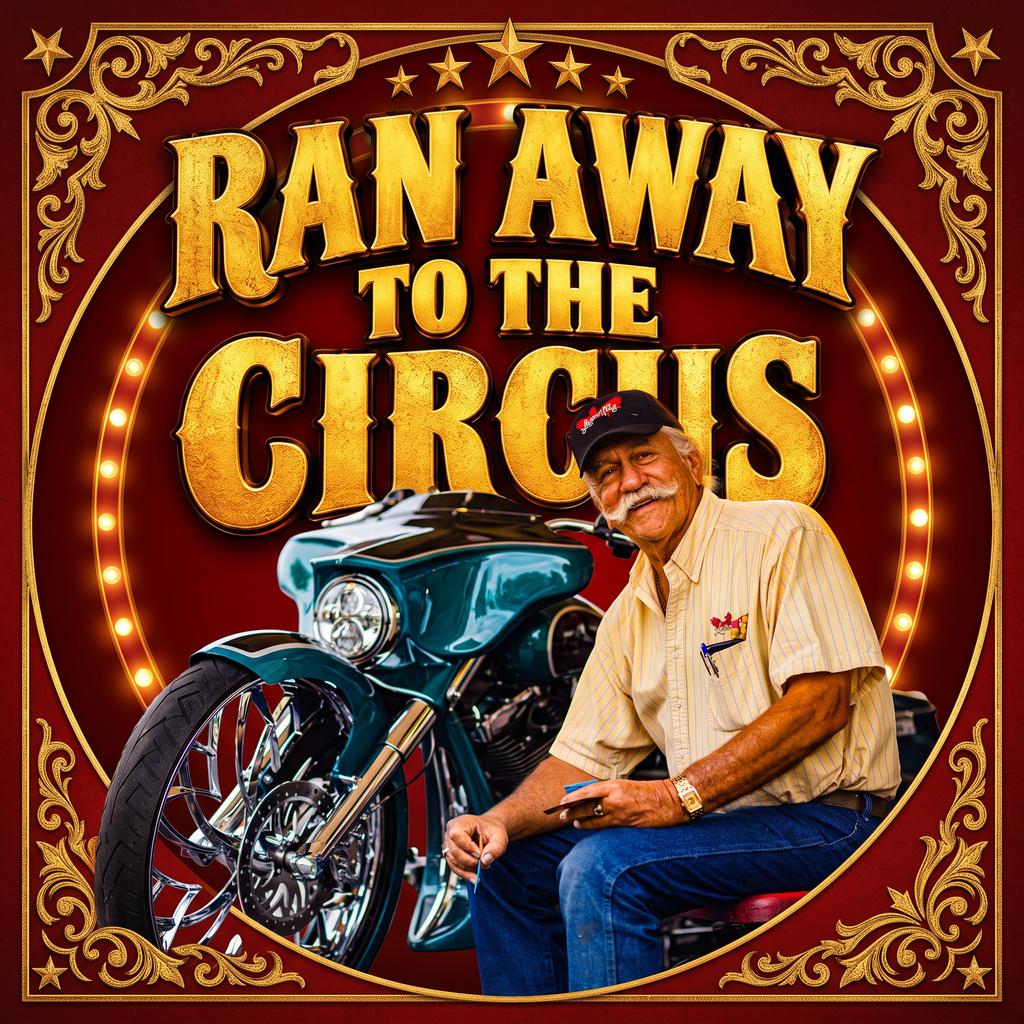
🎧 Listen and Watch Give A Heck Podcast
This alcoholism recovery story begins with a teenager who ran away to join the circus as a drummer. Dave Letterfly Knoderer, circus performer, liberty horse trainer, airbrush muralist and author, joins Dwight Heck to share how detours, hitting bottom and recovery changed his work and his relationship with his father.
🎤 Give A Heck Podcast
Real conversations and solo episodes about purpose, financial stewardship, mindset, leadership, and intentional living.
🔍 Episode Overview
Dave Letterfly Knoderer grew up in Ohio, the son of a Lutheran minister and an opera singer, and the younger brother of a boy whose behaviour nobody could explain until he was diagnosed with Asperger’s decades later. Dave withdrew into being productive, started pinstriping his wagon and bicycle as a child, and by his teens decided the answer was to run away and join the circus. He started as a drummer, painted the circus trucks between shows, and found his way to the horses.
Over the next three decades Dave became a liberty horse trainer and an award-winning performer, and built an art career around sign painting, carnival murals and airbrush. He became the most prolific motor home airbrush muralist in the recreational vehicle industry, spent 15 years as resident artist at the country’s largest RV dealership, and today travels a seven month route pinstriping motorcycles at Harley-Davidson dealerships. Along the way he shares the comedy act he did with a little black mule, Gold Dust and the Old Cuss, which is on YouTube.
Then alcoholism brought it all to a halt. Dave talks openly about hitting bottom, the recovery fellowship, the moral inventory that started his writing, and how recovery changed his relationship with his father, a perfectionist who became his best friend. He has five books published, four more manuscripts underway, and a message about options, purpose and not giving up.
Dwight adds his own thoughts on legacy, awareness, serving others, and why your story may be the thing someone else needs to hear. Dave also shares two free books, Hit the Road and Thrive: Seven Secrets for Living the Dream and Responsible RVing, and where to find them.
📚 What You Will Learn in This Episode
- How a teenager ran away to join the circus and built a creative life from drums, paint and horses
- What a mule, a liberty act and classical horsemanship taught Dave about relationship
- How detours, from sign painting to RV murals to Harley-Davidson pinstriping, kept reshaping his career
- What hitting bottom with alcohol looked like and how recovery introduced Dave to himself
- How a moral inventory became the start of his writing and five published books
- How recovery turned a strained relationship with his father into a best friendship
- Why options are the key to happiness, and what to do when you feel stuck in the cloud
📵 Chapter Summaries
[00:00:00] Teaser and Show Introduction
Dave’s mule act opens the episode, followed by the standard Give A Heck introduction.
[00:01:23] Welcome to Dave Letterfly Knoderer
Dwight introduces a man who ran away to join the circus as a drummer, became a liberty horse trainer and a mural artist, lost it all to alcoholism, and rebuilt his life through recovery and writing.
[00:03:49] Growing Up the Younger Brother of a Boy Nobody Understood
Dave was born in Indiana and raised on a university campus in Ohio, the son of a Lutheran minister and an opera singer. His older brother’s behaviour had no explanation for decades, Dave withdrew into being productive, and he started painting pinstripes on his wagon and bicycle.
[00:06:59] Running Away to Join the Circus
A frustrated teenager decides his family is the problem and runs away. In the circus he plays the drums, adding drum rolls and rim shots to heighten the audience’s experience.
[00:08:22] Painting Circus Trucks and Finding the Animals
Between shows Dave paints scroll work and lettering on the circus trucks, and the animal people notice his interest in the horses, elephants and camels.
[00:09:12] Relationship 101 With Horses
Horses only understand consistency and kindness. Dave describes his six pony liberty act, a horse that lay down and sat up, and his study of classical horsemanship, including a dancing horse schooled to the highest level.
[00:10:50] The Mule Act: Gold Dust and the Old Cuss
Love at first sight with a little black mule, the comedy act they built together, the break away tab on his pants, and how she scooped him up to carry him out of the ring. Dave had her for 34 years, and the act is on YouTube.
[00:12:34] Hitting Bottom and Entering Relationship
Alcoholism takes hold, Dave hits bottom, and recovery asks him to build relationships with people, which he finds much harder than building them with horses.
[00:13:57] The Moral Inventory and Where the Writing Began
The long written inventory that is part of recovery turns into Dave’s creative writing, first marketing material for the RV industry, then essays and a memoir.
[00:15:34] Five Books and Four More Manuscripts
Dave tells how readers inspired Hit the Road and Thrive, shares that he has five books published with four more manuscripts underway, and describes the book about growing up with a neurodivergent brother.
[00:16:40] Legacy, Purpose and Gratitude
Dwight and Dave talk about legacy as something you build while you are alive, and Dave describes living with a heart full of purpose and gratitude, with an active imagination and ongoing curiosity.
[00:18:51] The Music Behind the Show
Dwight asks what changes when the music is muted. Dave explains how music heightens every sensation, and that a show is always a team effort of music, lighting and props.
[00:22:01] The First Mentor and the Craft of Sign Painting
A sign painter who joins the circus in Illinois becomes Dave’s first mentor and opens his eyes to letter form, layout and pattern making.
[00:24:34] Detours: A Michigan Mentor and a Sign Company Apprenticeship
A 1976 detour, a mentor in Michigan, a winter job at a sign company that turns into a year of apprenticeship, and a circus that is beginning to cut its animals.
[00:28:35] Sobriety, Computers and the Rise of the RV Market
Dave chooses to become the best sign painter in Jackson, Michigan just as vinyl cutters arrive. He discovers the motor home market, turns to airbrush murals, spends nine years on the road, and becomes resident artist at the country’s largest RV dealership for 15 years.
[00:31:48] When Wraps Took Over: From Motor Homes to Harley-Davidson
Digital wraps change the market in the early 2000s. A mural job in an Iowa motorcycle dealership leads Dave to pinstriping, and to the seven month route he travels today.
[00:35:10] Free Books: Hit the Road and Thrive and Responsible RVing
Dave explains who each book is for, how Responsible RVing came out of 50 years of RV experience, and where listeners can get both resources.
[00:40:48] Pivoting When Technology Changes Your Career
Dwight points out that Dave kept pivoting when technology removed his income, while many people camp where they are. He then asks what rock bottom looked like.
[00:43:00] Rock Bottom, Recovery and a New Design for Living
Dave describes a six year old’s decision to do everything himself, how that became self-centredness, and how meetings and a mentor introduced him to himself. Today he works with men who are just starting out.
[00:46:06] A Best Friendship With His Father
In sobriety Dave’s empathy for his father grows. They become best friends, and one summer his father joins him painting around the carnivals.
[00:48:26] Horses as Therapy and the Slogan “Options Are the Key to Happiness”
Dave describes how horses are now used in prisons and hospitals, why he sees purpose in how his life unfolded, and the teenage slogan that has guided him.
[00:52:05] A Buffet Mentality, Not One Dish
Dwight talks about the danger of focusing on one thing, why you need more than one passion, and why serving others matters at every age.
[00:55:05] Writing as Healing: The Story He Never Told
Writing frees up space in your head. Dave describes an incident he was ashamed of for years, hearing another man tell the same story at a retreat, and putting it in a book so it can help someone else.
[01:01:57] Your Story Can Give Someone Hope
Dwight shares what writing his own book did, the response to his scoliosis episode, and why a podcast episode can still reach someone years later.
[01:09:30] The Books: Speedy, Kinker, The Galloping Snapper and What Comes Next
Dave walks through each book in order, then the ones on the way: The Sign King, Red Sorrel on the Road Home from Pegasus Publishing, and the book about his brother.
[01:16:00] Never Discount the Power of Your Story
Dwight encourages listeners to share their story, join a group, be vulnerable, or simply start journaling with bullet points.
[01:19:16] What It Means to Give a Heck
Dave describes how the need for applause turned into a purpose, and how his skills now serve a far greater mission.
[01:22:12] Awareness, and Hope for Someone Ready to Give Up
Dwight speaks about awareness and being willing. Dave leaves listeners with “don’t give up five minutes before the miracle” and the picture of reaching your fingertips out of a cloud.
[01:26:27] Where to Find Dave and Closing Thoughts
Dave names letterfly.com as the best place to start, thanks Dwight, and Dwight closes the show.
🎯 Key Takeaway
Dave’s life did not go in a straight line, and he says the detours are what shaped it: the circus that cut its animals, the computers that took away sign painting, the wraps that ended the motor home murals, and the alcoholism that brought everything to a stop. What carried him through was relationship, with horses first, then with people in recovery, and finally with his father. His message is that options are the key to happiness, and that if you are in the cloud right now, you reach out with your fingertips, because you should not give up five minutes before the miracle.
💬 Continue the Conversation
If this episode resonated with you, here are related episodes to explore:
Another guest who worked his way out of addiction, with the daily discipline, faith and community behind his turnaround.
On feeling alone, the exhaustion of hiding it, and using humour to reduce shame, a thread that runs through Dave’s story too.
A guest who started over after losing everything, and what he learned about rebuilding.
Dwight’s own story of leaving one career for another, the same willingness to pivot Dave describes.
Dwight on breaking generational patterns and being the present father he never had, which echoes Dave’s healing with his own father.
🔑 Key Themes Discussed
- Running away to join the circus and finding a creative life
- Learning relationship through horses and a mule
- Detours that reshape a career, from sign painting to RV murals to pinstriping
- Hitting bottom, recovery, and healing a relationship with a father
- Writing your story as healing, and options as the key to happiness
👤 About Dave Letterfly Knoderer
Dave Letterfly Knoderer grew up in Ohio, the son of a Lutheran minister, and ran away to join the circus as a teenager, first as a drummer and then as a painter of circus wagons. Through the 1970s he became a liberty horse trainer, and over three decades he studied classical horsemanship and performed as an award-winning horseman. He built an art career that includes murals for amusement parks and restaurants, theatre sets, gold leaf, and the gilding on antique fire trucks, and he became the most prolific motor home airbrush muralist in the recreational vehicle industry and a Hall of Fame contributor to it. Today he travels a seven month route each year, pinstriping motorcycles at Harley-Davidson dealerships, and spends the winters in Florida. Dave is the author of five books, including Speedy: Hurled Through Havoc, Kinker: Circusing the Seventies, The Galloping Snapper: Confesses Everything, Hit the Road and Thrive: Seven Secrets for Living the Dream, and Responsible RVing: How the Ultimate RV Changed My Life, and he is working on more. He speaks at national and international conferences and has been at his creative work for more than 50 years.
🌐 Connect with Dave Letterfly Knoderer
- 🌐 Website
- 🎨 Artist Page
- 📚 Author Page
- 🎤 Speaker Page
- 🎁 Free Book: Hit the Road and Thrive
- 🎁 Free Book: Responsible RVing
- 📖 Amazon Author Page
- 📺 YouTube
- ✍️ Blog: LetterflyWrites
🤝 Connect with Dwight Heck
- 🌐 Give A Heck Website
- 🎤 Podcast Page
- 📺 YouTube Channel
- 🎵 TikTok
- 🐦 Twitter / X
- 🎤 Work With Me / Be a Guest
🎧 Listen and Watch This Episode
- 🎥 Watch on YouTube
- 🍎 Listen on Apple Podcasts
- 🎧 Listen on Spotify
- ❤️ Listen on iHeart Radio
- 🎵 Listen on Amazon Music
- 🎤 Listen on Audible
💭 Final Thoughts
Dave’s story is proof that a life can be rebuilt from the bottom, and that the things that hurt us can become the things that help someone else. Ask yourself what your own detours have taught you, and who might need to hear your story. If you feel stuck in a cloud today, reach out with your fingertips and let someone help you see past it.
📣 Call to Action
🎧 Enjoyed this episode?
✅ Subscribe to the Give A Heck Podcast on your favourite platform
- ⭐ Leave a review at https://ratethispodcast.com/giveaheck
🎤 Think you have a story worth sharing?
📝 Full Episode Transcript
[00:00:00] Dave: And then I would act like I was taking a bow, and she would come up and act and she would, uh, bite at the, the, the special tab on the back of my pants, which would make my pants break away and come off.
[00:00:15] And then I would act like I was embarrassed. And I would start running and stand in the middle, and I’d whistle to her and she’d come running and she’d scoop me up on her back. She’d put her head down between my legs and scoop me up.
[00:00:28] Speaker: Welcome to Give a Heck. I am your host, Dwight Heck, and for much of my life, lived my life in quiet, desperation wondering how I was going to pay the bills, take vacations, save for retirement, and one day wondering if I would get off the hamster wheel of life and have purpose, a life that most of society lives, which takes us to work, then home, then repeat, and pays us hopefully enough.
[00:00:52] Just to survive the harsh truth that most live with more months than money and have no idea how to live life on purpose, not by accident. This ensures the mass majority are living not just financially broke, however, emotionally and mentally as well. Due to financial pressures and each episode, I will introduce you to thoughts, ideas, and guests that can help you to learn how you too can live life on purpose, not by accident.
[00:01:23] Dwight: What does it take for a teenager to walk away from home, join the circus as a drummer, and end up decades later as one of the most prolific airbrush muralists in the recreational vehicle industry? And what has to happen along the way to a man who built his life on performing and creating for everything to come to a complete stop.
[00:01:46] Welcome back to the Give a Heck podcast. I’m your host, Dwight Heck, here to help you live life on purpose and not by accident. My guest today grew up with a father who demanded perfection and the constant frustration of never quite measuring up eventually pushed him out the door. As a teenager, he found his way into the circus first as a drummer, then with a paintbrush, painting big signs, animal scenes, and festive artwork on circus wagons themselves.
[00:02:22] Through the 1970s, he built a bond with animals. Under the big top. He became a liberty horse trainer, and over the next three decades, he apprenticed himself to some of the finest horse trainers in the world. Learning the haute école, the highest level of classical horsemanship. That work took him to the stage as an award-winning performer.
[00:02:46] Alongside the horses, he built a career as an artist, painting murals for amusement parks and restaurants, theatre sets, gold leaf, windows, and the gilding on antique firetrucks. Then alcoholism brought all of it to a halt. Out of that bottom came a practical faith, a new purpose, and a very different relationship with his father.
[00:03:11] He has become the most prolific motor home, airbrush muralist in the recreational vehicle industry, and a Hall of fame contributor to it. Today he travels a seven month route every year. Pinstriping motorcycles at Harley-Davidson Dealerships, east of the Mississippi. He has written several books. He speaks at national and international conferences, and he’s been at his creative work for more than 50 years.
[00:03:40] Dave Letterfly Knoderer. Welcome to the Give a Heck podcast.
[00:03:46] Dave: Thank you, Dwight. I’m glad to be here.
[00:03:49] Dwight: I’m glad you’re here too for, for the listeners. Uh, buckle up. Um, after researching and putting together the podcast like, you know, I do, um, Dave’s story, his life is, is amazing. I’m looking forward to hearing the details of his origin and how he got started and, and I imagine you will too.
[00:04:12] So Dave, I always like to start at the beginning because our origins absolutely shape everything in our life. I know people say, well, the rear view mirror is small for a reason. The windshield’s bigger because the past is small. It’s in the past, but the past does affect us, right? They can discount it, but it shapes everything in who we are.
[00:04:32] I believe our trials and tribulations sh go right back to our, our earliest recollection. So take me back to your earliest memories. Was, was life like for you as a kid growing up long before the circus, the horses, or any of what you’re known for today?
[00:04:48] Dave: I’ll be happy to do that. I was born in Indiana, grew up in Ohio, the son of a Lutheran minister, and my dad was a mechanical draughtsman during World War ii, he illustrated flight manuals for the Army Air Corps.
[00:05:07] And then after the war he met my mother, who was an opera singer, and then we, uh, he, they started a family. My older brother was first and then I came along and then we moved to Ohio. I grew up on a university campus, the younger brother of a boy who produced bizarre behaviour for which there was no explanation for back in the fifties and sixties.
[00:05:37] The only thing I knew was it was frustrating. My brother was the target of all the kids in the neighbourhood because he was weird and he was the focus of my entire family when I was at home. Uh, and it wasn’t until, uh, decades later that he was diagnosed and he was diagnosed with a high functioning form of autism called Asperger’s.
[00:06:07] My response to the, uh, kids in the neighbourhood who were all picking on my older brother was to withdraw socially. And I dove into being productive. I was creative from the get go. As a little kid, I remember when I was big enough to see out of the automobile, I noticed the pinstripe designs on the other cars, and I had the idea I could do that.
[00:06:37] And when I got home, I got my paints out and I started decorating my wagon. And then I started decorating my bicycle. And then the other kids in the neighbourhood noticed what I was doing and they’d talk me into doing something for them. And I’d go, well, yeah, I could do that. And then the whole time I’d be painting something on their bicycle.
[00:06:59] I’d be thinking, why don’t they just do it themselves? And, uh, life progressed. I was a, uh, music and an art major the whole time going through school. And by the time I was a teenager, I was a frustrated, rebellious teenager. And I had figured out my family was the problem and the solution for me was to run away and join the circus.
[00:07:28] So that’s exactly what I did. I started playing the drums, uh, to accent the efforts of the performers. You know, I give a drum roll when the daredevil was about to do his scary feats. And when the ladies were climbing the web to go up to the, to do an aerial act, I’d give them a rim shot every time they kick their leg out.
[00:07:54] And then naturally they were drum licks and cymbal crashes for the, for the climactic acts of all of the, uh, acts when they would step forward and take their bows. And so that was kind of a creative way to, uh, be a drummer instead of simply being a drummer in the band, a drummer who was adding emotion and creativity to the, to heighten the experience of the audience that were watching the show.
[00:08:22] And then between shows, I would grab my paintbrush and I would start experimenting with decorative, uh, decorative circus scroll work and lettering and images of all kinds on the circus trucks. Just another creative outlet. And along the way, remember I mentioned that as a child, I was, I withdrew socially for some reason or another.
[00:08:50] When I was on the circus, I was attracted to the animals, what the animals were doing, the horses and the elephants and the camels and the different kinds of animals on the circus. And I, uh, some of the animal men, the animal people, noticed my interest in it and they started to encourage me and, and show me.
[00:09:12] So I actually entered into relat what I call relationship one oh one with horses because, uh, you know, horses don’t understand when you’re moody or you’re manipulative or you’re trying to, you know, the things that we do socially, they only understand consistency and kindness. And, uh, and, and when you create a safe place, then you can promote a connection.
[00:09:44] And so I actually, uh, entered into being in relationship with other living beings through horses First. My first act was a six pony liberty act, and then I acquired a horse who would lay down and sit up and march and everything. And, and as I continued to progress, I was fascinated with classic horsemanship and I would seek out these incredible horse trainers and learn from them.
[00:10:16] And my second horse was a dancing horse who would do the passade and the three step and the bow and all these other movements. And then my third horse was also a, a dancing horse or a haute école horse in the business. They call it high school, which simply means a horse schooled to the highest level. And then along the way, I also acquired a little mule, a little 12 hand jet black mule that the first time I saw her, it was love at first sight.
[00:10:50] And that little animal was so willing. I ended up teaching her more than I had taught any of the other individual horses that I had been working with over the years. And together with her, we did a. A comedy act. It was, it would start as with all the liberty stuff. And then we would do a comedy routine where it looked like she was being belligerent and she was, uh, ignoring and being defiant of what I was acting like I was asking her to do.
[00:11:25] And it was all for the sake of comedy. And we did a, a cute little act, and it culminated with a nice, uh, waltz and then a hind leg walk. And then I would act like I was taking a bow, and she would come up and act and she would, uh, bite at the, the, the special tab on the back of my pants, which would make my pants break away and come off.
[00:11:52] And then I would act like I was embarrassed. And I would start running and stand in the middle, and I’d whistle to her and she’d come running and she’d scoop me up on her back. She’d put her head down between my legs and scoop me up. And that’s how we would exit the ring, you know? And so we did a, a cute little act, and there it, those, uh, the act I did with her is actually right here on YouTube, so you could actually go find it if you want.
[00:12:19] Yeah. Just look up gold dust and the old cuss, and you’ll be able to see, uh, the little act I did with that little mule. She was a wonderful animal. I had her 34 years.
[00:12:33] Dwight: Wow.
[00:12:34] Dave: She was a nice animal. Yep, definitely. So, yeah, I end up, uh, actually preferring horses. And then, like you mentioned, uh, things changed in my life, uh, when alcoholism got a grip on me, and then I got to the point where I needed to, uh, I hit bottom and I needed to do something about it.
[00:12:56] And that’s when a complete transformation occurred because, uh, uh, I don’t know how many of the listeners know very much about the fellowship of, of aa, but the, the solution is for us to enter into relationship with each other, and especially with a higher power. So I had entered into, I had entered into relationships with horses and felt that bond.
[00:13:25] And then it was as soon as I had the instructions, it was certainly a much, it was a greater challenge to enter into relationship with my fellow, uh, uh, fellowship members, because people are a, a much more complicated, uh, uh, animal than, uh, you know, than a, than a horse. But, uh, it ended up, uh, providing me with, uh, the transformation that turned me into a completely different person.
[00:13:57] The process included writing. There was this step that’s that, uh, it, it, you have to, uh, write down. It’s called a moral inventory. You write down people in your lives and events that occurred and, and beliefs that you had acquired and all of these things. And it’s all, uh, uh, big, long, exhausting inventory that you make with the help of a, a guidance, uh, mentor.
[00:14:29] And, uh, that is actually where my creative writing started because I had done so much of this, uh, inventory work for the sake of recovery. I was on a roll and I just kept writing. At beginning, I started writing marketing material for me as a motor home artist, introducing myself to the RV industry. And then I evolved into an a memoir because I had all those interesting stories for my life, living all over, uh, most in North America, half of Canada performing with horses in all these, uh, prestigious places.
[00:15:12] I had some interesting stories to jot down. And so I started writing essays and then eventually I had enough to fill a book and then another, another book, and then somebody would inspire me, Hey Dave, you are travelling the country, living the dream, doing what you love. You should write a book on how to do that.
[00:15:34] So I did. I wrote another book called Hit the Road and Thrive Seven Secrets to Living the Dream. And so, uh, yeah, and my writing continues. I’ve got five books published and I’m working on four more manuscripts. And among them is the story about my experience as a child growing up under the, with an older brother who was a neurodivergent, which is designed to hopefully provide hope for the reader who may very well also be in a frustrating family situation.
[00:16:13] And he doesn’t know that there’s a way out. So, uh, definitely that’s what fuels my writing today, the transformation that has occurred into me becoming a people person who has valuable experiences and interesting stories that I can. Turn into, uh, something that will benefit the reader.
[00:16:40] Dwight: Well, yeah. Any, anything that you’re doing though is evergreen, meaning it’s gonna be valuable to people forever.
[00:16:48] Right? And putting down things on paper creates, when, when you’re doing it alive, becomes a living legacy. People always say, well, what do you want your legacy to be? And I coach people and tell ’em, well, your legacy is going on right now. If somebody was to be asked about you, what would they say?
[00:17:12] Dave: Definitely.
[00:17:13] Dwight: Would you have a story to share? Right. That would be good and positive and uplifting.
[00:17:19] Dave: And there’s been growth that occurs. And oftentimes the, the people that are around me, I’m not necessarily on the, have the ability to, uh, encourage or coach them in regards to something that would provide them with a benefit.
[00:17:40] But I do have the ability to be a good example of someone who lives with a, with a heart filled with purpose, and, uh, and a heart filled with gratitude for all that has taken place and who has, uh, an active imagination, who remains curious and, and ongoingly creative. So that, uh, uh, it just, I’ve always been like driven to.
[00:18:13] To create yet, yet another. And so this is this interesting sequence that has been my life, starting with drums and painting around the circus and, and evolving through my relationship with horses has now become a tremendous opportunity for me to, to provide interesting anecdotes that will hopefully inspire the reader and bring about, uh, inspiration to help them join me with my purpose to make this a better world.
[00:18:51] Dwight: Oh yeah, definitely. For those listening who are watching you, go to Amazon and check out, um, Dave’s books. Uh, you should see all the different comments of people that have read your books, and obviously you have, but for the listeners or viewers, um, go check it out. Some of the comments I was reading yesterday when I was building the deck for this were amazing how you’ve touched people’s lives already and made a difference.
[00:19:17] So congratulations on stepping out, taking a leap of faith, whether it started through, uh, the programme or not because you were journaling or whatever you want to call it, right? You were writing down, um, what you were going through it, it, you’ve, you’ve gone through such an e evolution, right? It’s just amazing to me listening.
[00:19:41] I read about it, but listening to you actually talk about it and the passion behind it. You don’t talk to very many people that start learning human connection through animals. At least I haven’t uhhuh. So I find that absolutely fascinating, especially you talking about, um, your mule, right? And you can, you can see the joy in your face and, and you can hear, you can hear the inflexions in your voice as you’re speaking about just the journey you’ve been on.
[00:20:10] Um, I liked when you talked about the music where, where you you’d, you know, be that highlight for that person doing something amazing. And on the circus, in this circus part of me itself, and it made me think, people ask yourself this. If you were to mute a TV show that had, you know, suspense or horror or whatever, take out the music, how good is the show?
[00:20:36] Dave: That’s right. Because that’s exactly what they use to heighten the emotion and the feelings and the, and the environment. Your, your, your sensations. All of the sensations, the touch, the smell, the, uh. The but the sound, all of the sensations are all heightened by those suggestions made with music.
[00:21:02] Definitely.
[00:21:02] Dwight: Yeah. It’s, it’s amazing though, really when I think about you doing that and how many people are oblivious that are listening or watching, right? I’m very attuned to what I watch from very young age. It doesn’t matter if it was a live production on in theatre or whatever, that if the music wasn’t there, the actors, actresses, whatever you want to call them, the people doing the production or doing the entertaining and the circus or whatever would be so lost.
[00:21:37] So really at the end of the day, in order for people to shine the support of music, the lighting, it can be, has to do with the stage props. Everything are just as important if not more important than the person doing the show, in my opinion. Oh
[00:21:53] Dave: yeah. Uhhuh. Well, it’s, it’s actually a team effort.
[00:21:58] Dwight: Yes.
[00:21:58] Dave: So definitely.
[00:21:59] Yeah, definitely.
[00:22:01] Dwight: And that’s great to hear. Thank you for sharing that. So you talked about, so you went from painting the circus wagons to murals gold leaf and eventually becoming the most prolific motor home airbrush, muralist in the recreational vehicle industry. How did that art career take shape along the way?
[00:22:22] Like we’ve talked about your book and stuff and I’ve read so much about how, you know, you talked about doing bicycles with people and wondering why people couldn’t do it. And at that age, of course you’re gonna wonder that because not everybody has the same gifts and talents in my, like God for me, gives everybody something unique.
[00:22:40] Now, can you tap into that uniqueness? Does somebody encourage that uniqueness? How did your art career take shape along the way? Were there people along your journey that stand out, that really supported you, that taught you specific processes? Can you share with me like more in detail, um, your art part of your life?
[00:23:03] Dave: I’d be happy to, uh, as an artist coming right outta high school, I was pretty much gung-ho on figuring it out myself. And I didn’t know anything about good letter form or how you go about laying something out, or even pattern making or some of the little techniques that, uh, that were used by the sign painters back in the good old days.
[00:23:26] And I was fortunate during the first full summer after I graduated from high school, there was a sign painter that joined the circus while we were touring through Illinois. He just tagged along with us and he was hired to, uh, to put decorations on the, on the, on the circus trucks. And I had the opportunity to observe and help him and ask questions, and he would, he would teach me.
[00:23:57] So, um, that was my first mentor and that really opened my eyes up to, uh, the possibilities that, uh, were available. And he gave me a big boost. And, uh, as I continued with my other circus ambitions, uh, circus truck decoration was certainly part of what was going on at that time. And I started to accomplish some more aggressive, ambitious projects, uh, as a, you know, even a.
[00:24:34] 19-year-old, and you asked me about how my career evolved. Well, I have to credit the detours that took place along the way for rocketing my career, uh, especially as a, as a sign painter because, uh, see, I wasn’t getting paid whenever I was painting all these circus trucks. And so I had a, uh, detour that occurred in 1976.
[00:25:13] And I had a mentor in Michigan who would encourage me. He was a huge source of encouragement. He was like a SA, uh, s uh, a father figure. My dad was at one point, was dead set against everything I wanted to do. And my, my mentor in Michigan was, he would provide encouragement for all these wild ideas that I came up with, and he’d ask the practical questions that I needed to be involved with in order to accomplish these things.
[00:25:44] And it was in his living room wherein I realised that I should learn how to become a sign painter. That was a trade back when we were kids. It’s pretty much gone now. But that was a lively trade and there were lots of opportunities to learn those kinds of skills. And at one point. A detour occurred in the I one winter between circus tours.
[00:26:14] I got a job at a sign company so that I could apprentice and learn some of these sign painting skills. And then in the spring of the year when it was time to go hit the road with my ponies and my horse, the circus was experiencing growing pains of its own with the, uh, with, and they were starting to, uh, eliminate some of the traditional inclusions in the show, especially animals they were starting to taper off with, with using animals.
[00:26:53] So in the spring of the year, I was counting on this job that had been promised to me, and in the spring it wasn’t there. So I stayed at the sign company and that, uh, that full year I worked alongside of journeyman sign painters lettering men that were exceptional lettering men that had a handle on all these concepts and like you said, the gold, gold leaf and, and, and pin striping and, and letter form and, and laying out, scaling up everything you can think of in that, in that interesting trade.
[00:27:33] And so I spent a full, a little over a year as an apprentice, and that’s really what rocketed my level of my skill level. And then I resumed my, uh, performing ambitions and then I. Combined it with painting around the old fashioned carnivals that would travel throughout Michigan, which gave me an interesting outlet for painted artwork because they want interesting things.
[00:28:04] They want scrolls and images of clowns and snarling tigers and, and, and Frankenstein and, and, and cemeteries with bats flying in the air and stuff. And it gave me an interesting place to, uh, to develop, continue to develop my skills. And then, uh, uh, and, and a couple of years into that coincided with my hitting bottom as an alcoholic.
[00:28:35] And then I was simply in the right place at the right time. I had, uh, the ambition in sobriety to become the most, uh, the best sign painter in all of Jackson, Michigan. And I spent two years there. And that coincided with the computer showing up on the scene, the computer that would cut out, uh, vinyl lettering, that you could just simply stick on things.
[00:29:07] So it was starting to take away that, uh, livelihood from the sign painters. And I was in the right place at the right time. And I discovered a huge market while I was looking around for something else to do. I ex ex discovered a huge market that hadn’t been there before. The RV industry was just evolving and maturing to the point where they were beginning to offer large, uh, diesel pusher motor homes for the, for the median priced, uh, market.
[00:29:49] Prior to that, the only thing that was 40 feet long was for the luxury market, the Vogues and the Silver Eagles and the Wanderlodges. And so, uh, Elkhart, Indiana was just starting to mature into a, into a nice middle range, serious big diesel pusher motor home. And the people were buying them. They were selling their homes and buying these motor homes.
[00:30:18] And at that time, in the middle eighties, those motor homes were plain at best. They had a belt line stripe around them, and that was it. And so they came, uh, looking for ways to make their motor home better looking. And I was in the right place. I had developed my mural painting skills on the carnival with the airbrush, and I just evolved into an airbrush mural artist.
[00:30:47] Since I knew how to travel, I learned how to travel with the circus. I was able to capitalise on that market because I would stay in the proximity of where they were clumping up at either campgrounds or at rallies or at the factory or anywhere that they would, I was on the road solid for nine years, just chasing motor homes, putting murals on motor homes, and that’s what established the name Letterfly as the most prolific in the RV industry.
[00:31:23] That’s what also allowed, or it made it attractive for the largest RV dealership in the country, which is was in, uh, Tampa to invite me to become the resident artist. And I was the resident artist there for 15 years, and that’s what gave me the ability to have a home of my own. And, uh, so yeah, definitely.
[00:31:48] So all, all then the horse and the mule had a, had a place to, they became a hobby and uh, and I had a place to go and people would come all from all over the country to find me to get a mural on their motor home. And then another detour occurred. The technology came up with a way of digitally printing wraps, and they took the labour out of paint masking systems where they could put a full body paint job on a motor home and make it look like a gigantic tennis shoe.
[00:32:30] And that eliminated the, the, uh, mindset of the coach owner wanting to find out some way of making his motor home look better, because they were ha they were satisfied with, with the way they looked. And that happened in the early two thousands. So fortunately another detour was underway. I had a motor home customer who had a Harley-Davidson dealership and he was expanding it, and he wanted me to come up to Iowa to paint murals inside his motorcycle dealership.
[00:33:08] And so I spent part of the summer in Iowa painting Mount Rushmore and painting big eagles flying along and, and, uh, logos and, and some of their mottoes and just given the whole place a, a nice, uh, retail experience for the motorcycle customers. And that’s where I was introduced to the bikers. They would come in and watch me paint, and it was just like going back to childhood.
[00:33:38] They’d say, Hey, would you come out to the parking lot and look at my motorcycle? I’d like to, you know, find out if you could paint something interesting on my bike. So that’s where I ended up, uh, evolving from the motor home mural artist into the motorcycle, uh, pinstriping artist. And today I have a seven month route where I am, I go from Harley-Davidson dealership to Harley-Davidson dealership throughout, uh, be mostly between Philadelphia and Chicago.
[00:34:15] And I zigzagged my way north and south in the spring and fall back to my home in Florida where I spend the winter. And, uh, I have no idea how I’m going to improve on that because I just absolutely love living my life this way. Just staying in the, in the perfect weather year round, which is, which is what the RV lifestyle is all about.
[00:34:44] So in addition to being a classic horseman and a, an artist with a command of not only the sign painting trade, but especially as a mural artist and now a Pinstriping artist, but in addition to that, I have a command of what is involved with living your life in an rv, travelling around, uh, you know, living the dream.
[00:35:10] So this is also part of what has influenced, uh, what I call my purpose, and it has influenced me writing a couple of books that, uh, I’ve actually made available absolutely free for your listeners. One of these books is called Hit the Road and Thrive Seven Secrets for Living the Dream. And that’s designed to, uh, benefit the person who, uh, perhaps selected a practical way of living his life.
[00:35:55] And now he’s bored and he’s sitting on the couch wishing he was out here on the road, living the life that I’m living. And it’s kind of a, just a, a source of encouragement with a little bit of attitude adjustment built in to help that person overcome the reluctance. Of taking that first step out into the unknown, and that, uh, manuscript is available at a website that’s real easy to remember.
[00:36:31] All you have to do is go to daveletterfly.com and there’s a way for you to get the resource absolutely free. Get it emailed right to your inbox. And then the other book that I wrote has to do with the RV experience. I wrote a book called Responsible RVing because I have a background with RVing over 50 years that started with me building my own camper that went on the back of a pickup truck.
[00:37:08] So I have a, an intimate, uh, knowledge, especially because of those years that I spent t it was 20 years of, of being around the RV industry, decorating motor homes. And there have been some monumental changes that have taken place in the RV industry that started back after World War II when there were lots of talented and there was lots of, uh, industrial, uh, prowess in this country.
[00:37:41] And the original premise was to build a good product to encourage people to go camping, you know, hook something behind your car and go camping when they were first, uh, encouraging that whole thing and that, uh. Has completely changed since its original premise now that there’s a huge demand for it. As you’re probably aware, there’s a, when the supply and the demand, uh, switches, then uh, all of a sudden the, the, the quality of what’s being produced today has become questionable.
[00:38:20] And, uh, so I wrote another guidebook that’s called Responsible RVing, that, that, that clarifies what it is that’s taking place that you need to know about if you’re going to enter into the purchase of an rv. And then it also gives you all the options to purchasing an RV because there are many. And, uh, and it also introduces the mindset of our, the need for environmental responsibility as human beings on this planet that we share with each other.
[00:39:01] Uh, so it’s part, uh, instructional part, uh, uh, tribute and it’s part, uh, memoir. ’cause I share many of the stories that have occurred as the result of my traipsing up and down the highway and in a variety of different kinds of, uh, uh, recreational vehicles. So, uh, and that book, responsible RVing, it’s like I’ve got something that I want.
[00:39:32] To go out into the world because my idea is this is going to benefit the world. So I’ve also created a website where you can get that manuscript absolutely free, and that’s easy to remember too. It’s just go to responsiblerving.com and there’s a place to get that resource for all your listeners who are, even if you’re just interested in the idea of travelling around and, and living a life that you have only dreamed of, I encourage you to get that resource and uh, and uh, and read up on it.
[00:40:13] So definitely because uh, that’s, that’s what the transformation that that has taken place in my life and that has occurred is the real result of all these detours. It has turned me into a person who has a sincere desire to provide something that will benefit those who are around me. And I appreciate this opportunity to, uh, reach your audience and hopefully provide them with some benefit.
[00:40:48] Dwight: Absolutely. So to add, there’s a few things I wanna add. For those that want to access those websites, go to giveaheck.com. We’ll make sure that they are listed in the show notes. Um, so you’ll be able to go for a one stop shop, go to giveaheck.com, go to the podcast tab. At the top you’ll see a picture of Dave and there’ll be detailed show notes along with chapter summaries and, uh, information on how to reach out Dave’s socials, anything to do with his websites and stuff that he’s talked about.
[00:41:23] So one of the things you went from, you talked about going from things that were evolving in your life, things that were changing. A lot of it has to do with technology. And I guarantee there’s lots of people that, um, are listening or watching that have gone through this themselves or know somebody that’s gone through that.
[00:41:42] Their job, their career was changed because of technology for you There, what I see happening. Is that you were always open to pivoting, to actually going into something different. Realising that your horse days of, of training and doing your c your circus stuff became a hobby and you evolved past that into something different.
[00:42:09] A lot of people though, become camped in life when they lose their primary source of income or their primary passion. You didn’t necessarily let that stop you, but you did go into a point in time. We touched on it, you touched on it briefly, uh, in regards to, um, your, how you got into writing and how it affected your life with alcohol, right.
[00:42:32] And alcoholism. What did, what can you share with us when you hit, when you hit rock bottom, what did it look like for you? How did it, how did it open up your eyes or, um, change even? Like I, I read about the fact that it helped you with a practical relationship with God and it helped shift your relationship with your dad.
[00:42:56] Can you talk about those, that period of time in your life?
[00:43:00] Dave: I’d be happy to. And it started at the beginning of the show when you introduced the audience to the fact that our personalities were developed when we were children. And I, I was able to disclose how that frustrating family dynamic because of my older brother and my perfectionistic father kind of provided a frustrating place.
[00:43:25] And my response ended up, or the personality that developed became the highly creative person. So it ended up providing me with part of what ended up making me great now. But that’s not to say that I had the, the perfect formula for everything because I was not socially, uh, adequate at all. I was, uh, what we learn in the process of recovery is that the problem is that I’m self-centered.
[00:43:55] So that means that this, this, uh, this decision that I made as a 6-year-old to, that to become determined, to figure out how to do everything myself, so I didn’t need anybody else. All that did was set up the tendency to become intensely self-centered. And that was part of what needed to become uncovered in the process of recovery.
[00:44:28] And the place that that takes place is in relationship in the, uh, in what we call the meetings, which, which are like therapy groups and in, and it takes place one-on-one with a, with a mentor figure. A sponsor figure. And so what ended up happening in early sobriety, I was, that’s where I got introduced to myself.
[00:44:56] These other people were introducing me to myself because they’d already gone through it. They’d uncovered the belief systems that had kept them separated and, and, and laid this all of this stuff at God’s feet. And, and, and. Experience transformation into something different. And so again, it was the, the detour, and then it was the outside influences that I had, uh, that I began to allow that, that ended up introducing me to this new design for living my life.
[00:45:37] And today I work with other men who are on the entry level and I’m, uh, going through this, uh, introductory process with them because that’s how the, that’s the whole premise of the programme is, is once we, once we get it, we, we gotta give it away. And so, uh, definitely. So, uh, it’s really also interesting that my daddy was a minister and he was heavily involved with the church.
[00:46:06] And even though it, he, we didn’t necessarily have a, have that kind of, uh, uh. What do you call it? Kind of a, you know, warm, fuzzy home situation. Even though I loved my dad, I loved everything that he loved. That’s part of the reason I loved the circus. My dad loved the circus. And so, uh, but in recovery, whenever my belief systems, uh, when I, when I was able to get these things out and look at them and then go, wait a minute, these aren’t serving me anymore.
[00:46:40] And then I started to acquire a new belief system, especially a purpose in my life, which was being of service to others. My attitude and my perception and my empathy for my dad started to introduce me to a different person, a person that I didn’t have access to when I was a little kid. So in sobriety, I was able to go back to my dad and enter into what became a, a best friendship.
[00:47:16] We became the best of friends and he spent one summer with me when I was painting around the carnival, just because he finally realised this guy is having a blast doing what he loves. I’m gonna go join him. And he spent the whole summer with me. One summer we had that, uh, we had the Boy to man, uh, healing experience, and we became very close.
[00:47:42] And so, uh, uh, and that’s thanks to recovery because one of the things that I learned as the pro in the, in that process is that, uh, we, we, we see who we are. And so if I was unable to look at my dad and, and, you know, see the, the, the good person that was just making his, his set of mistakes as he went through his life, just because he was trying to do as good as he could, and he just happened to be a perfectionist because of another belief system that he acquired when he was a kid.
[00:48:26] All of a sudden that gave me. Uh, as I began to heal what was going on inside of me, it gave me the gift of empathy and understanding and, uh, some of these other gifts that, uh, helped to promote, uh, connection and regard for, for one another, which, uh, and another thing that’s really interesting and that I think that I have an advantage over many, many people, it’s really interesting now that they’re taking horses and using them for therapy.
[00:49:02] You know, they take ’em into the prison systems and have these convicts learned to take care of a horse, and they take ’em into hospitals where people have personality disorders and they teach them to, to interact with a horse. And then they’ll take the horse into, uh, hospitals where there are, uh, different conditions and they’re discovering that horses and interacting with horses are, is highly therapeutic.
[00:49:32] So I think that, uh, God knew what he was doing when he put, when he choreographed the way that my life was going to play out, because he wanted me to have all of these resources before I entered into, uh, my ultimate, uh, role, which is quite possibly to do. Like my daddy was doing. He was a minister. Who sought to, in provide encouragement to his congregation?
[00:50:00] Well, here I’ve got a completely different, uh, congregation. I’m, and, uh, I have a, I have a message, and it’s a message that’s probably quite similar to the message that, uh, my dad was, you know, he was relaying what Jesus was, uh, was teaching. And so I think that, uh, in a different, a completely different way, I ended up acquiring a message, which is essentially, uh, the same, same message.
[00:50:30] And it’s, uh, I remember when I was a teenager, I came, I coined this, uh, slogan that I suppose I believed, and that was, options are the key to happiness. And it’s like, it’s, I think it might be a, a born from the curiosity, playful type attitude of, of a child. And I, just because of my situation and my, uh, creative tendencies, I never, uh, I never matured out of that.
[00:51:08] And, and, you know, certainly never did sell out to become something that would qualify as practical, practical. And, uh, I was able to, so it’s interesting that today, uh, I, I encourage, I’ve, I’ve, I’ve benefited from being willing to change. And accepting that options are the key. And, uh, so today, through the stories that I write and the books that I, uh, the, you know, the guidance that I can provide and, and the message that I have for your listeners today, it’s, uh, it’s interesting that, uh, I’ve been blessed with a, with a message that can, uh, hopefully be helpful to the, to others.
[00:51:59] And it’s given me, given me a purpose for Yeah. Getting up in the morning, so,
[00:52:05] Dwight: yeah. Well, and that’s, that’s the thing. Most people and society, it doesn’t matter what generation they were born in, they don’t have options. Right. Like you, you said your slogan options are key to happiness. Well, it’s true because those listening are watching.
[00:52:22] If you are very narrow minded and focused on one thing, what’s going to happen in your life? If that one thing goes away, look how many times that happened to Dave. So you need to look for other things that interest you. Um, stay your mind is a giant computer. It doesn’t know the difference between a truth and a lie.
[00:52:43] It only knows what you feed it. So the more you feed it of good things, the more end result will be for you to be living a purposeful intentful life. Why I spend so much time, um, getting to know people and building relationships, goal setting with them. What are you trying to achieve? You need to understand what do I want to achieve today in my life?
[00:53:04] What do I want to achieve a year from now? What, what do I want my golden years to be like? Am I gonna be that traditional person that society has told me that I gotta retire at 65? Or are you gonna be that person that’s always enlightened until you take your last breath and be a person that’s gonna go out?
[00:53:24] And always grow and always change. God doesn’t want us to be stagnant. God wants us to serve others, and by serving others, he serves us. And Dave’s a prime example of that. He’s admitted that his journey was a, was a plan, a big, a plan bigger than him that God took him through. But your journey, Dave, everything that you’ve done has affected people in a positive way.
[00:53:50] Yes, there’s probably some negativity in there, but at the end of the day, the positivity shines through right from working in this, doing music in this circus to being a per part of their performing acts to doing painting, to, you know, writing books, to going through alcoholism and learning from that, to support and serve others, to rebuilding your dad’s relationship.
[00:54:14] God has his fingerprints all over your life, and it is such a joy to hear actually, not to take discount and take away from the, some of the struggles you went through growing up with your brother or your dad, but to have that epiphany as you were going through the journey of alcoholism and, and coping and dealing and cir, you know, circumventing it and, and coming above it is amazing.
[00:54:40] Those listening are watching, there’s so many nuggets of information you can get from this. I, I truly hope you look up and, and check out Dave’s, um. Journey, check out his books. And speaking of books, I want to get into, we’re gonna wrap up the show with talking more about your books, and you’ve mentioned quite a few of them, which is, I really appreciate, one of the things I found, I’ve only written one book.
[00:55:05] Um, I haven’t been driven that much to wr to write more, even though I get encouraged to do it. Um, my book is about purpose. It’s called Give a Heck, how to Live Life on Purpose. And Not By Accident. It talks about your, the origin. It talks about planning, goal setting, putting things in place for your life to understanding that every single aspect of, like, for me, major health issues, growing up to that, there was a reason everything happens.
[00:55:33] Things happen for us, not to us. And once we accept that and that there’s a grander design for our lives, we live a more purposeful life. But in order to live purpose, we need to serve others. And we need to always stay, in my opinion, need to have a buffet mentality.
[00:55:51] Dave: Uhhuh,
[00:55:51] Dwight: you can’t just stay focused on one thing, one dish that satiates you because eventually that satiation could be gone.
[00:55:58] And now what? Now we fall into addiction and, and different personality challenges. So I know when I wrote my book, I found it to be very cathartic. When you wrote, started writing and did your first book, obviously you’ve written, you, you’ve, you’ve released five books. What was the most, what did it do for you?
[00:56:20] Was it, you know, like you talked about it, but I want more details. In your book writing process, how cathartic was it for you? Did it give you a closer connection to, um, family, to friends, to God?
[00:56:34] Dave: Definitely. I think that, uh, not only is the act of writing about specific things that occurred in my life, cathartic, but it also frees up hard drive space because you’re getting it outta your brain and you’re getting it onto the page and it just frees up, it frees up that space for something new.
[00:57:03] So that’s another benefit. Now, uh, and I used these, I’ve used these books to tell. Uh, ’cause I, I’ve been a student, uh, I take webinars. I take, uh, go to conventions. I’m learning all that I can about writing. And there was this one web, web, uh, memoir webinar that’s hard to say that I took. And the teacher said, uh, if you’re not gonna go into all of the gory details about all of the little nuance that occurred, as you’re putting these things together, all the gory details, if you’re not gonna include all them, why bother?
[00:57:51] Because that’s what is going to make your story, uh, touch somebody’s heart because there are other people who have gone through. I had an episode that took place when I was first around the circus that I was so ashamed of that I vowed I was never gonna tell anybody, and I never did until I entered into the process of recovery from alcoholism.
[00:58:24] And then I was in a ret, I was at a retreat, it was a men’s AA retreat up in Michigan, and we’re all in the auditorium on this, uh, on this university campus. And the speaker is up on the stage and he’s telling his story. And that exact same incident was part of his story. And I was sitting there in the seat listening to this other man who had gone through the same thing.
[00:58:58] I was able to go up to him after and say, Hey, that whole, and he understood the thinking process, the belief, the, the think, the things that I had locked into. And he was able to encourage me to, uh, to bring those things out and to lift them up and to let them go and, and to experience the healing and all of those kinds of things.
[00:59:26] And because of his example, I was able to take that exact same incident and put it into a form in one of my books that will potentially bless somebody else who’s out there, who’s got, who doesn’t know. And they’ve, they’ve locked this person, this thing in inside. And, uh, it, it influences their way of going, their belief, their certainly their relational, uh, uh, capacity.
[01:00:03] And so, uh, yeah, the writing process just continues that way. And a little over a year ago, I figured I’m going to tackle telling the story about being the little brother of a neurodivergent whenever that condition was not even understood. And so that’s one of my next books, and it’s designed to, uh, benefit families who may have a frustrating situation that they’re living with and they don’t know that there’s a way out.
[01:00:36] And, uh, and so yeah, that’s what drives me to, to dig deeper. And that particular story is emotional anthropology, because as a little kid, I was going through all this stuff and I was not a happy kid. So, uh, and now it’s coming out in, in, in a book form, and it’s, uh, in my, uh, intention is for it to, uh, be appealing to a large audience who will, uh, to receive benefit from, from, uh, experiencing, uh, the, what I went through as a child, you know, for the sake of, ’cause we’ve all got, we all grew up in situations that, uh, were not ideal.
[01:01:27] You know, we’ve, there’s always a, an invitation to rejoin the dysfunction. And so as we get better and better at, at becoming familiar with ourselves and then take that information and use it to benefit somebody else, then we are on a, uh, it’s positive momentum that we are, that we are part of, uh, with an intention of making this world a better place.
[01:01:57] Dwight: Oh, absolutely. I, I know with, uh, writing down and doing my book, I wrote it in, uh, 2021, um, actually started in 2020 and wrote it into 20, 21, 5 and a half months of kicking myself in the pants or patting myself in the back. Reliving in, like you said, unpacking that off your brain, unloading your hard drive, whatever you want to call it.
[01:02:20] Some of the reflections I’ve had from people that have written a book from a, a young girl in high school, that, that have pivoted and changed her thought process to a gentleman going through really hard times, both American friends of mine and changing his life, getting a business started. I think writing a book and sharing, not, I’m talking nonfiction books, people that are listening or watching, they can give people hope because as Dave mentioned, there was somebody on the stage talking about his story.
[01:02:53] We’re, we’re unique, but there’s a lot of commonalities. There’s somebody out there that needs to hear your story. They need to give, be given hope, right? Having, have faith that, you know, if they continue to persist and do the right things, you know, like I, I live by a motto that fear knocked on the door, faith answered, and no one was there.
[01:03:18] Right? So what you’re doing is amazing. I know one of the chapters in my book, I talked about a degenerative spine disease that I have, and the reason I bring that up, um, is I can’t believe how many people can relate to it. And then I’ve done a podcast episode, uh, on, you know, specifically my scoliosis and what it did to me as a child.
[01:03:40] And, and you know, how it moved me forward and the amount of response I’ve gotten from different scoliosis groups that it didn’t even know existed around North America, um, that want, you know, that I’ve got, got these invitations. And I joined one yesterday. Because once we know our story can help others that can give them hope, God wants us to continue to serve.
[01:04:04] So now I’m gonna serve through my story on those sites and what am I gonna read that’s gonna enhance my life? And give me a little bit of sense. Maybe there’s something we may think we have the answers to all our strife and tribulations like you talked about with your brother and writing a new book.
[01:04:23] But really, have we addressed all of it? I’m shocked some of the things I’ve been reading and the responses I’ve gotten on social media when I released this episode quite a few months ago, that what it’s released in me, Dave, right? Mm-hmm. Even more than, and I thought I had, but I haven’t. Right? So it’s a synergy we give and we get back, right?
[01:04:47] Wouldn’t you agree?
[01:04:48] Dave: Oh yeah, definitely.
[01:04:50] Dwight: Right? And it brings joy into my heart to know that even if I passed away tomorrow, my book is Evergreen, right? Mm-hmm. My podcasts of great guests like you, um, you know, 300 and some episodes later, uh, I’ve had solo episodes, but I’ve had more guest episodes. All that’s evergreen, even I, I look back at my catalogue and I go into my analytics.
[01:05:14] And the reason I share this is it’s amazing how episodes from their first season, right, five years ago, again, it’s gonna be end of sixth season here. Are still listened to
[01:05:27] Dave: Uhhuh,
[01:05:28] Dwight: right? All of a sudden it’s like, what? On this date? It’ll show there’s a spike and I’ll go and I’ll look at it and I’ll say, oh, there was 20 episodes listened to.
[01:05:36] And I’m going, what? And I’m looking at the titles and the guests. It’s because somebody out there is searching for something, they’re lost, they’re, they’re spiralling, they’re on the hamster wheel of life. They don’t have any guidance. Maybe their job got taken away to technology. Maybe they have a loss.
[01:05:53] Maybe they have real tumultuous family situation. They’re looking for something. And God led them to that episode. And I don’t know if it helped ’em or not, but it makes me smile. And I think to myself, all the years of doing this, all the sleepless nights I’ve had. Creating this podcast just to be a passion project, to showcase great people.
[01:06:17] It’s working. Whether it’s one person or a thousand people, I guide my life to continue to grow, to serve one person, right. Serve God. And God will help me hopefully on a consistent basis. I’m listening ’cause he’s, he’s not wrong. It’s me that doesn’t necessarily listen right to go out and serve one person at a time.
[01:06:41] And if that one person heals, maybe they share information that heals others. Maybe I’m the catalyst. And even if I don’t know, I don’t care. Why don’t I care? Because I’m serving God. I’m doing what I was destined to do. I still love my finance business, insurance, helping people get outta debt and, and living a purposeful life so they can retire with comfort.
[01:07:02] But the thing that makes me the most joy is knowing that a high school kid now that is engaged to be married many, many years later now in her or um, early twenties, it changed her life to having a buddy of mine that went through a tumultuous point in his life to getting divorced, to now having one of the top speed shops in Texas.
[01:07:23] Right. And giving me credit, which was so kind to him, to give me credit for specific things in my book that changed his thought process and me having to think to myself, who changed my thought process? Mm-hmm. Who helped me? Was I grateful and being, and all this process of everything I’ve got through. And you’ve talked a little bit about it too, being grateful, having gratitude, right?
[01:07:47] Mm-hmm. And realising we’re not the de facto standard. That there’s somebody bigger than us, right? A, a bigger power for me, for you, God, that’s directing and helping us ensure that we serve more. Because you writing another book, some people would think to myself, oh my goodness, when’s he gonna stop? I hope he never stops.
[01:08:08] Right? That’s what people say to me. When’s enough gonna be enough to wait? Why do you keep on doing this? Why do you put yourself through that? Because an average, average episode for me, from start to finish is eight hours before it’s released. And people will say, well, other podcasts? Or they’ll say, well, I don’t spend that kind of time.
[01:08:25] Okay, well I’m not, you. I’m very concerned about the message I’m putting out. I wanna make sure that this is touching, at least has the opportunity to touch one person’s life, right? So, um, I’ve thought about quitting, but this is my college. This is my, this is my classroom. You are my guest lecturer, you’re my guest speaker coming up to this stage to share your knowledge openly with honesty and sincerity and how it’s changed your life, how you’re continuing to grow, and how it’s going to continue to help grow other people’s lives.
[01:09:03] And I appreciate you Just wanna let you know that your life and, and your journey, your continued journey is inspirational and it’s gonna give so many p it already has, obviously, but I know with my listeners and viewers, it’s going to give people some more hope, right? Some more direction in their lives instead of living that linear life where they’re just going straight ahead, they hit a roadblock and they don’t know where to go.
[01:09:28] Dave: Mm-hmm. Definitely.
[01:09:30] Dwight: Right? So, so when it comes to the, it’s the last, if I, I was trying to figure out the dates. Your last three books would be, are they the speed, speed, the Speedy, the Galloping Snapper, confesses, everything. And Kinker are your most recent books.
[01:09:47] Dave: Definitely. Yeah. And you, and you actually, uh, shared them in the right sequence.
[01:09:52] Speedy started as a, that was book number one, and it started as a tribute to my dad because I, I have a love for my dad. And so it’s got a lot of background. And then I wanted to ex the reader to find out where my love for the circus came from. And then it’s a collection of stories that, uh, started with my dad, uh, in the Army Air Corps when he was, uh, a draughtsman, uh, mechanical drawer illustrating flight manuals.
[01:10:25] And he got his first motorcycle, so that’s his, uh, him on an, on a old motorcycle on the cover of the book. And then Kinker: Circusing the Seventies is a memoir about a approximately 10 years of my life, starting when I was 15. And I was, uh, we, we lived outside of Chicago at the time, and I was big enough to, uh, get on the train and go explore downtown Chicago on a Saturday.
[01:10:56] And I would, uh, I started to get, uh, influenced by, uh, all kinds of things. Plus I was a frustrated teenager, and that’s where, uh, I was divinely led to the resource that I needed to make contact with the circuses. And so, uh, and then that started my, so it’s actually about a 10 year period. It’s, it’s all of my circusing experiences starting as a 16-year-old going all the way up until I had my, uh, my Liberty Act and my horse that did, uh, my first horse that laid down and sit up.
[01:11:40] And then it, it culminates with, uh, the elephant handler twisted his ankle. So I had to work the Elephant Act too. So, uh, mm-hmm. It just kind of a, it’s a kind of a glorious conclusion. So, and it’s circus all the way. Wow. And it’s, it’s the form of the circus that’s largely gone. Now. The, we back in those days, the tents were made outta canvas, and they went up and down every day.
[01:12:06] And today they’re, they’re quite different from that. And then the next book, the Galloping Snapper, uh, includes the story about when I was performing and painting around the carnivals, and I acquired my second horse and, and learning, uh, more incredible horsemanship and, uh. And, and it includes my, uh, what do you call it?
[01:12:39] My downward spiral is, uh, as, as an alcoholic. And so you, you go through hitting bottom and then me reaching out for help, and then the long process of recovery, uh, taking place that’s in the galloping snapper. And then, uh, there’s a book that’s in the works right now, and it actually fits between Kinker and Galloping Snapper.
[01:13:06] And that’s the Sign King. And that’s the story about my year as a sign apprentice in this, in a sign painting Lettering Man. And I wanted to capture all the nuance of that trade, all the lingo, all the slang and all the skills that were part of everyday life at that time that are gone today. There are no hand-painted signs being made anymore.
[01:13:34] Now they just push a button and a computer makes them. And so I wanted to capture that for posterity. And then the book that will follow the galloping snapper is the Red Sorrel on the Road Home, which is with the publisher right now. A publisher in England wanted to publish that for me, and you’ll never guess what the name of the publishing company is.
[01:14:02] It’s Pegasus Publishing.
[01:14:06] Dwight: I’ve actually heard of them.
[01:14:07] Dave: And so, yeah, they’re a, they, uh, they, they, like, they’re specialised in books about horses and they were especially attracted to that manuscript. And so it’s in the works now. I, my editor and I just proofed the manuscript and got it back to them. And so they expect it’ll be ready to, uh, launch in like April of 27.
[01:14:32] And then, uh, I’m still working on the, the book about growing up as the younger brother of, uh, neurodivergent. And it, it’s a book that has three sections, the, the setup and then it includes the story of healing that took place with hitting bottom as an alcoholic. And then how that transformed my, uh, not only my relationship with my dad, but later on, after my dad was gone, uh, how it empathy had occurred.
[01:15:07] And I ended up reaching out and becoming more of a brother to my brother. And, uh, it, and it tells, it’s not a story that has a happy ending because he, my brother is still, uh, he still has bizarre behaviour. He’s always gonna be that way. So it ends up with, uh, with a, a change takes place. There is a change that takes place on both of our, uh, both of our levels.
[01:15:40] So that one’s in the works. And then I’ve got another, uh, two that are, uh, that are in the works that are so, yeah, I’m just on fire writing stuff and the whole idea. Oh,
[01:15:51] Dwight: that’s good though.
[01:15:52] Dave: The whole idea is to write something like you said, is it’s gonna benefit the reader.
[01:15:58] Dwight: Yeah. Well it benefits you too, right?
[01:16:00] Because I can see the passion, I can see the, the joy in your face. I can hear it in your voice. It keeps you driven. And that’s why I said earlier, people say, well, when’s enough enough? When I, the day I take my last breath? What do you mean? How are you gonna enjoy life if you’re always constantly on the go and always doing this and doing that?
[01:16:19] I said, who, what impression, what impression did I give you? That I’m not enjoying life?
[01:16:25] Dave: Yeah.
[01:16:25] Dwight: I am enjoying life.
[01:16:27] Dave: Yeah,
[01:16:27] Dwight: serving others is serving me. Serving God is, is is a blessing. Right? I’m blessed and highly favoured and I, I just, I don’t get it. Society is so, so programmed us that we have to have a defined work life, a defined home life.
[01:16:46] A it, it’s all learned behaviours that people, it’s, it’s controlling you. You can decide to live that way, and that’s your, that’s fine. Yeah. Dave and I aren’t, Dave and I are, are always wanting to strive, to continue to grow. And you know what? You, you, you’ll keep your brain healthier. It keeps your life healthier.
[01:17:06] You’ll live longer. You’ll continue to attract the most interesting people, and their vulnerabilities will tie into your vulnerable abilities. You’ll create relationships that’ll last a lifetime. Uhhuh. And then if, and then if you happen to do, like Dave, write many books, you’re going to have, have that out there like they say in the ether forever, right?
[01:17:31] Whether Dave’s still on the planet or up with God. At some point, those books are gonna change people’s lives, right? So never discount the power of your story. Those listening are watching what you’ve gone through there. You may think to yourself, well. Other people have gone through that. My story is not that special.
[01:17:52] It absolutely is.
[01:17:53] Dave: Uhhuh,
[01:17:53] Dwight: right? There’s somebody that’s gonna relate to you, that’s gonna connect with you, that’s gonna feel the warm and fuzzies when they hear your name and they, or when they read something, or listen, I’m not saying you have to be an author, but join some groups. Get out there, put yourself out there.
[01:18:11] Right. Be vulnerable. It will help your life grow and you will change for the better. And, and you won’t go back. Mm-hmm. You’ll just, you’ll look back at your life and may go, oh geez, this was terrible. What was the silver lining in that? What did it teach you? Right. It and maybe you’ve haven’t had that opportunity.
[01:18:32] Like, when I wrote my book, it, it opened my eyes to a lot of things that I had compartmentalised. I don’t know if you can agree with that in your own life, but I pushed it back and I didn’t lift the lid open. I didn’t congratulate myself on things. I didn’t kick myself in the pants, as I mentioned. So, you know, maybe you’re a personal listener to watching.
[01:18:52] You don’t wanna write a book, maybe learn, get into learning how to journal. Put your thoughts down. Right. Yeah. It doesn’t have to be complicated. I, I, I start, I, I did journaling for ever just as bullet points.
[01:19:04] Dave: Mm-hmm.
[01:19:05] Dwight: I didn’t write paragraphs or sentences. I, maybe it was a sentence, but I’d just do bullet points because it was releasing something in me as opposed to keeping it trapped inside.
[01:19:16] Right. So we got two more questions and then we’re gonna wrap up the episode. Um, okay. One of the things you spent more than, you know, as we talked about 50 years, creating, performing, recovering, and encouraging others along the way. What has all of that taught you, but about what it truly means to give a heck, not just about art or success, but how we treat ourselves and each other?
[01:19:42] Dave: Yeah, definitely. I would say that the, uh, initial lessons when I was a teenager at a, or a young person striving to express myself creatively, uh, as a social, uh, socially inept, was driven by my self-centered nature. I wanted, it was like I wanted somebody to notice me. So what did I do? I became a circus performer, and then I would get the approval, you know, the applause that would occur at the end.
[01:20:18] So, uh, later in life I ended up, uh, discovering there were reasons that I was doing these things, you know, and it’s like you said, once we, once we end up embracing the truth that we are in, uh, in, we are a valuable part of this kingdom that God has created. And when we step up and, and, and claim that, uh, holy ground that we’re standing on and become obedient to, uh, his will for us, all of a sudden we can take these exact same, uh, skills and thoughts and, and motives and turn ’em around and use them for a completely different and far greater purpose.
[01:21:10] So I would say that, uh, the, just the, just the complete transformation that I have experienced has given me, uh. I, I, I, what’s the word? Like, proof that, uh, that, uh, that I have a, I have a mission. I have been empowered as the result of going through everything that I’ve gone through. And if there’s any doubt in my mind, it’s, it’s, it’s the result of something else popping up that’s interfering with the truth.
[01:21:54] And the thing for me to do is to, you know, uh, lay it at God’s feet and, and become healed and cleansed and, and humbled and, and obedient once again, so that I can resume my purpose here on the planet.
[01:22:12] Dwight: Oh, that’s, that’s, that’s amazing. Um, for those listening, being aware, right? Having awareness is something that we all are weak at, and it’s not because we want to be, society hasn’t really educated us through school or our families haven’t said, Hey, be aware of what you’re feeling, what you’re going through.
[01:22:37] Don’t always be in reactionary mode. Be in a proactive mode and understand what you’re feeling, how you’re feeling, and, you know, if you’re somebody listening or watching, you don’t know who to reach out to. There. There is so many different avenues of people out there that can support and help you depending on what your circumstances are.
[01:22:57] Um, it’s hard to direct you, but I, I believe Dave has a lot of good things that you could go and listen to. Watch, right? Check it out. Read that can help you, including myself. My book may be something that could help you out as well, but the secret is, is not to sit back and have that boo hoo woo hoo mentality that life is so unfair.
[01:23:21] Maybe it is unfair, but what are you gonna do about it? Are you going to change? Are you gonna seek out and be the willing? I tell my clients all the time, the only way we can ever succeed is you have to be the willing, you have to start being aware of what you’re doing in your life that’s maybe causing these circumstances and being honest with yourself is one of the hardest things.
[01:23:44] So, Dave, if there’s someone listening right now who is overwhelmed, anxious about the unknown, and has been on the edge of giving up on ever finding their way out, what do you want them to hear before this episode ends?
[01:23:57] Dave: Oh, I would be, I’ve absolutely been there myself. Uh, what I would like for them to, uh, embrace is the, is the possibility that there is something, uh, and, uh, the saying is don’t give up five minutes before the miracle takes place.
[01:24:21] And, uh, if, if you, if you can only, uh, hold onto the idea, the concept of having a little bit of hope. You know, it’s like when it was described to me whenever I was in one of my deepest depressions in early sobriety, it was described to me that I was in a cloud. I was in a cloud, and I couldn’t see anything except this depression that I was in.
[01:24:51] And it was my responsibility to take my fingers and reach as far as I could possibly reach in order to get the tips of my fingers out through the edge of the cloud, because that is what it takes to initiate the change. Because once the fingers are out beyond the cloud, then next thing, the arm can be beyond the cloud, then your shoulder, and then pretty soon your mind, and you get to peak and all of a sudden you can see beyond the cloud.
[01:25:29] So if there’s a listener out there who’s struggling with frustration or like you said, anxiety or, or something’s interfering with their, uh, optimal emotional happiness right now, and there’s, and it’s something that’s depressing or it, it may very well be, you’re going through something normal like grief for, for a recent loss.
[01:25:55] What I want to encourage you to do is to reach out, visualise being in that cloud of depression, and reach out with your fingers, fingertips, and, uh, reach out for the hope, the joy, the love, the, the, the beautiful environment that exists all around you that you cannot see because of that cloud. So yeah, please do reach out and reach out to me.
[01:26:23] I’ll help you, uh, get through it.
[01:26:27] Dwight: Absolutely. Again, for those listening or watching, just go to giveaheck.com, go to the podcast tab. You’ll be able to find all the information you need about this episode and how to reach out to Dave. So Dave, thank you. I appreciate you coming on and sharing what comes through in everything you’ve shared, this circus, the horses, the art, the recovery, the books is a man who kept choosing to create something out of whatever life handed him.
[01:26:55] That’s a message a lot of our listeners needed to hear today. Dave, what’s the best place for people to reach out to? You Mess mention a couple websites. Do you have one that you’d prefer for people to focus on? First and foremost?
[01:27:11] Dave: Uh, yes, I certainly do. The best website is, and it’s another one that’s easy to remember, letterfly.com and you’ll find all kinds of information about not only my, uh, artistic abilities, but my horsemanship resume and speaking, and all kinds of, uh, different kinds of things on letterfly.com and certainly all my books.
[01:27:40] So definitely
[01:27:42] Dwight: Fantastic. And is there anything else you’d like to share or add before I wrap up the show?
[01:27:48] Dave: I would just like to thank you for this opportunity to, to bring, to light and, uh, for, for giving me this opportunity to be a blessing to those who are listening out there in the world. Thank you so much.
[01:28:04] Dwight: Yes, thank you. I appreciate you investing your time with us today. So to our listeners and viewers, thank you for investing your time with us today. We do not take that lightly. If this episode resonated with you, please share it. When you share an episode, it helps this message reach more people so they too can give a heck and live with purpose and intention.
[01:28:25] Please subscribe to the Give a Heck Podcast in your favourite platform and leave a comment to review. It helps to show grow and allows more people to discover conversations that challenge them to step up and live intentionally. Until next time, live life on purpose and not by accident. And remember, it’s never too late to give a heck.
[01:28:48] Thank you for taking time outta your day and listening to Give a Heck if you find value. I’d appreciate you sharing with your friends and family so they too can learn how to live life on purpose, not by accident. So you do not miss the next episode. Please subscribe on your favorite podcast platform and please also post a review.
[01:29:09] I look forward to reading your comments. This has been Dwight Heck. If you want to check out other podcast episodes or today’s show notes, please check out my website. giveaheck.com, and until next time together, let us all strive to give a heck.