
🎧 Listen and Watch Give A Heck Podcast
- Watch on YouTube
- Listen on Apple Podcasts
- Listen on Spotify
- Listen on iHeart Radio
- Listen on Amazon Music
- Listen on Audible
Ben Barbic lost his childhood home to a wildfire, then lost it again to an earthquake years later, and hit rock bottom at twenty-eight before rebuilding his life through music, real estate, and writing. This episode covers tenacity, creative discipline, and what it actually takes to keep climbing.
🎤 Give A Heck Podcast
Real conversations and solo episodes about purpose, financial stewardship, mindset, leadership, and intentional living.
🔍 Episode Overview
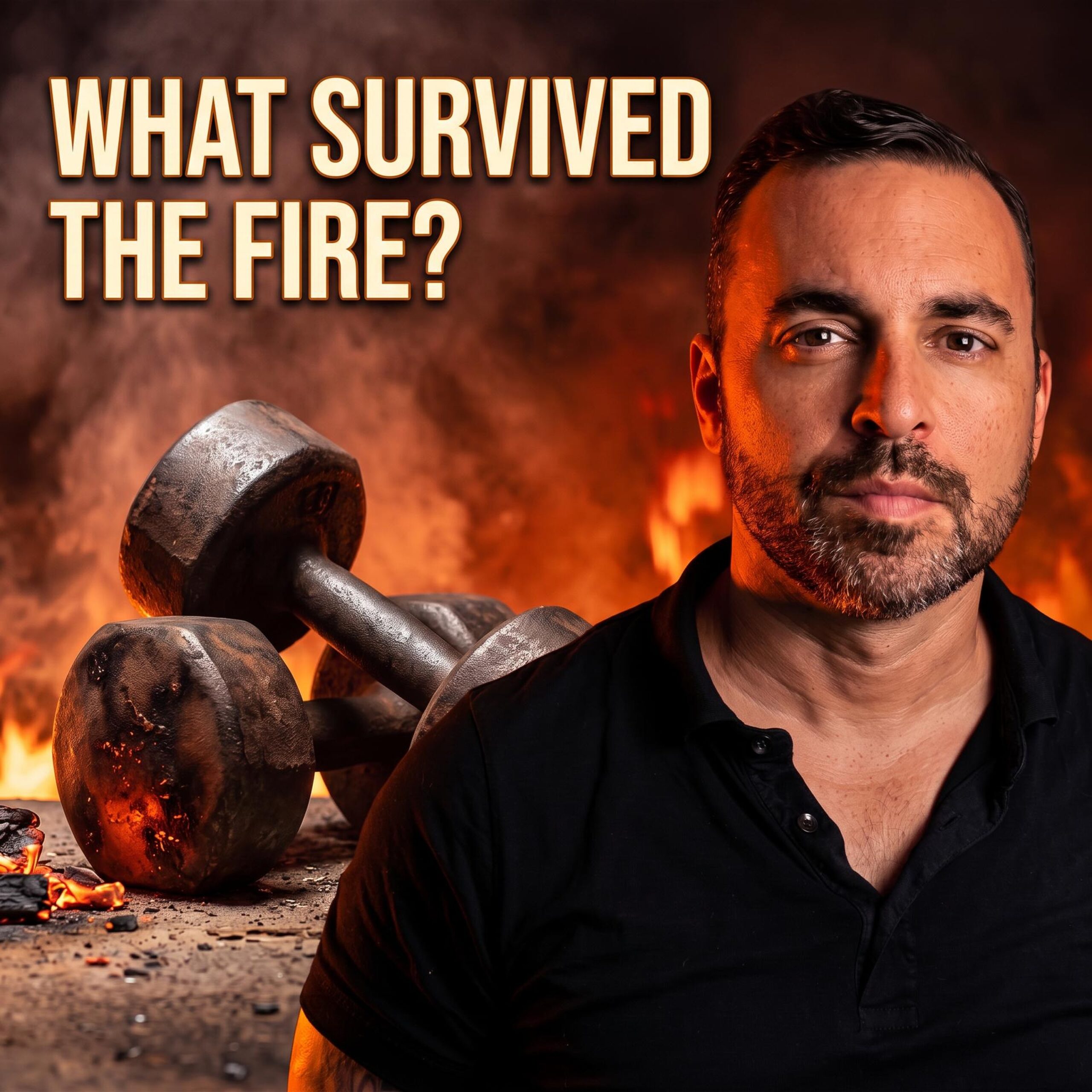
Ben Barbic grew up around his family’s motorcycle dealership in the Santa Cruz Mountains. At five years old, a wildfire destroyed the family home; years later, after it was rebuilt, an earthquake took it again. Out of that instability, two things became anchors for Ben: music and a set of dumbbells that survived the fire and that he still uses today.
Ben talks with Dwight about the rock bottom moment at twenty-eight that changed the direction of his life, the eight-year climb into a recording career on Rebel Sound Records working alongside collaborators and producers connected to Mariah Carey, Usher, and Chris Brown, and the parallel real estate career that let him stay present for his son.
He also opens up about the eight-year process of writing his memoir, Rise & Climb: Finding Purpose Through Pain, and why he believes discipline without obsession, not motivation, is the real key to not burning out.
📚 What You Will Learn in This Episode
- How Ben turned two childhood house losses into lifelong anchors instead of lasting anxiety
- Why his rock bottom moment at twenty-eight became the turning point for his whole life
- How he built a recording career from a home studio into rooms with Grammy-connected collaborators
- Why writing his memoir took eight years, and what the process taught him about his own truth
- How he uses physical discipline and creative outlets together without becoming obsessive about either
- Why surrounding yourself with the right collective of people matters as much as personal discipline
📵 Chapter Summaries
[00:03:03] Ben Welcomed and the Origin Story Opens
Ben is welcomed to the show and Dwight sets up the origin-story format the episode always opens with.
[00:04:20] Motorcycle Culture Childhood and the Wildfire at Age Five
Ben describes growing up around his family’s motorcycle dealership before the wildfire took the house and the business unravelled.
[00:06:40] The Earthquake and the Surviving Dumbbells
An earthquake destroys the rebuilt home, and Ben describes the two things that carried him through: music, and a set of dumbbells that survived the fire.
[00:07:23] Becoming a Father at Twenty-Two and Choosing Real Estate
Ben explains the decision to pursue real estate so he could stay present for his son.
[00:09:53] The Rock Bottom Moment at Twenty-Eight
The turning point that changed how Ben made decisions from then on, eighteen years of forward progress since.
[00:14:09] From a Boombox to Rebel Sound Records
Ben traces the eight-year climb into a recording career, including a pivotal New York meeting with Bert Padell.
[00:21:59] What Music Gives Him That Nothing Else Does
Ben describes music as an emotional outlet through any mood.
[00:25:26] Writing Rise & Climb: The Cathartic, Introspective Process
Ben and Dwight compare notes on the introspective, sometimes painful process of writing a memoir.
[00:36:19] On Core Values
Dwight’s faith, family, work filter versus Ben’s purpose in every category.
[00:41:18] Sunday Mountain Runs and Physical Discipline
Ben describes seven years of Sunday mountain runs with the same group.
[00:45:28] The Power of Surrounding Yourself With the Right Collective
Why the people around you matter as much as personal discipline.
[00:49:35] The Book’s Turning Point
The mirror moment at twenty-eight that the book, and a song, are built around.
[00:59:09] Discipline Without Burnout: Do It Anyway
Ben’s answer on the number one discipline to avoid burnout.
[01:04:21] Closing Reflection: Tenacity as Refusing to Give Up
Ben and Dwight land on tenacity as the throughline of the whole conversation.
[01:07:03] Final Message to Anyone Standing in the Rubble
Ben’s closing message to anyone at their own rock bottom.
[01:08:08] Where to Find Ben’s Book, Music, and How to Connect
Ben points listeners to risenclimb.com for the book, music, and more.
🎯 Key Takeaway
You do not need a perfect setup, a perfect mindset, or a streak you have never broken to keep climbing. Ben’s whole approach comes down to doing the next small rep anyway, and letting tenacity, not motivation, carry the work forward.
💬 Continue the Conversation
- He Led Global Companies, Then His Body Shut Down: Art Blanchford on Finding Purpose After Burnout
- Another rebuild-after-collapse story, Art’s body forced the stop that Ben’s wildfire and earthquake forced on him.
- She Froze in Her Interview: Janylene Turcotte on the Subconscious
- Pairs well with Ben’s account of the introspective work of writing his memoir and confronting his own truth.
- Small Town Kid, Big Life, Jim Tracy on Building Men of Character
- A parallel hard-childhood-to-purpose arc, character built the same way Ben’s tenacity was.
- They Predicted My Breaking Point, Dwight Heck on Resilience
- Dwight’s own resilience story, a solo companion piece to Ben’s.
- He Bet On Himself Twice, Dwight Heck On Reinvention
- Dwight’s own reinvention story, echoes Ben’s pivot at twenty-eight.
🔑 Key Themes Discussed
- Tenacity and refusing to give up
- Rebuilding after repeated, unrelated loss
- Creative discipline as an emotional anchor
- The rock bottom moment as a turning point, not an ending
- Discipline without obsession, and the importance of your collective
👤 About Ben Barbic
Ben Barbic is a reggae and hip-hop recording artist on Rebel Sound Records (Sony/The Orchard) and the author of the memoir Rise & Climb: Finding Purpose Through Pain, published by Skyhorse Publishing with worldwide distribution by Simon & Schuster. His story traces losing his childhood home to a wildfire, and again to an earthquake, along with time in jail as a young man, before rebuilding through music, discipline, and a real estate career with more than $250 million in career sales. He has released more than 100 songs and collaborated with artists and producers connected to Mariah Carey, Usher, Chris Brown, Vybz Kartel, and Popcaan, recording out of his own studio, Where Dreams Sail Studios, in San Jose, California.
🌐 Connect with Ben Barbic
🤝 Connect with Dwight Heck
- Give A Heck Website
- Podcast Page
- YouTube Channel
- TikTok
- Twitter/X
- Work With Me / Be a Guest
🎧 Listen and Watch This Episode
- Watch on YouTube
- Listen on Apple Podcasts
- Listen on Spotify
- Listen on iHeart Radio
- Listen on Amazon Music
- Listen on Audible
💭 Final Thoughts
Ben’s story is a reminder that tenacity rarely looks dramatic in the moment. It looks like sandblasting a set of dumbbells that survived a fire and using them for the next thirty years. It looks like showing up to a Sunday mountain run for seven straight years. It looks like doing the next small rep anyway, even without the perfect mindset.
📣 Call to Action
🎧 Enjoyed this episode?
✅ Subscribe to the Give A Heck Podcast on your favourite platform
🎤 Think you have a story worth sharing?
📝 Full Episode Transcript
[00:00:00] **Ben:** I think at its core that it’s worth it, you know, that it’s worth it to not give up. It’s worth it. Uh, I’m worth it. The listener’s worth it. You’re worth it. And I think that we, if we allow ourselves permission, you know, to thrive and, and enjoy our life, and to see what we’re capable of, um, to me it’s like coming out of the cave into the sunlight.
[00:00:20] And I think that that’s, that’s the beauty of it. And, um, and just, and just to keep at it, I think that at its core it’s just, just keep at it.
[00:00:29] Welcome to Give a Heck. I am your host, Dwight Heck, and for much of my life, lived my life in quiet, desperation wondering how I was going to pay the bills, take vacations, save for retirement, and one day wondering if I would get off the hamster wheel of life and have purpose, a life that most of society lives, which takes us to work, then home, then repeat, and pays us hopefully enough.
[00:00:54] Just to survive the harsh truth that most live with more months than money and have no idea how to live life on purpose, not by accident. This ensures the mass majority are living not just financially broke, however, emotionally and mentally as well. Due to financial pressures and each episode, I will introduce you to thoughts, ideas, and guests that can help you to learn how you too can live life on purpose, not by accident.
[00:01:25] **Dwight:** What does a person do when the same unlikely disaster losing the roof over their head happens to them twice before they’ve ever even reached adulthood? And what happens when the way through isn’t therapy or theory, but a beat up cassette player and a set barbells that survived the fire? Welcome back to the Give a Heck podcast.
[00:01:49] I’m your host, Dwight Heck, here to help you live life on purpose and not by accident. My guest today grew up in Santa Cruz mountains in the shadow of his father’s motorcycle shop racing dirt bikes. As a kid, when he was five years old, a wildfire burned his family’s home to the ground they rebuilt.
[00:02:11] And four years later, an earthquake tore through the house too. In the years after he found himself fighting panic attacks and for a stretch of his life addiction. What pulled him through was music and physical training. He went on to become a nationally performing recording artist on rebel sound records, working alongside collaborators and producers, connected to names like Mariah Carey Usher, and Chris Brown.
[00:02:37] Along the way, he also built a real estate career with more than $250 million in career sales and became an endurance athlete. Eight years and a lot of 4:00 AM rewrites later, he turned the whole story into a memoir, rise and Climb, finding Purpose Through Pain, published through Skyhorse and distributed by Simon and Schuster.
[00:03:03] Ben Barbic, welcome to the Give a Heck podcast.
[00:03:08] **Ben:** Thanks, Dwight. That was a great introduction, man. Loved that.
[00:03:11] **Dwight:** Thank you. Um, to me it’s important to introduce a person, right? Yeah. In a, in a very passionate way because you’ve, you’ve done me a favour, and in my listeners, I get people, they’ll send me messages.
[00:03:23] We like that you do this and, and I, and I mean it with all sincerity, you’ve decided to invest some of your precious lifetime with us.
[00:03:31] **Ben:** Mm-hmm.
[00:03:31] **Dwight:** Right? And, and I don’t take that lightly.
[00:03:34] **Ben:** Mm-hmm.
[00:03:34] **Dwight:** You’ll never get that time back. But this time that you’re giving us can educate and train and teach and motivate and uplift and inspire so many people that I really appreciate you being here, Ben.
[00:03:46] Thank you so much.
[00:03:48] **Ben:** Absolutely.
[00:03:48] **Dwight:** So, Ben, one of the things I start with on my podcast, which I find is, is the way life is so disconnected from, like, people are disconnected in life, they don’t care enough about the origin of people. Mm-hmm.
[00:04:01] **Ben:** Right?
[00:04:01] **Dwight:** They just want to know what, what have you accomplished since you become an adult?
[00:04:05] **Ben:** Mm-hmm.
[00:04:05] **Dwight:** Well, there’s so many different things in life that affect us. Like I talked about in reading out some of your origin, which is just a, you know, a little sliver of it. It’s important for people to understand so that they can connect, so that you can truly hit their heart with your knowledge, right.
[00:04:20] With your understanding and your compassion. So Ben, uh, always start at the origin story. What did your story actually start, like from your earliest recollections that you’re willing to share up to where you are now?
[00:04:33] **Ben:** Yeah, I think the, the key for me is to go back to the joy that I had when I was really young.
[00:04:40] I think one of the things that I had in my earliest memories was growing up around motorcycle culture. My parents had motorcycle dealerships. My father was a racer, and I was a kid that just got to play in this playground all the time, right? And so the earliest memories gave me that. And then when I was, uh, five years old actually, um, a forest fire took out our house and, and wiped out our house.
[00:05:06] And at the same time, because we were dealing with that, uh, the manager of the store embezzled, and my parents lost all of their motorcycle shops. And so why that’s important is it went from joy to extreme loss. And so we went from, you know, a modest house to the mountains, but living through this culture of, of really renegade motorcycle culture that, that I loved and I, and I, and I was a part of, to turning away from that culture of motorcycles, losing our house and having nothing but a donated trailer that we lived in.
[00:05:38] And, uh, you know, I think it’s important to kind of paint the picture. We didn’t have power. We didn’t have, you know, plumbing. Um, and so for quite a bit of time, we were just sitting amongst these burnt trees in a donated trailer. And so for my young self, this was very significant change that showed me here was one thing, and now here’s this existence.
[00:05:58] And so once that existence became that, um, unfortunately, if you will, I ran into a stream of, you know, unfortunate events that are fairly much like winning the lottery in the wrong direction. So, um, you know, after we lived in the trailer, we rebuilt the house and then the Loma Prieta earthquake ha happened, uh, two years after it was rebuilt, and we lost it again.
[00:06:20] And so, you know, this, this in my young mind created a sense of, of, of anxiety within me. I didn’t know what was happening, but I felt like I was gonna die. You know, I just, I felt like things were coming at me at any angle and, um, I couldn’t trust anything. And so, during this time. What I could trust was music.
[00:06:40] And so one of the things that really, it was impactful is that the world within music was one that I could go to, one that I could return to whenever I want, and one that was the world that I created. And so that world became extremely significant for me. The other piece of this was the only thing that survived the fire was the dumbbells and the plates that we had.
[00:07:04] And the only thing that did, so what did I do? My young self took ’em, I sandblasted ’em, and they’re with me to this day. The weights are with me to this day. I’m in my garage still. And so, you know, they, they started to be metaphors for my life. They started to kind of be a part of things that I carried with me and the strength that I gained along the way.
[00:07:23] And so with those two anchors, although I made a lot of stumbles, as I continued through life, I did have those that were keeping me from truly, uh, collapsing, if you will, through bad decisions, through anything. I maintained these two anchors within my life. And so those continued along. Um, I had my, my son was born at 22.
[00:07:45] Uh, you know, I, I had to go to work. I had to become, you know, I, I decided that, look, at that point I was going to sound engineering school. So music was a, a big part of my life. And when he was born, I had to stop going to school and I had to focus on making money for my son and for, you know, uh, myself. And so I decided to get a real estate licence because his mom lived four plus hours away.
[00:08:12] And so every Friday I had to go pick him up and come back home. And so I could be with my son. I, I made a dedication to being his life. And so real estate provided me an opportunity to continue with my music, my schedule, be in my son’s life, and dedicate time. And so it really became something to where it was an industry I had known, um, my father and then my mother had gotten into the industry.
[00:08:35] Um, but more than that, it was an industry that gave me the flexibility. So, um, I’m gonna say one more piece on this so you have all the nuggets in place. So, you know, I left Sound Engineering school, I went to work pro Audio guitar Centre, and I very quickly learned that I was pretty good at sales. You know, I didn’t know if I was good at sales, but I, I, I did well at Guitar Centre.
[00:08:54] I sold a lot of gear. I was around music and I needed to make more money. And so I decided, look, I’m gonna go into real estate and I’m gonna make sure that I continue with the anchors and the passions that I believe in. I’m not gonna give up my dream, right? But I’m, but I’m gonna, um. I’m gonna make this decision.
[00:09:13] And so that decision, um, I’m, I’m quite far away from, I’m over, I’m over 20 years away from that decision now. And so what happened from there was I just kept nurturing these different habits, these different things. I kept, I kept pursuing real estate, growing that learning, learning sales. I kept pursuing music, I kept growing that until that started to really take off.
[00:09:35] And then to fast forward a little more, I started writing. And we can get into that separately, but I just to kind of show you the, the way that I arrived here today, it was basically that with the rock bottom moment at 28, that changed my decision making and, and what I put money, uh, you know, effort into.
[00:09:53] And so now we’re 18 years removed from that. So it’s 18 years of progress where I was like full focused on real estate music and forward progress as much as I can make in life. And that’s in a nutshell, my whole philosophy.
[00:10:05] **Dwight:** Mm, wow. It’s all based on tenacity. Right.
[00:10:10] **Ben:** Yeah. Yeah.
[00:10:10] **Dwight:** So, so many people don’t realise, I don’t know if you agree with this or not Ben, but you have the superpower of tenacity.
[00:10:17] **Ben:** Mm-hmm.
[00:10:18] **Dwight:** I’m hearing this right from when you were little, all the way to taking barbells and sandblasting them. Like, and, and, and keeping that that is, that is an anchor to the past, but also an anchor to your, your ability to be strong and tenacious and move forward. Why would you ever get rid of them?
[00:10:35] **Ben:** That’s right.
[00:10:35] **Dwight:** Right. That’s right. You look at them and it may give you a wash of people listening are watching. You can get a, when you can look at something that’s a visualisation, you can get a wash of multiple two. Things can be true at once. You can get a wash of sadness because of how it happened, but also a, a, a wash of strength.
[00:10:53] **Ben:** Mm.
[00:10:53] **Dwight:** And perseverance and yeah. So congratulations on having a superpower that so many people are lacking. Right. Tenacity. So that’s, that’s what I heard throughout that, and you, you adapted to your circumstances consistently wanting to make sure your son was in your life and driving that distance and mm-hmm.
[00:11:14] You know, and being aware that you were good at sales and continuing to evolve your career, like your potential of what you wanted to do in the future is amazing. So many people, what do they do, Ben? They quit.
[00:11:27] **Ben:** Yeah. Yeah.
[00:11:27] **Dwight:** Right? Quitters never win. And winners never, winners never quit, right? Yeah. So, part of me, you know, at the end of the day, you know, winners always continue to go forward.
[00:11:38] They’ll pick themselves up, they’ll put a bandaid on their knee and they’ll move forward because they know that they can’t see what’s around the corner. But quitting never, ever accomplished anything but keep you on the hamster wheel of life, right? Mm-hmm. Go to work, go home, get paid, and you really never accomplish anything.
[00:11:54] And again, not to offend those that are listening, if that’s what you’re, your daily, always your, your stick of life, great. But most people that listen to my shore are people that have that little seed of inside of them that they want watered, they want to grow, and they need to hear stories like yours that no matter what, going from living in a trailer with burned trees around you to finding barbells, to selling equipment in a music store, to being, uh, you know, a writer, to producing music is, it’s amazing.
[00:12:28] But it’s, it didn’t, you also said, though, 18 years, or you said different time frames, right? Yeah,
[00:12:34] **Ben:** yeah, that’s right.
[00:12:35] **Dwight:** Those listening are watching, life doesn’t happen. You can’t just expect everything to come to you without putting an effort. So thanks for that. Yeah,
[00:12:43] **Ben:** no, absolutely. Absolutely. I mean, and you know, just to finalise that, it’s like, you know, I called my book Rising Klein, finding Purpose Through Pain.
[00:12:51] For that exact reason. The commonalities of my life are just like the barbells, you know, that like the purpose was through the pain. And so the, the duality of looking at the at, at the things that burnt, but I painted them, I, I, I brought ’em back to life. Yeah. And they were tough and they endured and they helped get me stronger and, and helped me mentally.
[00:13:08] ’cause, ’cause I believe that fitness is a big part of, you know, mental, uh, esteem and things. So yeah. Man, I think, um, it all, it all ties in.
[00:13:16] **Dwight:** That’s awesome. I love that though. Um, those, those listening, I’m smiling because I absolutely love, we’re not even that far into the show already. And, and just, I love talking to people, Ben, that have their story flows to the fact that they, they always persisted.
[00:13:36] They were resilient. Mm-hmm. Resilience is something that so many people need to, and awareness. Being aware, being resilient, not to let resilient part of me not to let things that have happened terrible in their lives, slow them down. Use it as a catalyst instead of an anchor. So thank you so much. So one of the things that, um, I wanted to talk about, you started with cassette tapes as a kid, and now you’re recording artists on Rebel Sound Records, working with collaborators and producers connected to names like Mariah Carey, as I mentioned, usher, Chris Brown.
[00:14:09] What was the actual path from a kid with a boombox to standing in those rooms? Like you mentioned some of it, but can you put more detail and, and a story behind it?
[00:14:19] **Ben:** Yeah. I, I think that, um, first of all, it was, it was just, it was just kind of the same general concept of never stopping on it. And so no matter what happened, like let’s say the early stuff is fine, I was a kid who liked music and, and really got lost in it.
[00:14:37] Right? And then I went to sound engineering school and I was, you know, a friend of mine had, uh, was getting his law degree and we were gonna start Benny B records. And it was, it was all set up. That’s what we’re gonna do. It was gonna be my music going forward, and then I had to make a pivot. Life gave me a responsibility.
[00:14:55] Um. But with that responsibility came a little bit of a mess in my identity for a second, but I never stopped the music. And then, um, and then once I, once I committed to saying, look at I am at, at 28, I, I think it’s very important to look at 28, because 28 was the moment that I started to take everything very seriously.
[00:15:22] And I, I flipped my mentality like a light switch to like, okay, look it, I’m never gonna stop at these things and I’m gonna climb as high as I can. And so from the four walls of my basement studio, I started making music that I was determined to get me to around the world, you know? And so I, I, I started from these very, you know, from four walls.
[00:15:42] I started reaching out and reaching out to the world. And so I started getting bites and I started getting, you know, opportunities to travel around and go to go to France and record for a month and, and go, go all over the place. And so as these things happened, I had, I had learned sales, I had learned the nuances of, you know, interactions and reach out.
[00:16:04] And same thing for booking anything, right? I, I just, I’m used to cold reach out. I’m used to reach out. I’m used to what that is. And so, um, it’s through the repetitions that I started elevating, you know, a connection to my identity as an artist. And through and through that people started seeing it and people started giving me a lot more yeses.
[00:16:24] And I still got nos. I still got, you know, opportunities where I, I, I remember, I’ll never forget, um, I write about this in my book, but this was an important moment. I, I, I made a song that, uh, was a demo that was enough to where I flew out to New York to, to meet with some people. And one of ’em was Bert Padell.
[00:16:43] Um, so he, they call him like the accountant to the Stars, right? And, and it was a, it was a very, I don’t say intimidating meeting, but it was a very invigorating meeting. Um, and he, and he, he listened to my music and he’s like, and, and he, you can look him up. He’s, he’s worked with the best of best. And he said, oh, uh, Ben, how old are you?
[00:17:00] And I was like, at the, at, at that meeting, I was 34, I believe, and he is like, oh, too bad you didn’t come to me at 28. I could’ve really got you a career. And so I was sitting with this guy who had changed people’s lives. He’s basically telling me I’m too old for the pop circuit. But I left invigorated because I was like, oh, he, I sat with this guy.
[00:17:21] I belong. I, I was enough to earn going into the room. I’m having these meetings. They think my music’s justified, and they’re using a schematic of like, to nurture an artist and to do the traditional route. I’m past that, and that gave me excitement. So it was a, it was a, in a way it was a rejection, but bigger than that, I, I, I thought it was a tremendous win because I came back from that trip elevated up in my mind.
[00:17:46] I met with a couple other, uh, people that were significant in one Grammys, and I, so I just be, I’m, I’m firm in the belief of this. Like, it doesn’t have to manifest something, it doesn’t have to get them to work with me, but just being involved and, and, and being around people of a certain calibre helps me elevate up.
[00:18:04] And so I came home and I was more motivated to just keep going on my own, to keep pushing, to keep developing out. And so, you know, from there, I, I very quickly got a whole bunch more doors opened for me, you know, and it, and a kind of snowball effect happened. And so I, I would say that trip was one where.
[00:18:24] It really changed it. And so the why did that happen? It’s because I never stopped when my, when my son was young and my, and my daughter was really young, I still was down in the studio making music for three or four hours while everybody slept and woke up at five or six. I was, I was dead tired. But I didn’t care.
[00:18:43] I, I knew that this was, this is what I needed to do to accomplish what I needed to have no regrets in life. And so I did it. And so I was able to do the same thing when I wrote a book. It’s just make the thing, cultivate the thing, find the connections, and then boom, literary agent, boom, publishing, dude.
[00:18:59] Like it’s just, I had a lot and we can get into that or not, but it’s like there was a lot of struggle over those eight years. A lot of like, nah, no thanks, not good enough. Whatever needs to go more. And this guy’s bragging too much. All these different things. And I had to learn the craft. So it’s the same concept that I learned from my early ages.
[00:19:15] And this is where like, you know, you said the premise of my book right off the gate, you know, the resilience and, and, okay, that thing happened. Flip it, you know, that thing happened. I’m gonna flip that. I’m gonna, I’m gonna take that, I’m gonna take the fuel of that and I’m gonna now keep going and I’m gonna just learn from it.
[00:19:31] So I, I think the one thing I’m a real proponent of is people taking that approach to things like, you know, through every rejection, there’s something to learn, there’s some fuel to get. And if you don’t think like, oh, I’m not good enough, and you think, nah, I am, I’m gonna, I’m gonna, I’m gonna, I’m gonna show that I am.
[00:19:48] I, I believe I am. I just have to get better at this craft. Fine. Or I have to, whatever it is, I have to be better mixer, a better singer, or better writer, or better salesperson and whatever. I just look at it as life’s a lot more full, a lot more abundant if we take those things and, and package ’em together and use them as, you know, uh, armour as you will if you will, going forward.
[00:20:09] You know, we just get better at it. Um, so that’s the approach.
[00:20:13] **Dwight:** Your, your whole everything we’ve been, um, talking about or that, you know, I’ve been listening to your level of awareness is, is very high. And I find that somebody that’s very aware of their circumstances can take, like you said, a guy said you, how old are you?
[00:20:31] 34. And he says, oh, if you’d come at 28. Well, most people take rejection how they take it as an anchor.
[00:20:38] **Ben:** Right.
[00:20:38] **Dwight:** And they go, oh, I’m never gonna be anything. And they get stuck on a hamster wheel.
[00:20:42] **Ben:** Right?
[00:20:42] **Dwight:** Your awareness was, you know, like, screw that. Like yes, I understand. You went through eight years of highs and lows.
[00:20:49] Right? The, like, I call tell people, we go through the valley despair, people that are successful, they’ll go, oh, you’re so lucky. And I’ll say to them, you know what? Luck is a loser’s excuse for winner’s completion. And at the end of the day, I am a person that will take that failure and realise it’s another stepping stone.
[00:21:07] Nobody I know in my lifetime, right. In my, my late fifties has that successful around me, or people I’ve met in, in and around the world was successful by, by giving up, they heard, they might have heard 999 nos before they heard a yes. Right? But each no was another stepping stone for knowledge, for understanding.
[00:21:28] Mm-hmm. And, and, and more awareness of their surroundings. Like you mentioned that too. Right? You’re just, you, you look at what’s going on? Where am I gonna go? What am I gonna do? Well, I know one thing I’m not gonna do, that’s quit.
[00:21:40] **Ben:** That’s right.
[00:21:40] **Dwight:** Because I know what my passion is. And in order to get people listening, watching sometimes to get to your passion, your stoop, true calling, you have to do some things along the way, or a job or different circumstances, like Ben was talking about, to pay the bills.
[00:21:53] **Ben:** Yeah.
[00:21:54] **Dwight:** Right?
[00:21:54] **Ben:** Yeah.
[00:21:54] **Dwight:** To take care of your family. To take care of yourself. So good on you. I love that.
[00:21:59] **Ben:** Thank you.
[00:21:59] **Dwight:** Thank you. You’re welcome. So what does music give you though? Like, you talked, again, you touched on some of this, but I want more, you know, nitty gritty, I guess, to it. Mm-hmm. What does music do for you that nothing else in your life does?
[00:22:13] Like, if, even, even now, that everything that you’ve built mm-hmm. It, it is, it sounds to me like that’s still your number one foundation, your number one go-to, to give you solace, to give you strength, to give you power. Mm-hmm.
[00:22:27] **Ben:** Mm-hmm. Yeah. Well, I think, I think it’s just, it’s just anything I’m going through can be channelled into it, you know?
[00:22:34] And so if I’m feeling good, it can be channelled into it. If I’m feeling angry, it can be channelled into it. If I’m frustrated, it can be channelled into it. If I’m feeling motivated, it could be channelled into it. So it’s a, it’s a direct artery into what I’m experiencing any given day. And so, sometimes as odd as this might sound, if I’m in a bad mood, I know I probably need to make a song because it’s not my usual mood.
[00:22:56] So I need to go channel that, or I need to write in book two right now. Now that’s how I do it because, because that’s a little unusual and I’m a little edgier. I’m like, okay, this is good. I need to use this, use this fuel ’cause this is not how I’m gonna necessarily wake up tomorrow. Um, and I’ve kind of applied that.
[00:23:12] I mean, even going back to, in a weird way, when I had COVID the first time, I was like, okay, I’m feeling in delirium right now, but let me go try and put this into art just because it’s just strange window where I feel totally different than myself. So my mind’s operating differently, you know, without drugs needing to do it.
[00:23:28] It’s just like naturally if you tap into it, you got a whole bunch of different categories that, that, you know, the brain can go to. So I think also to piggyback on a day job, let’s say I’m, I’m out there grinding in real estate and it’s, and it’s tough and I’m waiting on things or, you know, whatever didn’t work out.
[00:23:44] Or even if it did work out, having music is an anchor that I can go to, helps me feel like myself in, in many ways, you know? And, um, it allows me. To maintain that sense of identity that I, that I so value. And, um, and for me is like, I would say a vital piece of my overall, you know, collective energy. Um, I’m a big proponent that if we have multiple lanes going on, we don’t get as affected by something negative in one lane, you know?
[00:24:19] So.
[00:24:20] **Dwight:** Oh, wow.
[00:24:20] **Ben:** So, so,
[00:24:21] **Dwight:** like, I, I do, I love that. I, I just want to interject. Sorry. I keep on thinking to the self, you know, we talk about people, you’ll hear them say, where’s the light at the end of the tunnel? Where’s, how, how am I gonna make it through? And people will say, well, there, you’re gonna keep on pushing forward, delight will get brighter.
[00:24:37] Well, for you, the light at the end of the tunnel is music. It doesn’t matter what’s going on. Yeah. How many pipes are flowing together. The end result for you is your, your dedication to that craft, because it is a craft. Yeah. A passion has been music. And, and that’s refreshing to hear because, you know, those listening are watching this episode, don’t give up.
[00:24:59] Your light at the end of the tunnel can be whatever it needs to be. If you have a passion, keep that passion alive. Do whatever you need to do to, to make good on it. Right. Just keep on pushing forward. Right. So I loved that. I, I just kept on thinking to myself, his light is his music, and, and that’s really cool.
[00:25:17] **Ben:** Yeah.
[00:25:17] **Dwight:** I love it.
[00:25:17] **Ben:** Yeah. Yeah.
[00:25:18] **Dwight:** You’re welcome. So, um, did you have anything else you wanted to add before we move on?
[00:25:23] **Ben:** No, no. I think that’s fine. I could circle back to it later if
[00:25:26] **Dwight:** you Okay. Sounds great. So I’m gonna talk about your book.
[00:25:29] **Ben:** Mm-hmm.
[00:25:30] **Dwight:** Right? Which, which, for those watching, you can see it over his shoulder.
[00:25:34] Um, rise and Climb. Um, one of the things I know, writing my own book was one of the most cathartic things I ever did. And, you know, I, I talk about this with every author that’s on. There were moments that caught me off guard when I was writing it five and a half months. I pretty much didn’t do anything else besides mm-hmm.
[00:25:54] You know, outside of my business and, and life. I was literally writing this book and the editor would send it back to me, and sometimes I’d look at stuff and go, what? And I kicked myself into pants because I should have done it sooner, but it, I didn’t, I I compartmentalised it, right? Mm-hmm. Stuck it in a box and I didn’t acknowledge the good, bad, and indifferent right.
[00:26:16] The ugly parts of, of my life. So there was time, I, I, when I was writing the book that I did, I should have patted myself in the back. I didn’t so many successful people or people on a journey forget to enjoy the journey. And I’ve realised how much I hadn’t. I was always that, okay, I’ve reached here, go on to the next thing.
[00:26:34] And I never, I never celebrated. How was writing your book? How was it for you? Was it a cathartic journey? Especially with everything you’ve shared with me? I imagine it was, but can you explain more how, from starting to decide to write the book to the final completion of what you felt?
[00:26:52] **Ben:** Yeah. Um. Well, the, first of all, the original intention was to write something for my kids.
[00:26:57] So I, I just, you know, I, I was like, oh, I’d like to, I was in an airport going, uh, to a music show, and I had a couple hours and I was like, this is really strange. You know, at the time I was in my late thirties and I was like, this is kind of interesting that this is where I’m ri, you know, I’m really rising through music.
[00:27:14] And I was like, I should really write this down so they have something to reference. Like, it doesn’t matter your age, just do do the thing you want to do. It’ll, it’ll, you know, it’ll work out if you keep at it. So, uh, so I started writing it in an airport and I just, you know, the, the way I did it was kind of A to Z because it’s a memoir and, and I like A to Z stories, even in movies, if it’s a memoir, I kind of enjoy the, just straight through personally.
[00:27:36] People don’t always like it that much, but I like it. Um, so I started writing it and then I, I started seeing kind of some of these commonalities and, you know, the overall premise started to reveal itself of my life. You know, it’s, it’s pretty obvious to me now, but as I started writing it, I wasn’t as aware of these things.
[00:27:55] And so as, as that came about, I started seeing the commonalities of like, you know, flipping the switch or taking control or, you know, overcoming and enduring and never stopping, and how my music was all these things. So I developed it further and, um, the one thing I didn’t do in the beginning was really get into the story and get into the weeds of the truth underneath the story.
[00:28:20] I might glaze over it, or, you know, this happened and this happened and this happened. Instead of I was feeling this, you know, it was troubling it, you know, my vulnerabilities, my, you know, my pain, the, the real truth behind the thing. So I, the real therapy within it was really diving into that experience again, having to relive it and then having to relive it on repetition, because probably you did the same.
[00:28:46] I had, you know, five or six times that I had to go through or more actually the whole book again, and really sit with everything, say, is this true? Is this, is this, am I giving everything here? Why am I saying this? Is this story really needed for what the reader’s gonna get out of it? Or the, or the listener if it’s the audio book?
[00:29:07] And so, um, so through that I had to become really comfortable for anything in my backstory and really think about what was truly valuable or was it something I was just kind of saying because I was proud of it and, and, and so I really had to, I would say it’s, you know, I did, I have done therapy in the past in, in all of these things, but I would say this form was, uh.
[00:29:34] The most introspective that I’ve had to do. And through that introspection, I really learned who I was. And then that translated out into my music or sitting here with you. There, there was just a, an extra layer of truth of who I am that comforted me because it was, it was just laid out in front of me so clearly, you know?
[00:29:51] And, um, so that’s how, yeah, that’s how it came about.
[00:29:55] **Dwight:** That’s awesome. Um, I know you, you know, it does, it helps us realise so many things about ourselves as individuals and those listening are watching. Doesn’t mean you have to go write a book.
[00:30:09] **Ben:** Yeah.
[00:30:09] **Dwight:** Start journal. You can journal journaling’s great. It helps you out.
[00:30:13] It gets your, you may think that talking about with somebody or just sitting and thinking it into your thoughts helps pen to paper is still one of the most powerful things you can do. It can help you understand. And if you’re camped in life, I find so many people sit in a valley to spare way too long when there’s so simple little of tools.
[00:30:34] I’ve done, I’ve done therapy as well. It’s, it helped me a lot, but my book did more for me than mm-hmm. Just about anything because it helped me during the pandemic. When I rode it, you know, I’ve stuck in the valley despair. I’m always been a climber. Mm-hmm. And I was, and it was like, wow, I’m writing this book and I’m getting the publisher and getting the editors to, they’re bugging me.
[00:30:56] Do this, do that be, and you need to, you know, finish this off. And it was, it was painful. Other times it was just like, yeah, get up and want to dance. But, you know, at the end of the day, in order to get outta that valley to spur my point is and start climbing again, that awareness always comes up for me.
[00:31:16] Right. Yeah. You need to be aware of really, what do you want? Not what does society want. Um, I wrote that down here. You talked about the truth under the story. Mm-hmm. Right. The truth. Mm-hmm. How much do you think that society controls that, and society can be our family too. Mm-hmm. How much do you think society actually controls our narrative, our story, and it stops us from getting to the truth?
[00:31:42] **Ben:** I think considerably. I think, I think once you dive into your own story, you can see where those limitations lie and, um, become aware of where that is and try and correct the ones that, uh, you think need a tuneup and embrace the ones that you, you know, are comfortable with. I think that’s the, again, the duality of that is I think, um, some of the narratives might for the listener too.
[00:32:03] They might sit well and, uh, for, for someone you know, but, um. I think that when writing a book, or I would even go far to say journaling, you know, there will be new truths that come up within, at least for me, speak for me. There’s new truths that come up and some of them are hard to realise and and accept, and you might wanna push them to the side, but I think it just goes back to what the goal is.
[00:32:24] If the goal is to, you know, live the life you wanna live and see what you’re capable of, then, then I think those truths need to be explored, even if they’re uncomfortable and you could always return. To whatever narrative you had previously, if, if, if you don’t want to. But I, I think it’s, yeah, it’s important.
[00:32:42] It’s important, you know, because we, some beliefs we hold and they’re just a hindrance, but we don’t necessarily realise the, the hindrance involved with them. So I think one of the things that I’ve really worked on is, is trying to question and always learn. I’m always, I’m sure you’re the same. I’m always curious to learn and, and taking other perspectives and just see is there any flaws in, in what I’m believing that, that I could really benefit from more information.
[00:33:11] Um, and so that goes with philosophy or writing a book or music. Always trying to, any of them. I think parenting, weightlifting, whatever it is, man, I, I like, I like the idea of taking in new information and then kind of remoulding it, you know, as I go,
[00:33:29] **Dwight:** well analyse, right? Yeah. Even as a parent, people would say to me, uh, van, you might get a chocolate.
[00:33:35] I said, you know, you raised four daughters and a son.
[00:33:38] **Ben:** Mm-hmm.
[00:33:38] **Dwight:** You know, like, what was that like? I get asked that on podcasts all the time, and I’ll say it was character building. What do you mean? It was character building? Because one thing that worked for this person didn’t work for that person. And guess what?
[00:33:49] That’s like that in my business, that’s like that in life, right? People say, oh, repeat the same process, you’ll get the same result. No, you won’t. Every you’re, you’re making, you’re, you’re saying that life is that linear? I don’t think so. It doesn’t work that way. Right? That’s right. That’s right. Everything has its time and place, and yes, the past can be indicative of the future, but it’s not supposed to be a pattern that you, you think is gonna happen.
[00:34:15] Oh, this happened five years ago, 15 years ago. This happened when I was a kid, so mm-hmm. All of a sudden that learned behavior’s gonna keep me stuck. Those listening are watching. You don’t have to be stuck.
[00:34:24] **Ben:** Yeah. Yeah.
[00:34:25] **Dwight:** You, you have the seeds of greatness and, and you, and just listen to Ben’s story. You can, going from a trailer to going to, you know, music, to, to real estate, to being a, a published, successful author.
[00:34:39] Come on. You don’t think that took some investment and time? I know I was reading something that you were, did a lot of your writing stuff at four, was it 4:00 AM
[00:34:47] **Ben:** Yeah, 4:00 AM
[00:34:49] **Dwight:** Yeah. Something like that. Yeah. You were, you were very, very dedicated and like you said, and then you’d still get up at six o’clock.
[00:34:55] Well, I was raising kids, I’d do supper, help ’em with schoolwork.
[00:35:00] **Ben:** Yeah.
[00:35:01] **Dwight:** Extracurricular activities. I’d start laundry at 10 30, 11 o’clock at night, and then I’d start doing my work for the next day, and I’d be two, three o’clock in the morning and, and at 6:37 AM I’m up. I’m making lunches. The kids are getting up.
[00:35:14] And I did that for years and years and years. And people say, well, how could, how did you do that? Because I was driven. I knew what I wanted. Well, did you have things happen amongst that? Oh, absolutely, I did. Well, how’d you deal with it? Head on. All right.
[00:35:28] **Ben:** Yeah. Yeah, yeah, yeah. That’s, that’s it. I mean, that, that, that’s the piece of this is just, um.
[00:35:34] Do it anyway. I love, I just, you know, as comfortable it is, you just do it anyway. Just head down, you know, do it anyway. Bu
[00:35:41] **Dwight:** up. Yeah. You go
[00:35:43] **Ben:** just, just do it. So, um, yeah,
[00:35:45] **Dwight:** I love that. I love that. That’s, that’s, you know, that’s why leaders, people that are, you know, people that are, those that can really attract or make a difference.
[00:35:59] Leaders don’t just happen for others. They start leading in their family.
[00:36:03] **Ben:** Mm-hmm.
[00:36:04] **Dwight:** And you started that right? From doing that four hour journey to wanting to make money no matter what. It may not have been initially your passion, but it, it put food on the table. Leaders will start at their family, their core.
[00:36:19] Mm-hmm. I guess this leads right into the fact that I believe in core values. I have very specific core values that have become a filter for me, and I filter my life through that and decisions through that. Is it perfect? No, nobody’s, nothing’s perfect.
[00:36:34] **Ben:** Mm-hmm.
[00:36:35] **Dwight:** But it sure catches things, right?
[00:36:37] **Ben:** Yeah. Yeah.
[00:36:37] **Dwight:** Do you have core values that you follow?
[00:36:39] You know, it doesn’t matter if you do or not, but if you, if you do, I’d love to hear what your thoughts are about that.
[00:36:46] **Ben:** Yeah. Um, I, I mean, I, I haven’t laid out a core value system, um, is something that I kind of have like I would put on a wall, um. I do think I lead with a little bit of an offshoot off of that is, is finding purpose in a lot of different things.
[00:37:02] And so a core value would be like, uh, you know, really connecting to parenting and being it, and, and working on the craft of it. Um, I think that I, I, I apply, I apply the same thing to kind of all categories. So it’s like, I, I don’t think purpose is just like one thing, you know, purpose is a term used so much now, but I think it, it’s, it’s, to me it’s, it’s in all categories.
[00:37:25] So purpose within, you know, uh, lineage and, and what we’re leaving purpose within, uh, multitude of categories. So I don’t think I, I don’t have a core value system in a traditional sense, but I do really apply a sense of purpose, um, to my life. And I kind of look at it that way. Um, I’m not That’s
[00:37:45] **Dwight:** awesome.
[00:37:45] **Ben:** Really, uh, you know, takes time to, I’m, I’m, I’m pretty focused on different categories, uh, you know, within
[00:37:54] **Dwight:** Well, that’s good enough though. Yeah. Like, it, it wasn’t meant to put you on the spot in the sense that I don’t have mine up on our little chart. I belong to some different masterminds and stuff, and they have, they’ve made posters and they’ll have it on their wall.
[00:38:06] And I’m not just, you know, disregarding the fact of how powerful it can be for those. I have three simple core values of faith, family work.
[00:38:16] **Ben:** Yeah.
[00:38:17] **Dwight:** And all of those people say, well, that’s not in detail enough. You need like eight or 10. No, I don’t, because there’s so many subcategories of my faith. There’s so many subcategories of family, there’s so many subcategories of work.
[00:38:30] They go, 1, 2, 3, work does not supersede the other two.
[00:38:33] **Ben:** Right,
[00:38:34] **Dwight:** right,
[00:38:34] **Ben:** right.
[00:38:35] **Dwight:** Which affects my parenting, which affects my, you know, even with my grandkids now or just how I feel about life. So yeah. I don’t have it necessarily jotted down. I, they’re just very simple three things Yeah.
[00:38:47] **Ben:** Yeah.
[00:38:47] **Dwight:** That I’ve been following for like 30 some years and they, and they work for me.
[00:38:51] I’m not saying they’ll work for others. Right. Everybody’s got their dealio, their, their stick of how they’re gonna live life.
[00:38:57] **Ben:** Sure. Absolutely.
[00:38:58] **Dwight:** So that’s awesome. I appreciate you sharing that. You know what honesty is, is the, the key to connection. Mm-hmm. Right? Vulnerability. People just want to know that they’re not alone.
[00:39:10] That whether or not their journey is way beyond yours. The only difference is, is you’re at point A, they’re at point, um, c and they literally can see the fact, well, at one point in time, Ben was probably at c, he’s at a now because he was tenacious and he kept on moving forward. So you give believability and, and you give people comfort.
[00:39:31] And comfort isn’t a bad thing. That’s another thing people say, oh, you shouldn’t get comfortable. Why not? Why can’t you be comfortable in who you are?
[00:39:39] **Ben:** Sure.
[00:39:39] **Dwight:** That’s exactly, you have those, you can have those awareness moments as you mentioned. Right. And, and you continue to grow from that. All of a sudden, if you have an epiphany and you’ve been doing something the same way, does that mean you stay in the same way?
[00:39:52] Or does that mean you think and are aware of what you just thought? And Hmm. Maybe I should interject that. Yeah. Maybe I should look into that. That’s called growth.
[00:40:00] **Ben:** Exactly. Yeah. And, and I think, you know, um, comfortable being uncomfortable is, is a, a term that’s used. And I think that comfortable in our ourself helps us to go down these different paths, right?
[00:40:13] Comfort, comfort in the self purely helps us believe in ourselves to go down these different directions, you know? And so I think that pushing boundaries is great. It’s just, it’s a, it’s a wonderful thing to push boundaries, uh, and go, you know, to that next level. But, um, but yeah, I think comfort with the self is, is definitely a goal.
[00:40:35] Is, is important.
[00:40:37] **Dwight:** Oh, absolutely.
[00:40:38] **Ben:** Yeah.
[00:40:38] **Dwight:** And, you know, I just thought about something that just popped into my mindset. You use, you utilise physical activity so you can be comfortable and be excited and have endorphin and endorphin hit, but then you can also have your, your body chemistry when you work out.
[00:40:57] So if you’re doing both together, that’s like a double whammy of, of pushing yourself and moving and keeping on the climb instead of getting camped.
[00:41:05] **Ben:** Well, yeah.
[00:41:06] **Dwight:** So you’ve got, you’ve got, you’ve got both going on, and how many people don’t even have one of those two things going on Yeah. Where they’re constantly challenging their thoughts and, and, and then on top of that being physically active.
[00:41:18] **Ben:** Yeah. When I think that’s the, the, the fun, you know, uh, rising climb, it’s like every Sunday I get together with a bunch of guys and we go run, run a mountain around here, you know, in Santa Cruz Mountain. Wow. Wow. And, uh, and it’s brutal and it always humbles me every time. It humbles me every single time I do it.
[00:41:33] No question. Um, it brings me to a place of, of really pushing myself, but I love it and I love the piece of it. I love the co I love the, the, the collective of it. I love that we get together every Sunday. We’ve been doing it for seven years. Um. And I find peace when I’m up there. You know, like, like, like I, I, I run and then I’m just, and then I just be, and I’m just, I’m just there, you know, and I’m just, I’m just experiencing what it’s like to have pushed with the body and I really enjoy that common peace.
[00:42:06] And my mind just is, and I’m just kind of collective and it’s kind of like a good moment for me to frame out. We do it on Sundays. It’s a great moment for me to frame out my week, um, and just feel. Collective, you know, feel, collective, feel, feel like I made a decision that was difficult to do, but that I, that I love doing.
[00:42:26] And, um, and I returned to, you know, consistently.
[00:42:32] **Dwight:** Well, you’re part of a collective of people though too. So you, you say you’re running with this group, and the reason I bring this up is so many people don’t realise they’re stuck because of their associations. Right? Right, right. And associations aren’t just people, it’s what they watch.
[00:42:47] They listen, they read just their, their daily habits. But your biggest association of people is gonna reflect on where you’re going. Yeah. They really are. So if you’re the person that’s Monday to Friday, can’t wait till the weekend to hang out with buddies, and you’re gonna do, you know, whatever. Again, that’s completely their choice, but you’re a reflection of what your choices are throughout Monday to Friday and then the weekend.
[00:43:13] And that’s, that hamster will effect. Are you hanging out and associating with people? So you, like you said, you have these reflective moments, right? Mm-hmm. You’re with these, these people, you have that common goal to run this mountain, and it helps you reflect on your week. But those people they’re commonality that is important to you. Mm-hmm. As you said, you’ve been doing it for years, so getting together with them, I imagine there’s con there’s conversation, maybe not while you’re running, but be before or after or you’ve created great, uh, commonalities or synergy with these people.
[00:43:48] Have they helped? Has that helped your, your life besides just the run, having that great association of, of people?
[00:43:55] **Ben:** Yeah, absolutely. I mean, so I think, I think when we, when we’re around people that are committed to something that we’re also committed to, I think it’s a beautiful experience. And so, you know, there’s a group that’s in the fitness, there’s a group that’s in the music, a group of writers, a group.
[00:44:08] You know, once we’re in those collectives, um, we can thrive off of it and help each other out. So like, I, I love having, um, because this is kind of a multidimensional thing, I, I love having people in the different areas that I can call upon, um, that are really serious about craft within that. So, you know, the, the running group, serious ex-athlete guys, you know, professional level guys.
[00:44:30] So that’s exciting. I love going out with those guys. They, they make me better as a, as a, as a runner, as just a fitness, you know, trying to better myself as fitness. And then in music, it’s the same thing, trying to be around creatives, people that are really in that discipline and, and, and breathe that discipline.
[00:44:47] Because I’m in multiple fields, I really thrive off people that are very focused in one category because it, it helps me to enter that category and really embrace that, you know, so, so I, I like, um, having that same thing in music. Uh, a lot of the musicians that I work with are, are full-time just musicians and so, or artists, just artists in general.
[00:45:09] So, you know, that, that to me is a. You know, when the collective energy is focused on the thing that we’re trying to do, and, and these are like, uh, finely tuned machines, if you will, in those categories. It’s super helpful. And I think to, to circle back, you know, there was a time when I wasn’t embracing any of that, embracing any of these groups.
[00:45:28] It was, it was just kind of me solo and I was just kind of hanging out. It was, it was more, it was more just, just being, you know, not really engaging in these. And so life really took a dramatic turn for me when I, I like the concept of even starting with an army of one. Now you think of yourself as an army of one.
[00:45:45] Like if you have to reset and say, okay, it’s just gonna be me here, army of one, and then I’m gonna go out and, and build, uh, the tribe that I want to attach to within things, you know? And so, uh, I’m not saying in any way that you shed, uh, you know, or get rid of friends or anything that, that means something to your life.
[00:46:03] That’s not what I’m saying. I’m just saying, building towards the things you want to build towards and then creating that collective is super important because you start to really get those, those nuanced dialogues going and, and, and, you know, you learn together and you bounce things off each other. Or like me and you here, we’re both motivated guys.
[00:46:20] And, and these are dialogues that we could sit here for hours talking about this. ’cause this is just, this is how we live our life. So, you know, the more that I’m able to talk to people like you, and that’s a collective, it’s more exciting. ’cause we’re, we’re now all, you know, focused on this thing. So, uh, yeah, I do believe that it’s important in, in whatever way that people can do that to try and align yourself, um, within people within those categories.
[00:46:45] **Dwight:** Oh, I love it. Because, uh, you talked about having, you know, your musicians, um, your people that are, that are doing the physical fitness, et cetera. I’m the same way. I have, uh, a group of people that are just podcasters that we communicate, right? Yeah. In regards to getting better at the craft. So I, and I have a mastermind of business people that are entrepreneurs and we talk about the struggles and help e each other get past those struggles or share stories, right?
[00:47:16] Mm-hmm. Of how we got past it to give them belief that they can get past it. So each one is structurally supporting something different, right? Yeah. Yeah. I have another group I belong for speakers, right? Mm-hmm.
[00:47:28] **Ben:** Mm-hmm.
[00:47:29] **Dwight:** Just, it just different things Sometimes you can’t generalise stuff so much, right?
[00:47:34] That’s right. You can’t think that you can get all the answers from one general mentor or mentorship group. It doesn’t work that way. Don’t be afraid to also, um, interview and people are gonna laugh, right? Yeah. What do you mean by the interview? Well, let’s see. I’m not just gonna pick the first group. I’m gonna check out a bunch of groups.
[00:47:54] I’m gonna make sure that I, uh, give myself what I deserve, not what the first thing that comes up. That’s a shiny thing, right? Right. It’s all sparkling. And that’s what I’m gonna grab, right? So I tell people, you know, what. Oh, I’m interested in this group. Okay. What do you know about them? Well, I read this about them.
[00:48:12] Okay. So you read something that they gave you
[00:48:15] **Ben:** mm-hmm.
[00:48:15] **Dwight:** Right. That they produced. Have you, have you dived into it deeper? Mm-hmm. Have you asked if you can speak to some of the members? Oh, they can’t. I can’t do that. Okay. Well, if you don’t do that right, you’re, you could get stuck in something that’s not healthy.
[00:48:30] It’s just gonna slow you down. So don’t be afraid to question people that are so-called authorities to help you. Right?
[00:48:37] **Ben:** That’s right. No, that’s right. That’s exactly right. I’m with you on that too.
[00:48:42] **Dwight:** Right on. So we’re gonna get, this is the way my podcast is. I’m sorry. We, I think of questions as we’re going.
[00:48:50] I have everything, as I said, I’m very organised, but I also realise that things have to happen in the moment, and that’s how our conversation started at your book. And now we’re gonna get back to the book. Love it. Um, what was, when you, when you actually look at your book and somebody picks it up, as you said, they can read or listen to it, what is one point in the book, right, that you would figure that is one of the most impactful and powerful moments for people when they’re listening to it?
[00:49:23] Not to that they jump to it and miss the rest of the book, but what would be something that you would find would be there to, you know, the defacto standard for most people reading it, that they’re gonna have that light bulb moment?
[00:49:35] **Ben:** Well, I don’t wanna spoil my book, but it, my book is basically two drastically different pieces.
[00:49:41] It’s, it’s
[00:49:42] **Dwight:** okay.
[00:49:42] **Ben:** Life with struggle and difficulty and just kind of getting by and then literally flip a switch and everything changes. And, and, and that to me is the moment where, um, I think people are gonna connect with a lot of the struggles within it. And then I think, um, when it changes and I kind of lay out what I did and all the different things that I’ve, um, done, and I could be more specific than this, I think that is the moment that people are going to, you know, amp up and realise actually what the book is.
[00:50:13] It’s, it’s basically like, you know, a very long, because this is just the truth. It’s a very long setup for, uh, for what I became. And so, um, when I, when I, when I was 28 and I, and I looked at myself in the mirror and I thought, I’m so far from what I’m supposed to be. You know, I’m so far, I, I, I knew I, I was supposed to be so much more for myself, for my son at the time, for my girlfriend at the time.
[00:50:43] Um, and that moment that I said, enough’s enough and really just flipped any, you could pick a category. I flipped it in that moment. And so. I think that, you know, not everyone has to have what you would call a rock bottom moment like that. And where, you know, I, I made a song about it called Rock Bottom actually.
[00:51:04] And so, you know, my whole book is every chapter’s a song that I made during that time. ’cause my, I, I have a life soundtrack all the way going back. So in my audio book, it has all the, the songs that I made at the different time. Wow. Little clips, you know. That’s awesome. Yeah, yeah. All the way back. So, but, but I think that.
[00:51:20] That’s, that, that’s the moment is, is, oh, this is where it’s going. And so, you know, I I, I don’t want to get, I would love people to read it, to experience it properly, but that
[00:51:28] **Dwight:** Of course, of course.
[00:51:29] **Ben:** But that’s, that’s what I am, that’s the beginning of what I am now. And so when the book becomes what I, the beginning of what I am now, I think that’s where if you were to watch this interview, you will see, you know, the commonality in it, the, that’s the beginning of it, but like, you’ll see the commonality of, of, of what I am.
[00:51:47] And so to me, uh, I want people to feel the energy that I had within that, and then take that for themselves in whatever way it translates. It could be, it could be rock bottom, or it could some, somebody really thriving that just wants to add in and a little tune up on things. You know? To me that’s the, that’s the gold within it.
[00:52:04] And to be quite honest, when I read a book that’s, I’m looking for, I’m a avid reader, and I’m just looking for the little nugget of gold within a book, right? I just, I’m looking, where’s that sentence where I’m like, oh, so that, you know, that moment is what I’m, I’m hoping, and, uh, and feedback wise, I’ve gotten from people that, that, that they get out of it, you know, and then, and then just make that little, that little change in their life where they’re like, okay, I’m gonna start doing this thing, you know, uh, I’m gonna go back to doing this thing, or I’m gonna give a little bit of time for this, you know, or, or maybe a big thing, or like, I’m gonna start being in my kid’s life, you know, or something like that.
[00:52:40] I mean, it’s, any of that stuff is, is what, um, I’m hoping people can get out of it. Humbly too. Let’s be clear. I’m not trying, you know, humbly.
[00:52:49] **Dwight:** Oh, I understand.
[00:52:50] **Ben:** You know, that’s what I’m, I’m really searching for.
[00:52:53] **Dwight:** Well, you can hear it in your, I can see it. Those watching. You can see it in Ben. You can see the, the passion throughout this whole conversation, the excitement of talking about the different nuances of the book, of what, of how it can affect you.
[00:53:08] Each person might find a different nugget. Each person might be looking for something different. And I’m the same way with books. I look for something that’s gonna, I, I want it to be, I’m looking for that, that nugget within there, but along the waiting for that nugget, they better be taking me on a journey.
[00:53:25] **Ben:** That’s right. That’s right.
[00:53:26] **Dwight:** I don’t want, I’m not looking at, uh, uh, you know, a structured book where it’s just boring. I want something that’s got some nitty gritty, some good, bad and indifferent, the ugly of life, and then a satisfying finish, right?
[00:53:40] **Ben:** That’s right. Well, yeah, and I, I just, I don’t, you know, I believe in no weak lines.
[00:53:43] So like, as I kept editing it, I was like, is this sentence needed? I mean, every sentence to me has to be there, you know, it’s like, does this belong? Are they getting anything out of this sentence? So I’m a, I’m a big proponent of that as well, is, uh, the setup is significantly important.
[00:54:00] **Dwight:** Oh, I had that too. I was, there was things that, um, in my book, I don’t know what chapter, it was one of the chapters, chapter six or seven, and I was going over it with the, the editor.
[00:54:13] We were on a call and I said, you know what? I had to, and may, people may laugh at this, but I find when you read stuff out loud, it impacts you different, your brain hears it differently. Oh, yeah. So I would, I would literally read a paragraph, read a chapter out loud to see how I feel. Mm-hmm. And I, and because I’ve become really in tune to my body language, right?
[00:54:36] Yeah. Yeah. And becoming a student of human nature, my own human nature, first and foremost, as you mentioned earlier, you gotta work on the one first. Yeah. And I literally took out paragraphs. I said, you know how this, this is it, it may, initially, when I wrote it, it felt good, but it doesn’t impact the same way now that I’ve got the flow.
[00:54:55] That’s right. Or I changed sentences like you were saying, or I’d add sentences and it was quite the journey. Right.
[00:55:02] **Ben:** Yeah. I lo, I wanna sit on this for a second. So, um,
[00:55:04] **Dwight:** sure.
[00:55:05] **Ben:** I thought I was done with the book a good two and a half to three years before I was actually done. So I, I wrote the book. Wow. And then I did, and I did the audio book and.
[00:55:16] In that first draught, because I did the audio book, I realised I didn’t believe in every sentence. Some of them didn’t fit, you know, and it was, it, it, it, it brought that awareness. And so what was neat was that when I did the audio book for the final version, I believed in every cent. Like no sentence was like, Ooh, I wouldn’t say that, or, that sounds funny.
[00:55:35] You know what I mean? And so,
[00:55:36] **Dwight:** yes,
[00:55:36] **Ben:** I do. That was the, that was the check that like you just talked about. We’re reading it out loud. I, I experienced the same thing when I was recording it. And, and, you know, uh, because the book is leading with authenticity, it was like, if I didn’t believe in a line that would feel really convoluted and strange.
[00:55:51] So, um, so that’s where I was quite happy with, you know, the extra years, the extra time, um, and maintaining my voice. You know, I, I, I didn’t use a, a co-writer or ghostwriter. Uh, I used executive editors with the publisher to finalise it. But, but you know, I, I, I think that that was important too. And I think that there’s a little bit of a apprehension if, if people out there, first time writers.
[00:56:13] But, um, I think, you know, maintaining our own voice is such a beautiful thing in writing, you know, maintaining, um, maintaining our voice. And, and so, um, that’s another thing I’ve learned. And, uh, I try and, you know, tell people is, is what you just said, read it. And it is it sound like you, is it what you would say, you know?
[00:56:34] And, and that could be very revealing for people if they’re new to craft or if, if they’re using AI or something, you know? Um, I, AI wasn’t around when I made mine, so I didn’t even have that. Not
[00:56:45] **Dwight:** me either,
[00:56:46] **Ben:** right. So that, I, I’m grateful for that because I had to, to really do it. And I think, um, uh, my mom’s even writing a book right now, and I, and I’ve been Oh, wow.
[00:56:55] Talking, talking with her and, uh, you know, she’s a therapist and she’s gonna get into dealing with grieving and, and, and, and all the different experiences she’s learned as a therapist. And, you know, she has that tool. And I think that it was like, well, ma, just make sure that’s your voice. You know, that, that you, that you maintain your voice and that every sentence is something you would say how you say it, you know?
[00:57:16] And so, um, I was happy to be able to kind of, we’re working, I’m working with her on that now. And I think it’s, um, you know, it’s important because, you know, in our, in our real voice is, I, I believe gonna matter more and more as we go forward. Same in music, you know, like the Rising the Rise Climb album I’m doing, I’m doing acoustic.
[00:57:34] I wanted it to just be a guitar and a, um, and a vocal, because I want it to really get down to the core, um, the redos of all the songs in the audiobook and all the songs I made. But, but it goes back to that same thing of authenticity and just, you know, a, a real organic truth, um, that I could, you know, create with an upright bass, a little bit of percussion, and a guitar and a vocal.
[00:57:57] **Dwight:** So no facade.
[00:57:58] **Ben:** No facade. Facade. Exactly.
[00:58:00] **Dwight:** Yeah. And you know, and I’m so tired of that, um, those listening, watching. If you’re writing anything, I don’t even care if it’s a social post. Right. Or if it’s an email to somebody. Um, back in my day, a letter, right? I know it’s hard for people to believe, but you know, there used to actually be, people would write on a piece of paper and mail a letter, be your genuine self.
[00:58:23] There’s only one of you. Just like your fingerprint. It’s unique. You don’t have to please everybody. Those that are in your, you mentioned earlier, I love that word too. I use a lot of tribe. You mentioned that earlier in our conversation. They’re gonna, they’re gonna appreciate you for your genuine you, even if there’s a little nuance or a mistake because you didn’t, you know, didn’t say it with $20 words.
[00:58:48] I call ’em the 20, you know, too flashy, too fancy. It was just, you know, this is what it is. People are gonna accept you for who you are if they’re part of your tribe or they want to become part of your tribe, right? Yeah. Yeah. So don’t work so hard at being, you just be you, right?
[00:59:06] **Ben:** Yes.
[00:59:06] **Dwight:** And I talk, I talk to people about that all the time.
[00:59:09] So. Under all of this, you’ve done so much, right? Your writing, your real estate, your $250 million in sales, right? Your training as your endurance athlete. You’ve done all these different things, and you’ve talked about many different disciplines in the sense of what’s helped you stay going forward. What would you say would be the number one discipline that you would tell other people to utilise on their climb that will make it so that they don’t burn out too?
[00:59:39] **Ben:** Mm-hmm. Um, so just, just, I, I, the number one thing is do it anyway. Um, and just allow yourself whatever that looks like on any given day. So if, if you’re feeling tired and it’s a day you’re supposed to, you know, if you’re, if it’s an exercise day that is appropriate for exercise, just do a little bit. Just do a little something, even one set, just do something.
[01:00:00] Um, because the, the habit, you know, I, I don’t wanna say fear, losing the momentum, but I definitely understand that it’s through the, the routine of it, that it becomes ingrained and you stop really thinking about it, and it just becomes, um, part of your day and your experience. And so I would just say, put in the repetitions.
[01:00:20] You don’t have to be excited about it. Um, if it’s something you truly are trying to focus on pursuing, you know, just, just put in the repetitions and, and that could be for anything, you know, time with your kids, but your burnout or something like that. You know, just, I think there’s, there’s ways that we can approach it to where we don’t have to be in a perfect situation to do it.
[01:00:41] You know, I don’t have to be in a perfect mind state to come on the podcast. I don’t have, you know, I don’t have to be in a perfect mind state to make a song. I don’t have to be perfect mind state to go make a conversation for real estate. You know, it’s, it’s just, it’s just, just doing it and allowing yourself to have the freedom of like, I don’t need everything to be aligned perfectly.
[01:01:00] To make this happen and make this habit read a little. Like I, you know, I read every morning a little bit or a lot depending on the morning, but I’ll, I’ll do it. Sometimes it’ll even just be a paragraph. I’ll be quite honest with you. It’s, it’s, it’s just about like, sitting down, putting in, putting in the rep of the thing, finding, okay.
[01:01:17] I, I enjoy that. Um, but I do have one caveat to that. I also don’t like to become obsessed with something. So like, there, I wear the watch, it has a step counter. I like to try and get 10,000 steps a day, but if I’m at 9,000, I made the mistake of running around the house to try and get my 10,000 before.
[01:01:40] Right. I don’t want to be that. I think it’s, it’s good to nurture it, to be flowing in it, but not obsessed to the point where you’re hard on yourself for missing a day or you’re hard on yourself for, you know, uh, having a meal that’s out, out a lane or, you know, I, I want, I definitely am one that believes in habits, believes in the forward progress, believes in the, the momentum and the routine, but also watching when that threshold goes to something else.
[01:02:07] Because that I think is where we get caught up in, you know, badges and. These things that our, our phones tell us we did. Or streaks, you know, where it, where it, there’s a certain amount of streaks, it’s good and I think it, it, it can, it can go to this other thing. And so that’s one of the pieces that I’m, uh, also watching within myself, you know?
[01:02:30] **Dwight:** Of course. Yeah. Because we can become obsessed with consistency. At one point in time when I was younger, I had to, uh, I was like, you, the 10,000 steps a day. But for me as a Canadian, it was in, you know, I was, I had to do minimum five kilometres a day of power walking. I had injured myself and I couldn’t, couldn’t run, I couldn’t do a lot of the things I used to do physic to be physically active, um, because of some, um, core health issues that are, were genetic and are genetic still.
[01:03:03] Um, so I did that and I did that and did that and did that. And I had a day, and I don’t share this with a lot of people. I had a day where I was, I felt a twinge in my leg and I thought, oh, I’m not gonna do this. And it wasn’t that great outside. We go through the four seasons, you know, here completely.
[01:03:20] Like we get snow and stuff. So I have a treadmill and I went up to go on the treadmill and I was doing my stretching, my prior stretching before I got on the treadmill because stretching’s important for those listening who are watching, it’s, it’s, it’s invaluable to, uh, stopping injury. And I, and I was started, I was two kilometres in right Then I got to three kilometres and I felt something tinging even more.
[01:03:42] And I should have quit and I didn’t.
[01:03:44] **Ben:** Mm-hmm. Well,
[01:03:44] **Dwight:** it was nine months later before I got back on a treadmill, before I could do anything. ’cause I injured, I won’t get into the specifics of it, but I injured myself so bad that night I went to go to bed. I was in so much pain. I woke up in the morning and I went to a doctor, started going to physiotherapy just because I didn’t listen to myself.
[01:04:02] I wanted to be, I gotta do this. I’m on, I’m at day 180 or whatever. I haven’t missed a day.
[01:04:07] **Ben:** Mm-hmm.
[01:04:08] **Dwight:** Right. Yeah. And I didn’t give myself a word that most people don’t understand. I didn’t give myself grace.
[01:04:14] **Ben:** That’s right. That’s
[01:04:15] **Dwight:** right. Right. And we need to do that. And I appreciate you sharing that. That’s, that, that is amazing.
[01:04:21] I hope those are listening or watching you. You know, if you’re driving, obviously you don’t take notes, but if you’re listening to this at home or wine, some of this stuff, listen to this podcast again. Ben has got so many nuggets of wisdom that he shared and I so appreciate it. So Ben, we’re just about at the end of the episode here, all this stuff that you’ve gone through.
[01:04:43] I’m not gonna reiterate it, but what has this all taught you at the essence about giving a heck about life and never giving up?
[01:04:53] **Ben:** Um, I, I think at its core that it’s worth it, you know, that it’s worth it to not give up. It’s worth it. Uh, I’m worth it. The listener’s worth it. You’re worth it. And I think that we, if we allow ourselves permission, you know, to thrive and, and enjoy our life, and to see what we’re capable of, um, to me it’s like coming out of the cave into the sunlight.
[01:05:14] And I think that that’s, that’s the beauty of it. And, um, and just, and just to keep at it, I think that at its core it’s just, just keep at it.
[01:05:23] **Dwight:** And, and that’s exactly it. Um, that’s part of back what we started at the beginning of this episode. Tenacity is never giving up. Right? It’s just always, it doesn’t mean, as you mentioned a few minutes ago, it doesn’t mean that you don’t, that you beat yourself up for not hitting your 10,000 steps or having what I’d call a cheat meal.
[01:05:42] Right? I’m very, I’m very specific about how much sleep I get because it’s one of the number one things for a healthy body mind and spirit. I’m num my nutrition, I’m very, um, you know, specific about it. I have been for many, many years. And at the end of the day though, one, I, I have those meals that once in a while, my son, when he come, comes home, they’re all my kids are all adults.
[01:06:07] Or I get together with people and they’ll go, oh, we know you don’t eat this anymore. And I’ll go, heck yes I will.
[01:06:14] **Ben:** Yeah.
[01:06:15] **Dwight:** What do you mean? Well, my life isn’t so rigid that I’m stuck between two walls.
[01:06:20] **Ben:** That’s right.
[01:06:21] **Dwight:** If I eat this, yes, it may not be within my realm of what you believe I am now, but I’m not that rigid.
[01:06:29] I can, I can eat that food. I can do this one thing that I might not do because life is life’s in session people. This isn’t a dress rehearsal. Right. You don’t know when your ticket’s gonna be punched. I’ve lost so many friends and family way younger than me, right? At the end of the day, I know some of those people went, oh, I’ll, I’m gonna wait on doing this, this, I can do it in the future.
[01:06:52] And that future never came.
[01:06:54] **Ben:** Yeah.
[01:06:54] **Dwight:** So I’m not saying throw away all your disciplines. I’m saying don’t beat yourself up for having a, a a a cheap moment. Right.
[01:07:02] **Ben:** That’s right. I agree.
[01:07:03] **Dwight:** So thank you for sharing that. I appreciate it. So at the end of the day, if you had to give one last message though to, you know, people listening right now who feel lost, everything maybe more than once they’re standing in rubble, wondering if it’s even worse trying to rebuild again someone who’s been on the edge of giving up.
[01:07:23] What do you want them to hear before we end this episode?
[01:07:28] **Ben:** Well, first that I’ve been there and I can relate. Um, and that secondly, you’re worth it and that you’re worth investing in yourself and seeing what you’re capable of. And it all starts with even just the subtlest of decisions to just, just do the subtlest of things, the smallest of things.
[01:07:46] Um, and that can snowball into so much more. And so that’s what I’d, that’s what I’d offer.
[01:07:53] **Dwight:** That’s awesome. Thank you, man. I appreciate you, brother. So what comes through in everything you built, the music, the book, the life, is that none of it happened by accident. You didn’t just survive what happened to you, you turned it into an actual.
[01:08:08] You turned into actual material that you could build upon. That’s a different thing than resilience as a talking point. It’s resilience as a practise. And I think our listeners felt that today. I know. I sure did. Ben, where’s the best place for listeners to find your work? Get the book, hear the music, and connect with you?
[01:08:28] **Ben:** Well, you can go to the website, rise climb.com. It’s rise letter n climb.com. Um, you go to Amazon to get the book, the audio book or the hardcover. Uh, you go to Audible to get the co uh, the book. Um, and then the music’s available on all streaming s so Spotify, um, apple Music, you know, wherever people listen to music.
[01:08:47] And it’s just all under my name. So if you, if you type in my name or you type in Rise & Climb, um, you’ll find, you’ll find me there
[01:08:55] **Dwight:** right on. For those new to the Give a Heck podcast, go to give a heck.com. Go to the top Click podcast. You will see, um, a picture of Ben. You will see detailed show notes I put in chapter summaries.
[01:09:10] You’ll see all his social media links. You’ll see his link to his website, anything that is pertinent to make sure that you don’t lose the opportunity to connect with Ben and his material as well. There’ll be the full transcript in there for some of you that I, that I know that actually like going to the transcripts, you can go and read the whole uh, transcript of the episode as well.
[01:09:34] Again, give a heck.com. And is there anything else you’d like to share or add before we wrap up the show bin?
[01:09:42] **Ben:** I think this is the unique situation where we covered it so beautifully that, um, you know, I just really appreciate that conversation and you know, I, I hope to, uh, talk to you again sometime.
[01:09:51] **Dwight:** Oh, absolutely.
[01:09:53] Um, I’ve had, in the last five years, I’ve had guests on more than once as they transition or they grow or they feel they might listen back to the episode and they’ll say, they’ll get, I’ve had people reach out to me, Hey, can we do a part two in the future or really soon? Or they’ll tell me, I’m gonna release this.
[01:10:12] So you’re writing another book. Yeah. Reach out, brother. Right. You’re, you’re, you’re doing this, you’re doing this, this acoustic stuff with your music. Yeah. Reach out. I’m No, I appreciate it. I, I’m an open book, brother. This, this is the podcast is called Give a Heck. And, and for those that are new to the show that don’t understand my book is how my podcast, it starts out at the origin builds and then has a clean finish as to, as to my life.
[01:10:37] And this subtitle of my book is How to Live Life on Purpose and Not By Accident. Right. And I truly believe that you can live a life of purpose, but it isn’t gonna just get dropped on your lap.
[01:10:48] **Ben:** Mm-hmm.
[01:10:48] **Dwight:** Right. You have to work for it. So thank you so much again, I appreciate your final words. To our viewers and listeners, thank you for investing your time with us today.
[01:10:58] We do not take that lightly. If this s episode part of me resonated with you, please share it. When you share an episode, it helps this message reach more people so they too can give a heck and live with purpose and intention. Please subscribe to the Give a Heck Podcast on your favourite platform and leave a comment or review.
[01:11:18] It helps to show grow and allows more people to discover conversations that challenge them to step up and live intentionally. Until next time, live life on purpose and not by accident. And remember, it’s never too late to give a heck.
[01:11:34] Thank you for taking time outta your day and listening to Give a Heck if you find value. I’d appreciate you sharing with your friends and family so they too can learn how to live life on purpose, not by accident. So you do not miss the next episode. Please subscribe on your favorite podcast platform and please also post a review.
[01:11:55] I look forward to reading your comments. This has been Dwight Heck. If you want to check out other podcast episodes or today’s show notes, please check out my website. Give a heck.com, and until next time together, let us all strive to give a heck.