
🎧 Listen and Watch Give A Heck Podcast
- 🎥 Watch on YouTube
- 🍎 Listen on Apple Podcasts
- 🎧 Listen on Spotify
- ❤️ Listen on iHeart Radio
- 🎵 Listen on Amazon Music
- 🎙️ Listen on Audible
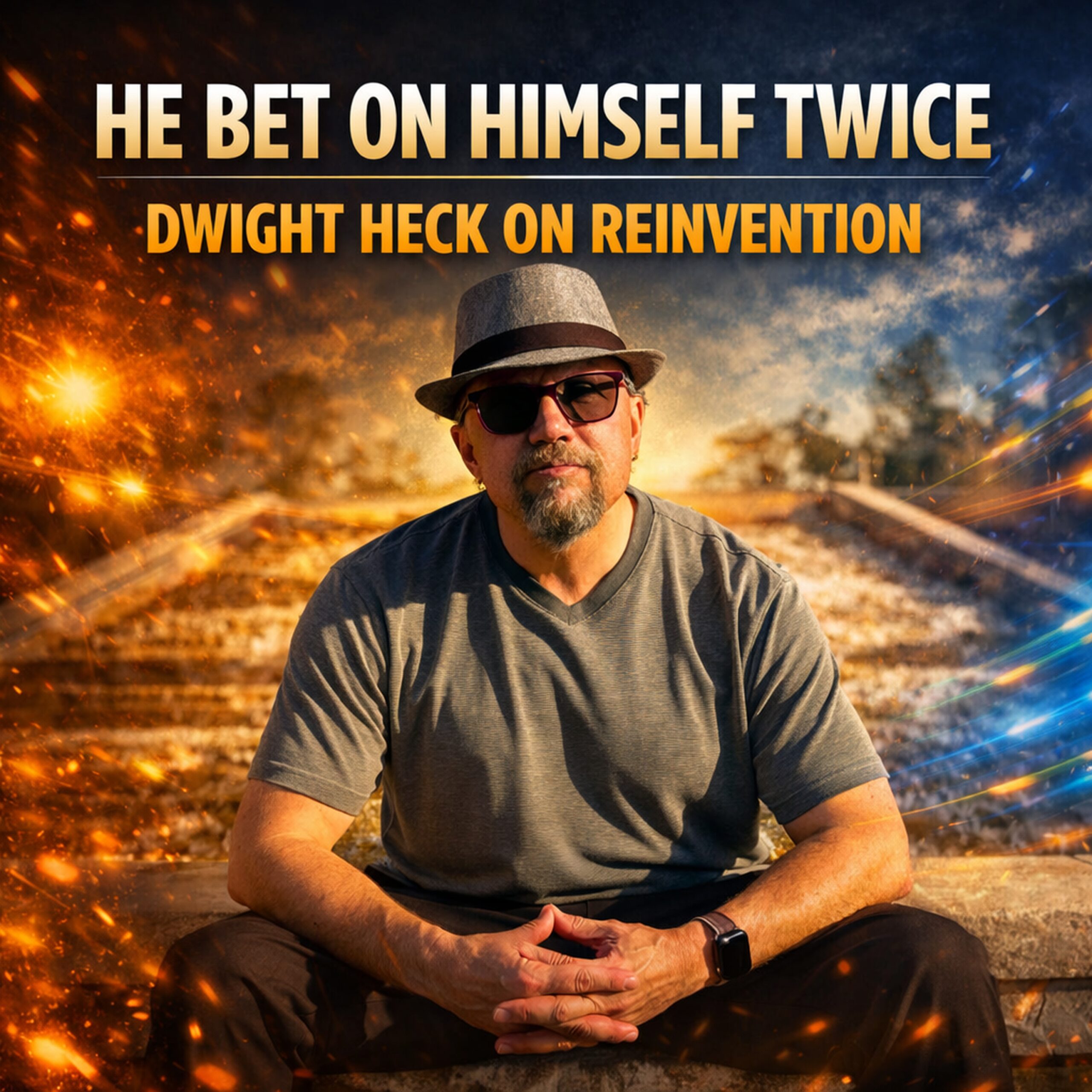
A twenty-something with an electronics diploma talked his way into fixing a mainframe nobody else could touch. Nine years later, a health crisis forced the career change that would define the rest of his life.
🎙️ Give A Heck Podcast
Real conversations and solo episodes about purpose, financial stewardship, mindset, leadership, and intentional living. This solo episode goes deep on risk, burnout, and the decision that led Dwight from IT into finance.
🔍 Episode Overview
Dwight Heck continues his solo arc, Not by Accident: Three Decisions, with the story of the professional risk that shaped the next chapter of his life. Before the mainframe story, there was an earlier bet on himself at fifteen and sixteen, a side hustle reselling video games through bulletin board systems, a venture that failed before he ever sold a single game, once he ran the actual cost math. He calls it a successful failure, an early lesson in cost to profit benefit analysis he would not fully appreciate for years.
That lesson mattered when, fresh out of an electronics engineering diploma, Dwight volunteered to fix a mainframe connection problem he had no formal training to solve, working until 2 a.m. multiple nights in a row until he got it done. That risk turned into a side hustle, then his own computer company, an early lesson in entrepreneurship long before he ever called it that. But the harder decision, the actual career change, came nine years later, after a grueling client contract, five days without sleep, pushed his body over the edge. About three months after finishing that project, Dwight was diagnosed with Bell’s palsy, a health crisis serious enough to leave him temporarily unable to drive or fully care for his kids during his joint custody time.
Dwight explains how a leadership role that demanded everything, with no real work-life balance, forced him to confront a pattern of overwork he had been living for years, and how a friend’s passing mention of finance, combined with his own dread of starting over from zero and a long-buried interest in accounting from high school, led him into the industry he still works in today. He also shares what that decision produced years later: a couple he helped go from ninety days away from financial ruin to their first paid vacation in over a decade.
This is Part 2 of the Not by Accident: Three Decisions arc, following Episode 303’s story of the brace and the hike, and setting up the final decision in Part 3, about the kind of father Dwight chose to become.
📚 What You Will Learn in This Episode
- Why a side hustle at fifteen and sixteen failed before it even started, and the lesson it taught about cost to profit benefit analysis
- How Dwight talked his way into fixing a mainframe problem he had no formal training to solve
- Why nine years in IT consulting, and a leadership role with no real work-life balance, left at best one happy client for every nine who were not
- What a five-day stretch without sleep on a single contract cost him physically
- What actually happened the day Bell’s palsy hit, and what the recovery required
- Why a friend’s mention of finance was not actually what convinced Dwight to make the leap
- What the decision to move into finance produced years later for one couple he coached
📑 Chapter Summaries
0:00 Teaser
The cold open, pulled from later in the episode.
0:19 Introduction
Dwight picks up where Episode 303 left off and opens Part 2 of the Not by Accident arc.
2:27 The Side Hustle at Fifteen
Dwight describes reselling video games through bulletin board systems at fifteen and sixteen, and the cost math that revealed the venture was doomed before it began.
4:23 The CSA Mainframe Story
Fresh out of his electronics engineering diploma, Dwight volunteers to fix a mainframe connection problem, working until 2 a.m. multiple nights to get it done.
7:33 Nine Years in IT Consulting
Dwight explains the reality of support and implementation work, one happy client for every nine who were not, and why the industry never lets up.
9:58 The Contract That Broke Him
A specific client project, cross-platform servers, licensing compliance, and five days without sleep, that Dwight believes pushed his body over the edge.
11:43 Bell’s Palsy
Dwight describes the day his symptoms began at a friend’s birthday party, and what the diagnosis and recovery actually involved.
15:32 The Finance Pivot
Dwight explains what actually convinced him to leave IT for finance, and it was not the friend who first mentioned it.
16:37 The Couple Who Turned It Around
Dwight shares what that decision produced years later for a couple he coached from the edge of financial ruin to their first paid vacation in over a decade.
19:58 What Both Decisions Have in Common
Dwight ties this episode back to Episode 303, and to the thread running through both decisions.
20:48 Closing and What Comes Next
Dwight closes the episode and foreshadows Part 3 of the arc, about the kind of father he chose to become.
🎯 Key Takeaway
The decision only happens once you stop outsourcing it.
Dwight’s argument in this episode is that neither the mainframe risk nor the finance pivot was really about computers or careers. Both came down to the same moment, when he stopped listening to what a doctor, a friend, an industry, or his own fear thought he should do, and got honest with himself about what was already true.
💬 Continue the Conversation
🎙️ They Predicted My Breaking Point, Dwight Heck on Resilience
Part 1 of the same Not by Accident arc, the story of the brace, the bullying, and the hike that proved a diagnosis was not a ceiling.
🎙️ 300 Conversations Later, Dwight Heck on Regret, Money and Purpose
Dwight’s milestone reflection on money, regret, and purpose pairs directly with this episode’s themes of risk and reinvention.
🎙️ Caught Between Adult Kids, Aging Parents, and Your Retirement
A solo episode on the financial strain of the sandwich generation, a natural next listen for anyone drawn to this episode’s finance pivot.
🎙️ Are You Drifting Through Life, Purpose and Direction
An earlier solo episode on the cost of living without intention, a companion piece to this episode’s decision-driven arc.
🎙️ He Led Global Companies, Then His Body Shut Down, Art Blanchford on Finding Purpose After Burnout
Art’s story of his body shutting down after years of running global companies mirrors Dwight’s own Bell’s palsy wake-up call.
🎙️ No Retirement Plan? How to Build Income That Actually Lasts, with Mark Kollar
A direct, practical follow-up for listeners drawn to this episode’s finance pivot and the couple’s retirement turnaround.
🎙️ Why Leadership Burns Out High Performers, Sira Laurel
Sira’s breakdown of systemic burnout pairs closely with Dwight’s account of nine years in an industry that never let up.
🔑 Key Themes Discussed
- Betting on yourself before you know how to do the thing
- The difference between a failure and a successful failure
- Burnout as a structural feature of an industry, not a personal failing
- A health crisis as the forcing function for a career transition
- Choosing a decision for yourself instead of outsourcing it to someone else
- What a financial turnaround actually looks like for a real client
- Becoming a career coach after living the exact pattern he now helps clients break
- Part 2 of the Not by Accident: Three Decisions solo arc
🤝 Connect with Dwight Heck
Connect with Dwight Heck (click below to access)
- 🌐 Give A Heck Website
- 🎙️ Podcast Page
- 📺 YouTube Channel
- 🎵 TikTok
- 🐦 Twitter / X
- 🤝 Contact / Be a Guest
🎧 Listen and Watch This Episode
- 🎥 Watch on YouTube
- 🍎 Listen on Apple Podcasts
- 🎧 Listen on Spotify
- ❤️ Listen on iHeart Radio
- 🎵 Listen on Amazon Music
- 🎙️ Listen on Audible
💭 Final Thoughts
Dwight closes this episode by tying it back to Episode 303, both the brace and the decision to leave IT came from the same place, a moment of getting honest with himself rather than letting someone else decide for him. The financial pivot cost him nine years of identity and a health scare to get to, but it also produced years of helping people like the couple in this episode find their way off the same hamster wheel he once lived on.
📣 Call to Action
🎧 Enjoyed this episode?
- ✅ Subscribe to the Give A Heck Podcast on your favourite platform
- ⭐ Leave a review at ratethispodcast.com/giveaheck
🎙️ Think you have a story worth sharing?
- Visit com/contact-us/ to find out how to be a guest on the Give A Heck Podcast
📝 Full Episode Transcript
[00:00:00] One of the other guests there was a woman I did not know. She thought I was hitting on her winking at her nonstop all night. Looking back, now I understand exactly why she thought that. Neither of us had any idea what was actually happening to the right side of my face.
[00:00:19] Welcome to Give a Heck. I am your host, Dwight Heck, and for much of my life, lived my life in quiet, desperation wondering how I was going to pay the bills, take vacations, save for retirement, and one day wondering if I would get off the hamster wheel of life and have purpose, a life that most of society lives, which takes us to work, then home, then repeat, and pays us hopefully enough.
[00:00:43] Just to survive the harsh truth that most live with more months than money and have no idea how to live life on purpose, not by accident. This ensures the mass majority are living not just financially broke, however, emotionally and mentally as well. Due to financial pressures and each episode, I will introduce you to thoughts, ideas, and guests that can help you to learn how you too can live life on purpose, not by accident.
[00:01:14] Welcome back to the Give a Heck podcast, where we challenge survival mode and choose intentional living. I am Dwight Heck, and today it is just me and you, no guests, just the solo conversation. Last time I told you about somebody deciding they knew what I was capable of and being dead wrong. That was not the only time in my life that happened the next time.
[00:01:39] It was not a doctor holding an x-ray. It was a room full of engineers who had no idea that a 20 something kid with an electronics diploma was about to fix the thing they had already given up on. This is part two of not by accident, three decisions, and I will tell you upfront, this one runs longer than the last.
[00:02:02] There was more ground to cover and I did not want to rush through it just to hit a runtime. Before I get to that room full of engineers, I want to back up a little further because that was not the first time I bet on myself with a computer, and I think this earlier part matters more than people usually give it credit for.
[00:02:27] At 15, 16 years old, I decided to expand into a second side hustle. I arranged to buy video games from a gaming company at 10% discount planning to resell them online, which back then meant bulletin board systems. BBSs. Since there was no e-commerce or internet yet, I had to pay to maintain a dial-in platform just for people to access it.
[00:02:55] That was 1982, right when personal computers were becoming the norm and the Commodore 64 was the dominant machine of the moment before I ever sold a single game. I ran the actual numbers and the reality set in. I would have to make long distance calls to the city where the BBS community lived just to promote the games, more long distance calls to supplier to purchase them, pay to have them shipped to me since drop shipping did not exist yet, and then reship them myself on a 10% margin.
[00:03:33] I would never even break even, let alone make a profit. I did not call that a failure, though I call it a successful failure because even though I never made a dime, I walked away with something I could not have gotten any other way. An early honest lesson in cost to profit benefit analysis. One I did not fully appreciate until I was a lot older.
[00:04:01] It taught me that just because something does not work does not mean you were wrong to try it. It just means you adjust and go. Again. I did not know at the time, but that lesson was going to matter a lot more a few years later when the stakes were a whole lot higher than 10% discount on video games.
[00:04:23] When I graduated with a diploma in electronics engineering early in the nineties, I landed a job at a company called CSA. Think of it like UL in the states, and that name means anything to you. We tested things, and sometimes we blew things up for product safety. It was a good job and it actually related to what I had gone to school for, which on its own felt like a win at the time.
[00:04:51] One day I overheard a group of engineers talking about a problem. They needed to connect an offsite mainframe computer to a group of new mainframe stations. They had just brought in and the company contracted to do the cabling and the installation had suddenly become unavailable and never did find out exactly why.
[00:05:16] All I knew standing there listening was that everything was at a standstill and it was actively hurting their operations. I volunteered before I gave it too much thought. I did not want to talk myself out of it. I told them I had a background in computers. I asked for the manuals for the mainframe and for the stations, and I told them I was positive I could figure it out.
[00:05:46] They did not have a lot of other options at that point, and they were under a real time crunch, so they decided to give me the shot. I took those manuals home. I read them on my own time late into the night teaching myself something. I had no formal training in one page at a time, and when I finally felt ready, I started the actual hands-on work.
[00:06:12] After my real job was already finished for the day I was there until two in the morning, more than one night in a row, I got it done. My fear of failure and got overpowered by how badly I wanted to show them I could do it. That job turned into a standing after hours arrangement. I became their unofficial IT specialist on top of the job I was actually hired to do.
[00:06:39] From there, I built a side hustle servicing their computer needs, along with a couple of other companies who heard about what I had done. After 11 months at CSA, I quit to build that into a real computer company. I sold that same client, their first personal computers, both desktops and laptops, and integrated them into their main frame system, something the two systems were never actually designed to do together.
[00:07:10] There were bugs, plenty of them. I worked through them anyway because by that point I had already proven to myself twice now that not knowing how to do something yet was not a reason to say no. I kept that relationship going for a couple more years, even after I was no longer technically their employee.
[00:07:33] That is a short version of how a kid with an electronics diploma ended up running his own computer company. But I want to be straight with you about something that is not actually the decision I sat down to tell you about today. That part, as risky as it felt in the moment, was the easy part. The harder decision came nine years later, and it did not have a dramatic overnight moment like the mainframe did.
[00:08:04] It built up slowly, the way most of the decisions that actually change your life tend to do. Nine years is how long I stayed in the IT consulting after the mainframe night. And here’s something people outside that industry do not really understand about support and implementation work. Something I think about constantly now that I coach people through their own careers.
[00:08:33] For every one client I made happy nine. Others were not. I want to repeat that because I do not think it lands the first time you hear it. One happy client, nine, who were not, not because my team was not good, we were good at what we did. No question. But you can only serve so many people at once. And the moment you finally catch up on one front, a new upgrade drops, a new requirement lands from somewhere else, and you are right back on the treadmill.
[00:09:08] It is a hamster wheel with no finish line in sight ever. Not even half the people we worked with were happy at any given time. And I want to be clear, that had nothing to do with the effort or skill that is just the actual nature of that industry. It will take everything you give it and ask for more the next morning.
[00:09:31] I lived inside that cycle for nine years, and I think if you had ever worked in a field like that one where the finish line keeps moving, no matter how hard you run, you already know exactly what I’m describing. It is not burnout from one bad month. It is burnout from an industry that is structurally built to never let you feel finished.
[00:09:58] Let me give you one specific example because it is easy to talk about burnout in the abstract and a lot harder to actually picture what it looks like. I once took on a contract to set up encrypted servers for our client file sharing between their Apple computers and their PCs, their own corporate email server, a full backup system for all of it.
[00:10:25] At the time, nobody had really solved the problem of getting Apple and PC machines to talk to each other easily. There was no single dedicated platform for something as basic as word processing and spreadsheets across both systems. Microsoft had just released a new version of office that could actually work, across both, so on top of everything else.
[00:10:50] I had to set up a server for that too and track every single license to keep the company compliant. I was the consultant hired to deliver all of it with a couple of very novice helpers who, if I’m honest, could not carry much the load. I ended up doing about 95% of that work. Myself and the days leading up to the contract deadline, I stayed awake for five days straight.
[00:11:18] I did not sleep. I never left. My tenacious nature the same thing that got me through that mainframe night. Years earlier turned into a detriment. This time I got the job done literally hours before my last day on that contract ended. Looking back now, I believe that project is most likely what drove my body over the edge.
[00:11:43] About three months after I finished it, Bell’s palsy hit and it changed my life through all of though all at the time. I had no idea those two things were connected at all. That is when the wake up call I could not ignore actually arrived, and it started at all places, a friend’s birthday party. I was at our place for a supper when my right eye just stopped blinking out of nowhere.
[00:12:11] One of the other guests there was a woman I did not know. She thought I was hitting on her winking at her nonstop all night. Looking back, now I understand exactly why she thought that. Neither of us had any idea what was actually happening to the right side of my face. It got worse overnight.
[00:12:33] By the time I got rushed to the emergency and saw a doctor the next morning, the entire right side of my face from my nose to my ear would not move. No blinking, no mouth movement. I could not see out of that eye at all. I was diagnosed with Bell’s Palsy and it stopped me in my tracks. I want to be honest about what that actually felt like because this was not just an inconvenience.
[00:13:02] The pain was intense. It felt like someone had driven a spike straight into my head, and the headaches did not let up for weeks, multiple times a day. I was putting drops and ointment in that eye and taping it shut just to protect it on top of the medication, to try to limit the damage and more medication just to manage the pain.
[00:13:26] For a while, I was basically a prisoner in my own home. I could not drive anywhere I needed other people just to get groceries for me. I had joint custody of my kids at that time and I needed help even to go pick them up. It was not that one health scare broke me all on its own. It was that going through something that physical forced me to finally look at a pattern.
[00:13:54] I had been living for years, working too much, not sleeping enough, not eating right, running myself into the ground and calling it normal. I knew that if I stayed in that industry, I would get sucked right back into that same pattern. It consulting, at least the kind I was doing does not really let you half do it.
[00:14:17] You are either all in, or you are out. There is no comfortable middle where you protect your health and still keep up. So physically I could not sustain that work without a complete change in how I was living. And if I am honest with myself, I already knew I was done with that industry. Not because I had failed at it.
[00:14:40] I had not because staying in that meant staying in that cycle, and I finally could not pretend to otherwise. Around the same time a friend planted a seed finance. I want to be honest about something here because it would be easy to make this sound cleaner than it actually was. Like some friends said the magic word and I saw the light.
[00:15:04] That is not accurate and I do not want to tell it that way. He mentioned it, I heard it, and I sat there in the back of my mind, unremarkable for a while. What actually convinced me to come down to two things, and neither of them was him first, I did not want to go back to school for who knows how many years just to start completely over from zero in some other technical field.
[00:15:32] Second, finance was not actually new territory for me the way people might assume back in high school, before computers ever pulled my attention away, I had seriously thought about becoming an accountant. That interest never fully left me. It just got buried under nine years of servers and support tickets and two in the morning cable runs.
[00:15:58] So I did not just jump over the next few months, I talked to medical professionals about what my body and my life actually needed going forward. I looked hard at how saturated the IT consulting market already was, and slowly through all of those conversations, none of them dramatic on their own. The decision became obvious, not because somebody talked me into it, because it finally let myself see what already had been true for a while and stopped arguing with myself about it.
[00:16:37] I want to tell you what that decision actually turned into, because a decision like this does not mean much until you see what it produces. I had friends, a husband and wife who I’d known well long before I’d ever got into finance. I always assumed they were well off. Once I was in this industry learning the actual rules of the money game, I asked them if they would let me try what I was learning on their own finances.
[00:17:09] They said yes. What I did not expect was that the facade so many people lived behind would start cracking right there with people I already knew. They were about 90 days away, like most people are from losing it all. If either one of them lost their job, they had not been on a proper vacation in over a decade.
[00:17:32] They went camping. They went fishing locally, but not an actual vacation. They were carrying major debt. His business was not making enough to move the needle for them. Her job helped, but it was not a deal breaker either. Once we sat down and actually set goals together, I found the cracks and we got to work repairing their financial life.
[00:17:57] Here’s something I want you to remember. Whatever your own number looks like, our finances are the good, the bad, and the evil in all of our lives. No matter what we make, money does not have a personality of its own. It wields the personality of whoever is holding it without knowing how to actually deal with money.
[00:18:22] Most people end up on a hamster wheel, stuck in debt, never knowing if they will ever get ahead a few years later with what I taught them about goal setting and budgeting. That couple was out of debt saving for retirement. They went on their first paid vacation in more than a decade, they turned a corner off that hamster wheel and into a life on purpose and not by accident.
[00:18:53] A life of intent. Their marriage got better along the way too. Statistically, money is one of the top reasons marriages fall apart. A lack of it drives people to addiction, to lies, to adultery, to verbal and physical abuse, and so much more. A lack of money. Knowledge is an epidemic, and I have spent the last 24 years working on helping as many people as I can live purposefully, because I know the pain of not having that.
[00:19:23] The stories I have gathered over those 24 years could fill several books. The trials and triumphs clients have climbed over, and the ones who, no matter what I did, seemed destined to stay stuck or worse. I think about that a lot actually. Both of my biggest decisions so far in this series, choosing their brace at 14 and walking away from nine years of it consulting as an adult, came from the exact same place, even though decades separated them.
[00:19:58] Nobody else decided either one for me. Adults around me had opinions about the race. A friend had a suggestion about finance, but in both cases, the actual decision only happened once I stopped listening to what everyone else thought I should do and got honest with myself about what was already true.
[00:20:22] That is the thread running through both of those stories. If you are looking for it, it was never really about the mainframe or the brace or even the diagnosis. It was about the moment you stop outsourcing the decision to a doctor, a friend, an industry, a fear, and finally just decide for yourself. That is where I want to leave this one with you today.
[00:20:48] Before I let you go, if this one landed with you, do me a favour and go leave a review. Wherever you are listening to this, it genuinely helps this show reach the next person who needs to hear it. And if you’re watching this on YouTube, hit that subscribe button. I would love to have you back for the next one.
[00:21:10] If you’re in Alberta or British Columbia and you want to talk about your actual financial picture, I am licensed to help you with that directly go to giveaheck.com and book a discovery call. If you’re anywhere else in Canada or anywhere else in the world, I still want to talk with you. That conversation just looks a little different, more coaching, more mindset, and that is available to you too, same website.
[00:21:40] The next decision I want to tell you about was not about my body, and it was not about my career. It was about the kind of father I was going to be, and it started with a promise I made to myself before I even fully understand what I was promising. That is next week right here on the Give a Heck podcast.
[00:22:05] And remember, it’s never too late to give a heck.
[00:22:10] Thank you for taking time out of your day and listening to Give a Heck if you find value. I’d appreciate you sharing with your friends and family so they too can learn how to live life on purpose, not by accident. So you do not miss the next episode. Please subscribe on your favorite podcast platform and please also post a review.
[00:22:30] I look forward to reading your comments. This has been Dwight Heck. If you want to check out other podcast episodes or today’s show notes, please check out my website. giveaheck.com, and until next time together, let us all strive to give a heck.